S8 E6: 100 Seconds to Midnight: To Live or Die - Healthcare in the US

Healthcare Show Notes: You can reach me on the website at http://www.causeofdeath100secs.net or you can email me at mailto:Jackie@causeofdeath100secs.net. My Link Tree can be found at: https://linktr.ee/CauseofDeathpod Hello and welcome to Cause of...

 Apple Podcasts

 Spotify

 Spreaker

 Podchaser

 Castro

 RSS Feed

 Goodpods
Healthcare Show Notes: You can reach me on the website at www.causeofdeath100secs.net or you can email me at Jackie@causeofdeath100secs.net. My Link Tree can be found at: https://linktr.ee/CauseofDeathpod Hello and welcome to Cause of Death – 100 Seconds to Midnight. I’m your host, Jackie Moranty. This episode is going to be a little different since I’m going to give you a glimpse into my life. I normally try to keep my personal life out of the podcast, or at least limit it to entertaining anecdotes that are related to whatever topic I’ve chosen to teach you about. This time, you’re going to be immersed in a personal journey that I’ve been experiencing over the last couple of years. This story will hopefully, give you all some insight about the American healthcare system and the ways that it fails us. It’s 90 Seconds to Midnight and in one of the most powerful countries in the world, only two classes of people can afford healthcare, the very rich and the very poor. I’ve taken the link to my GoFundMe out since I’ve met my goal. Thank you all so much for donating. https://agentsync.io/blog/loa/the-history-of-health-insurance-past-present-and-future https://www.healthsystemtracker.org/chart-collection/u-s-spending-healthcare-changed-time/#Annual%20change%20in%20price%20and%20quantity%20indexes%20of%20health%20services,%201980-2022,%20index%20numbers%202017=100 https://www.ncbi.nlm.nih.gov/books/NBK500098/ https://developmentalpolitics.org/platform-of-policy-recommendations/homelessness-in-the-u-s/?gad_source=1&gclid=CjwKCAjw2Je1BhAgEiwAp3KY71ecsxQGxcCSgQ_9r1NC6z_hyPTyzahtd011WpvpffS2uHLdELsT4BoCRCUQAvD_BwE https://www.audacy.com/wwjnewsradio/news/national/medical-debt-is-forcing-people-into-homelessness https://consumers4qualitycare.org/medical-debt-puts-housing-out-of-reach-for-millions-of-consumers/#:~:text=Nearly%20half%20of%20those%20people,likelihood%20of%20experiencing%20poor%20health. Music: Time Off by Damma Beatz You can reach me on: Instagram: @CauseofDeathpod Threads: @causeofdeathpodcast FB: @COD100Secs Twitter: @CauseofDeath10 TikTok: @causeofdeath100secs Please don’t forget to rate and review on any of the platforms found here: www.causeofdeath100secs.net You can support Cause of Death here: Subscribe on Apple Subscriptions Patreon: https://www.Patreon.com/JackieMoranty Ko-Fi:
0:05 Did you know one of the few things that Nostre Damas correctly predicted was his own death? Did you know that only one professional baseball player has been killed while playing the game? What about the fact that one of the most poignant last words ever were spoken by a parrot. Each week on Famous last Words, well, examine some of the final thoughts of some of the most fascinating people in history, from presidents to murderesses, from business innovators to teen pop icons. That's Famous last Words, part of the dark Cast Network, available right now wherever you get your. Podcasts, Grab your marshmallows and sleeping bags for the Burnt Marshmallows podcast or Cozy Mysteries Come alive around the crackling campfire.
0:54 Picture yourself wrapped in a warm blanket, sipping hot cocoa as we share spooky tales that will whisk you away to a world of mystery ghosts and perhaps even an occasional monster, crime solving spirits, urban legends, Bigfoot, We've got it all. Join Burnt Marshmallows every Tuesday wherever you listen to podcasts for Cozy Mysteries. Dark Cast Network, Come on over to the dark Side. We're really nice people once you get past the true crime and scary science. So this episode was supposed to drop a week before I had surgery. That didn't happen. Obviously, it had to wait since I had some technical difficulties, and those technical difficulties kept going until after my surgery.
1:47 So now I'm recovering. But I want this to be the first episode in this series, and then we'll talk about what happened during and after surgery. Thank you for listening, and thank you for waiting on me. I'll talk to you soon. Hello, and welcome to Cause of Death one hundred seconds to midnight. I'm your host, Jackie Morandy. This episode is going to be a little different since I'm going to give you a glimpse into my life. I normally try to keep my personal life out of the podcast, or at least limit it to entertaining anecdotes that are related to whatever topic I've chosen to teach you about.
3:00 This time, you're going to be immersed in a personal journey that I've been experiencing over the last couple of years. This story will hopefully give you all some insight about the American health care system and the ways that it fails us. It's ninety seconds to midnight, and in one of the most powerful countries in the world, only two classes of people can afford healthcare, the very rich and the very poor. A great place to start any story is at the beginning, So I'll give you a general outline of my personal healthcare. As I was growing up, I remember having health insurance, and I remember it covering everything with just a copay of ten dollars. It didn't matter what you needed, you paid your copay and you received care. Once I was out on my own and working, healthcare wasn't as readily available, though smaller companies didn't offer benefits of any kind, so often I went without health care.
4:04 I didn't need much at the time, so I wasn't really worried, and if something did happen, there were county hospitals that would tend to an illness and not charge an arm and a leg. In the eighties and nineties, many of those county hospitals were shut down funding was no longer available for those. For several years, I went without health care coverage and my daughter was on Medicaid. She got great care, but I didn't qualify since I was an adult, and at the time I wasn't pregnant. I also had no long term health issues, and I wasn't disabled. Eventually, Obamacare came along and for a short time, companies were forced to give their employees some sort of health care coverage. Most of the time, the coverage was terrible and the employees were paying for most, if not all, of the premiums. Fast forward to twenty twelve and the beginning of this story. I was working for a very small company in Albuquerque as a quality assurance manager. The company had fourteen employees and nothing that really looked like health care benefits. I paid my thirty four dollars every paycheck as a premium, but if I needed to see a doctor, anything that I needed to have done would be out of pocket except preventive medicine. Now what that means is that I could have a mammogram for nothing, but if that mammogram showed that I needed more care,
5:36 like a biopsy or surgery, that would all be out of pocket. Dental care and vision weren't part of my package either. The four oh one k was weak. The whole thing was a mess, and it was all surrounding a political idea that offering benefits was forced upon this particular company by the Affordable Healthcare Act of twenty ten, so if they could get away with not providing benefits to employees, they just wouldn't provide them. It was about this time that a little growth started on the end of my nose. It didn't seem like much, it didn't hurt, it never really bothered me, and for the most part, I just forgot about it. The insurance I had was not going to cover the cost of having it looked at, and honestly, I thought it was a z it or something like that, so I ignored it. I was only with that company for a few months when I decided to move to Kansas to be closer to my daughter.
6:36 I got a job with the State of Kansas, which provided me with great health insurance benefits, but unfortunately, they didn't pay me. I did establish a primary care provider in Kansas, and I went to see her one day for an upper respiratory thing. She prescribed antibiotics and told me to stay home for a week while I was there. I dropped them. I asked and asked her to look at the growth on the end of my nose, which by this time was getting pretty big, and I was getting rather concerned. She said to me, put the mask back on. I'm not touching that. She didn't offer a dermatologist, she didn't offer screening, she didn't offer a biopsy. She offered me nothing. Just keep wearing the mask and you'll be all right. Well, needless to say, I needed to make way more money than the State of Kansas was paying me. And really those health benefits weren't all that great when the doc wouldn't deal with an obvious problem.
7:38 I moved to Missouri when a job came up with the company that I work for now. But I was a contractor for six months. The health plan was a lot like the one that I had with the medical device company. It was nonexistent. Meanwhile, the growth kept growing. Six months after I started as a contractor, I was high. I fired full time with the company, and I actually got health care benefits. And this is where we are today. Now I'll explain why I'm asking for donations for surgery when I have health benefits. My copay in network to my primary care physician is twenty five dollars. If he sends me to a specialist, it's fifty dollars. As soon as I established a primary care physician, I went and I paid my twenty five dollars, and I told him that there were three things that I needed from him.
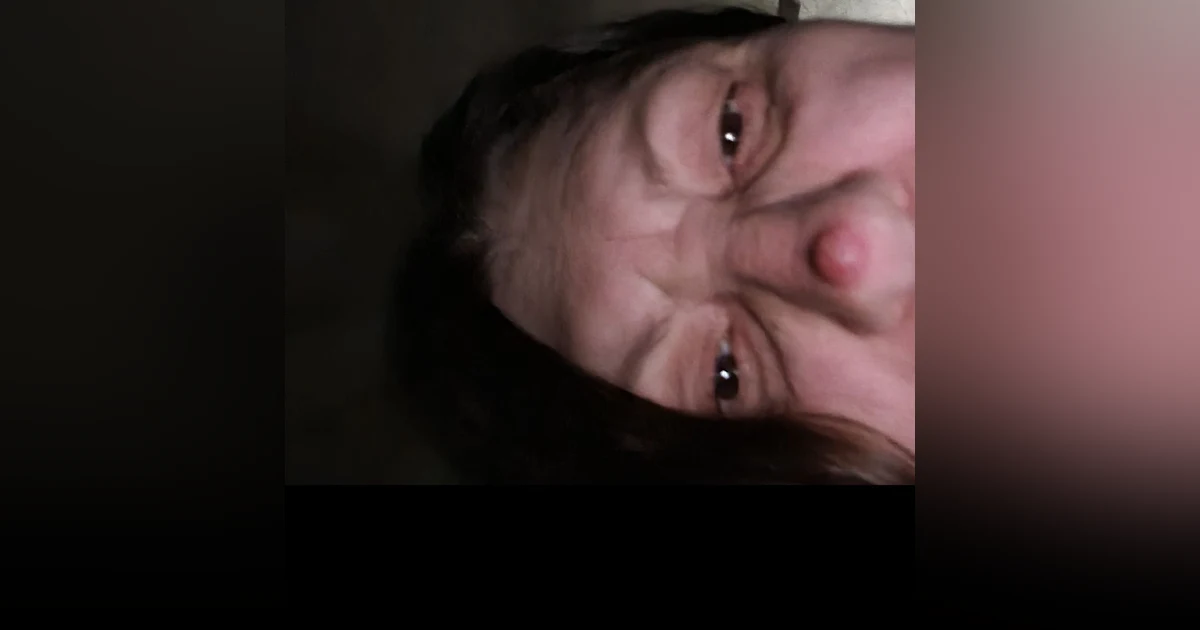
8:35 I needed to lose forty pounds, I needed to quit smoking, and I needed to get the thing on my nose. Looked at the pictures of what this looked like at the time. Are the cover photo for this episode. Go take a look. Now. My doctor was worthless when it came to quitting smoking or getting on any kind of diet, but he did send me to a dermatologist who specializes I MOSE surgery for skin cancer. I felt like I was on my way, and I was really happy that I was finally gonna find out what this thing on my nose was and what I could do about it. I went in to get the biopsy done in May and they took about half of the growth. Two weeks later they called me and sure enough, it was basil cell carcinoma. I wasn't surprised. I'm a sun worshiper. I rarely wear sunscreen and most of the time I'm hatless.
9:34 I have darker skin, I rarely burn. I didn't think I could get skin cancer. I thought my genetics would keep me from it. I was wrong. Now, since getting this diagnosis, I have been terribly depressed, and I've been terrified. It's basil cell, so it is the best kind of skin cancer to have. It doesn't spread as easily as squamos cell or god forbid, melanoma. But it's been there for two years. Could it have spread? How far did it spread? Will there be radiation treatments chemo? I was not sure, and this is why you haven't heard a whole lot from me. Over the last couple of months.
10:19 I could barely concentrate on my work, let alone. The podcast scheduling became a delicate dance, trying to figure out when the most surgeon could coordinate with the plastic surgeon, meanwhile getting me in as soon as possible since this thing could be spreading. We all agreed. On July fifteenth, it was happening, and I was counting the days. I just wanted all this to be over. I called about two weeks before to make sure that everything was in place. I arranged for my dog to be taken care of, I scheduled rides and made sure that I could drive home by myself after the most surgery. No one ever mentioned a deductible. No one ever talked to me about payments or what it would cost. No one mentioned that they could cancel my surgery if I didn't have that deductible on hand and be ready to pay it when I showed up for surgery. Now, in all fairness, I didn't ask either. I assumed that they would ask for a copey or bill me or make some kind of payment plan, something I never expected. What actually happened. No one said a word until Friday, July twelfth, at four o'clock in the afternoon, when the lady in the billing office called me to tell me that I needed twelve hundred dollars in cash when I showed up for surgery on Monday. I don't have that, I said, can you
11:53 make a payment plan? No, she said, we don't do payment plans anymore. We've been burned far too many times, so now we just demand payment at the time of service. I don't have it, I said, again. I need this surgery. This is the cancer surgery. I need this to be gone. Well, if you can't afford the deductible, then we have to cancel your surgery. Until you can. You're kidding me, I said, I'll call you on Monday to see if we can work something out, but as it stands, without payment, you can't have surgery. At this point, I was super worried that I wasn't going to be able to afford the plastic surgeon and I would be doomed to walk around with a huge hole in my nose for the rest of my life. So I called his office and asked about deductibles. He wanted another twelve hundred dollars. Do I need that upfront? I asked, knowing that I was never going to get this done if everyone wanted money upfront, and I have and wait and wait, haven't I met my deductible already? Isn't it fifteen hundred dollars? I think that I'll have that paid off with the dermatologist now He's office lady said, oh, well no. First of all, we can bill you for our services, so no, you don't need it up front. Wait, I thought that buys me time. As for the deductibles, she said, yes, you've
13:25 met the fifteen hundred, but there's also about forty five hundred dollars. Forty five hundred dollars, I said, where did that come from? Those are your individual out of pocket costs for any procedure. Well, at least I can do a payment plan for that part of this. But it's still four o'clock on Friday and I needed twelve hundred dollars by seven am on Monday. I went home and I just cried. I stayed in my funk until one one of my podcasting friends and the founder of the dark Cast network called me to ask if I was ready for surgery. I told her what was going on, and she told me to start a GoFundMe, so I did just that. By the following Monday, I was about two hundred dollars short of the deductible to get the most surgery. I called and rescheduled for the twenty ninth of July at seven am. In the GoFundMe, I'm asking for two thousand dollars to cover the MOS and the plastic surgery from the bills that I have so far, I'm hoping that this is all there will be. I can't imagine that there will be more. I have insurance.
14:44 As it stands, I'm about five hundred dollars short of my goal. The link to the GoFundMe is in the show notes if you'd like to help out, I hope there will be more bills from this. Healthcare in America is expensive, and like I said that in the beginning of this episode, only the very rich and the very poor can afford it. The very rich because they have money, and the very poor because the government covers them. That leaves about sixty seven percent of the rest of the nation who depend on private health insurance to cover the bills, and often it doesn't. People end up paying way more out of pocket than they really should. If you look at the GoFundMe website, most of the people out campaigning need medical assistance. About forty one percent of Americans are stuck with medical bills they can't pay, and many times this forces people into homelessness or bankruptcy. And these are people who like me, pay upwards of three hundred dollars a month for company health benefits just for the right to carry a card. We pay our copays every time we go see a doctor. Then when we have something come up, we're told that we have a deductible that we have to meet, and then we have at of pocket costs. Oh and don't forget that there could be something else that's just not covered under our plan. Americans balk at the idea of universal health care. Somehow. It
16:15 goes against the grain of this nation that we should take care of people when they're sick. It goes against the constitution, you know, life, liberty, and the pursuit of happiness. I've talked about universal health care on the show before, and I waffle on it. I do. I don't have a solution, but this country needs it. We can't keep settling our citizens with debt for things that are beyond their control. Now, while I'm thinking about that, I think about a government that changes every four years, and what healthcare looks like when it translates to taxes. I think about a government that's so inept that they continue to nominate poster children for AARP as leaders. How is that going to work when it comes to running a health care program for everyone in the country. Maybe it can't happen here. Maybe the US can't handle it. After all.
17:10 If you want to see any promising program fail, hand it to the US government. Look at the educational system. Now. We do have government health care programs, Medicare, Medicaid, Indian Health Service, Veterans Affairs, and the Department of Defense. If you ask any veteran or Native American about government health services, they'll tell you that you're much better off with unclear deductibles and high premiums. At least you get seen. But that's not true because if we go back to the beginning of my story, I had health insurance that was only good for mammograms and pap smeares. It wasn't going to do anything for skin cancer. I couldn't afford to be seen. I had a doctor who saw the damage the cancer was causing, and she chose to blow it off.
18:02 So I don't think that my insurance is any better than any government funded healthcare plan. Let's take a break to hear from my sponsors, then I'll come back to talk a little about the history of American health care. Sickness funds were arranged by financial institutions around the eighteen eighties and remained popular through the nineteen twenties. These were set up by banks who would pay the people who had money in their banks for medical care. Industrial sickness funds were started in the twenties and thirties by employers to benefit employees who fell ill or were injured on the job. The industrial sickness funds played a part in the labor movement and healthcare through unionization. Health insurance as we know it began in the US in the nineteen thirties.
19:00 The Great Depression was in full swing during the thirties, and at that time the price of medical care was relatively inexpensive since hospital visits were rare and even most surgery was performed in the patient's home. People were more concerned about the inability to work and make money than they were about paying medical bills. Workers' compensation was introduced during the early twentieth century. This insurance was and still is, dependent on job related injuries. In nineteen oh eight, the first federal law governing workmen's compensation passed Congress. This was called the Federal Employees Liability Act or FELA. This law only applied to railroad and interstate commerce employees. It rarely paid out because the employee had to prove that the company was at least partially responsible for the accident. But when it did pay out, the benefits right what is paid out today for compensation. Between nineteen ten and nineteen fifteen, thirty two states passed workers' compensation insurance laws that allowed employers to buy insurance through the state. At the time, this was not mandatory, but this insurance would guarantee that employers could avoid civil suits while still providing health care and compensation to the employee. Jobs were notoriously dangerous in
20:31 that era, and this insurance made employers legally obligated to pay for medical care when an employee suffered an on the job injury. This system rarely paid out, though employers could be absolved of their duties to pay in several ways. One was to claim that the worker had agreed to that particular risk as part of their employment contract. The second was to claim that another employee caused the accident, not the company, and the third was to claim that the injured employee was at fault and caused the accident on their own. Workers' compensation only paid out if the company could be proved negligent. Workers' rights movements were gaining momentum around this time, and states were reforming child labor laws, limiting the length of the work week, and they were addressing the occurrences of workplace injuries and the lawsuits that often followed, activists pushed for laws that would put the financial responsibility on employers when their employees were injured on the job. Employers also found that these laws would allow them to care for injured workers. During the twenties, many European countries developed some form of nationalized healthcare. In the US, there were several movements for the same plan, but it failed to take hold, and the reasons for this had been attributed to several causes, the first being that physicians
22:04 represented by the American Medical Association felt that a nationalized health care plan would keep them from setting their own fees. This was the case when workers' compensation controlled cost by allowing their own physicians to treat on the job injuries. It always comes down to money. Right At the time, sickness funds had been created and they served as many as thirty to forty percent of those working outside of the agricultural community. Now, if you remember, these funds were created by banks, and those banks created powerful lobbyist groups that insisted that these funds, which only replaced wages and didn't cover the cost of healthcare, were enough to get a family through a work injury or a grave illness By the nineteen thirties, commercial health insurance began to gain traction in the US, and of course, insurance companies did not want to give up any of their profits to a national healthcare system. These three groups continue to lobby against nationalized healthcare, and they've convinced the American voters that we don't need nationalized healthcare. Let's continue with the history.
23:33 A group of school teachers in Dallas started the first commercial employer sponsored healthcare plan in the thirties. They joined forces with Baylor University Hospital to pre pay for their healthcare by paying a premium of fifty cents per person per month. This would later become Blue Cross and it was the model for the insurance that most of us have today. This policy allowed teachers to spend up to twenty one days in the hospital at no cost, and since most of the people who had the policy didn't spend any time in the hospital, it was cost effective for Baylor to stand by the policies. This model began at the beginning of the Great Depression and the hospital was seeing a huge drop in income since most people couldn't afford healthcare and were relying on charity care. Justin Kimball was the hospital administrator of Baylor University at the time, and after the experiment with the teachers was so successful, he decided that the idea of having employers prepay for health care for their employees at a small monthly premium could bring more revenue into the hospital and could feel a niche family. Physicians refused to be a part of the system because they didn't believe it would serve their interests.
24:58 They thought that they would be cut out of the profit margin or be sidelined in favor of those who could charge more reasonable fees for their services. These physicians started their own health insurance company and it was called Blue Shield. The creation of Blue Shield kept the nationalized health care discussion and the hospitalization insurance from digging into their profits. Blue Cross and Blue Shield were separate from one another. Blue Cross only covered hospitalization and Blue Shield only covered physicians. The creators of these programs referred to them as prepaid care and not insurance plans. This kept them from having to answer to any regulatory agencies, but in nineteen thirty three, the state of New York determined that they were insurance plans and they should be regulated just like any other insurance. New legislation was written that these companies were considered nonprofits rather than for profit businesses, and so were not as heavily regulated. During World War Two, another insurance company was founded. In nineteen forty one, Henry J.
26:14 Kaiser partnered with doctor Sidney R. Garfield and created a prepaid health care plan for his shipyard workforce. Kaiser Permanente Health Plan became official in nineteen forty five and soon spread across the states of California, Washington, and Oregon, ensuring over one hundred and ninety thousand people. By the nineteen forties, health insurance plans were becoming more and more commonplace, but still at the time, only about nine percent of the workforce had an employer sponsored health insurance plan. That changed in nineteen forty three with the war Labor Board declared that benefits employers provided for their employees, such as health insurance, didn't count as wages. This was a big deal because there were government imposed wage caps and price caps on nearly everything in order to stave off wartime inflation. During World War Two, the labor market was tight and companies were desperate to keep production moving, so the competition for workers was steep. They couldn't raise wages due to the wage caps, but they could offer health insurance as a draw since it wasn't considered a wage. Employers began offering health insurance to give workers extra money without raising wages. This,
27:45 combined with unionization and favorable tax laws that made employer sponsored healthcare non taxable, made the forties and fifties a period of extreme growth for health insurance. By nineteen sixty, over sixty eight percent of the US population was estimated to have some form of private health insurance. I'm going to stop here, but I'll continue this story in two weeks. Surgery is scheduled for the twenty ninth and thirtieth, so that will give me a week to recover. And while I'm recovering, I can write the next section and tell you how the whole thing went. It's ninety seconds to midnight, and in the US, people are paying into healthcare plans that don't cover anywhere near what they should. Now I'm stuck in that vortex too. Please see the show notes for ways that you can contribute to my surgery. This has been a subject that I've wanted to talk about for a hot minute. I really didn't want to be the model for this conversation, but here we are. Next time, I'll be telling you all about how surgery went, the challenges of recovery, and then more history as we talk about the of employer sponsored healthcare plans, the creation of Medicare and Medicaid, and the state of healthcare as we know it. Check out the show notes for references I used in this episode. In all the ways that you can connect with me on the socials, you can reach
29:17 me at Jackie at cause of Death one hundred sex dot net or on the website at www. Cause of Death one hundred sex dot net. If you try to contact me this week, I may not get back to you as quickly as I normally would. I'm not sure how the surgery is going to go. Also give links to my Patreon page where you can get ad free episodes and other perks, my merch store, my GoFundMe, and other ways to support my surgery and the show. Please rate, review, and subscribe, and share these episodes with everyone you know.
29:58 I know I've been a little hit or missed lately with everything that's been happening, but I promised that things will level out. Shortly. I want to thank everyone who donated so that I could have this surgery. The outpouring of support has been amazing, and I have been moved to tears several times. I also want to thank CJ John of Beyond the Rainbow podcast for helping me set up the GoFundMe and for helping me pass the word. CJ has graciously donated T shirts with the Cause of Death logo on them to anyone who donated more than thirty dollars to the fund. I'll be reaching out to you all so that we can get addresses and send those out. Until next time, keep your nose on your face.
30:44 Two weeks from now, I'll be telling you all about modet surgery and the plastic surgery, and hopefully I'll be cancer free by then. B

