S8 E2: Brain Suckers: The Story of Naegleria fowleri
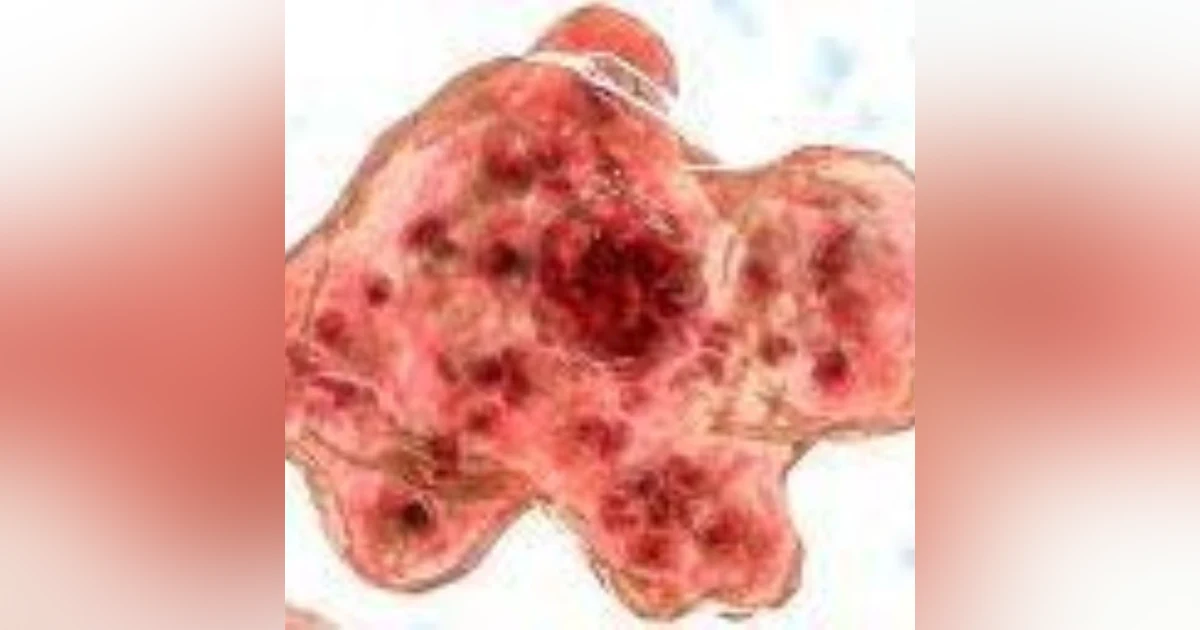

Brain Eating Amoeba Show Notes: You can reach me on the website at http://www.causeofdeath100secs.net or you can email me at mailto:Jackie@causeofdeath100secs.net. My Link Tree can be found at: https://linktr.ee/CauseofDeathpod This season is called...

 Apple Podcasts

 Spotify

 Spreaker

 Podchaser

 Castro

 RSS Feed

 Goodpods
Brain Eating Amoeba Show Notes: You can reach me on the website at http://www.causeofdeath100secs.net or you can email me at mailto:Jackie@causeofdeath100secs.net. My Link Tree can be found at: https://linktr.ee/CauseofDeathpod This season is called “Creepy Crawlies” and today, I’m going to be talking about one of the strangest and most dangerous among them, Naegleria fowleri. This animal is the brain eater that’s made a huge splash, pun intended, in the media over the last couple of years. While this organism thrives in temperatures above 80° Fahrenheit, it can be found in lake or river sediment at temperatures well below that. The mortality rate for PAM is roughly 97% with only four people out of 157 having survived in the US between 1962 and 2022. https://www.researchgate.net/publication/350905632_Naegleria_fowleri_Sources_of_infection_pathophysiology_diagnosis_and_management_a_review https://www.thoughtco.com/the-life-of-an-amoeba-4054288 https://www.thoughtco.com/what-are-cells-373361 https://www.cdc.gov/parasites/naegleria/general.html https://www.cdc.gov/parasites/naegleria/index.html https://www.healthychildren.org/English/health-issues/conditions/infections/Pages/naegleria-fowleri-the-brain-eating-amoeba-how-to-prevent-this-rare-infection.aspx https://www.ncbi.nlm.nih.gov/books/NBK535447/ https://www.health.state.mn.us/diseases/naegleria/index.html https://www.dhs.wisconsin.gov/publications/p01085.pdf https://www.ncbi.nlm.nih.gov/pmc/articles/PMC9964342/ https://www.canada.ca/en/public-health/services/laboratory-biosafety-biosecurity/pathogen-safety-data-sheets-risk-assessment/naegleria-fowleri.html https://www.tceq.texas.gov/toxicology/q-a/amoeba https://www.beckershospitalreview.com/public-health/why-brain-eating-amoeba-infections-are-becoming-more-common.html https://weather.com/health/video/rare-brain-eating-amoeba-cases-could-rise-due-to-climate-change?cm_ven=PS_GGL_DSA_09162019_1&par=MK_GGL&tpcc=mktg-search-Google-acquisition&gad_source=1&gclid=CjwKCAiAuYuvBhApEiwAzq_YiUAkKam_smsl0ezdn7j4gstP7QyZTDtoE5uFzjHC_5siNsBL80-DpxoCdt4QAvD_BwE https://www.science.org/content/article/repurposed-drug-battles-brain-eating-amoeba https://www.ncbi.nlm.nih.gov/pmc/articles/PMC7783332/ https://byjus.com/biology/amoeba/ https://pubmed.ncbi.nlm.nih.gov/31612525/#:~:text=Though%20the%20exact%20pathogenesis%20of,pathogen%20invading%20the%20host%20CNS. https://www.ncbi.nlm.nih.gov/pmc/articles/PMC4604384/ https://www.sciencedirect.com/science/article/abs/pii/S0001706X16305897 https://pubs.acs.org/doi/10.1021/acschemneuro.6b00232 https://onlinelibrary.wiley.com/doi/10.1111/1440-1681.13192 https://emedicine.medscape.com/article/223910-overview?form=fpf https://academic.oup.com/femspd/article/51/2/243/888715 https://academic.oup.com/f https://journals.asm.org/doi/full/10.1128/aac.01293-15 https://www.sciencedirect.com/topics/medicine-and-dentistry/naegleria-fowleri https://link.springer.com/article/10.1007/s11684-021-0865-2 https://www.researchgate.net/publication/350905632_Naegleria_fowleri_Sources_of_infection_pathophysiology_diagnosis_and_management_a_review https://www.researchgate.net/figure/Reported-cases-of-primary-amebic-meningoencephalitis-n-381-by-country-of-exposure-No_fig1_341190198 https://applications.emro.who.int/imemrf/Parasitologists_United_J/Parasitologists_United_J_2012_5_2_93_104.pdf https://link.springer.com/chapter/10.1007/978-3-642-73772-5_88 https://www.academia.edu/70102030/A_Review_on_Global_Distribution_of_Primary_Amoebic_Meningoencephalitis_PAM_Caused_By_Naegleria_Fowleri_The_Brain_Eating_Amoeba https://acsw.dypvp.edu.in/documents/Study-Material/Microbiology-TYBSc/Entamoeba-histolytica.pdf https://doh.wa.gov/sites/default/files/legacy/Documents/5100/420-002-epitrends2019-03.pdf https://acsw.dypvp.edu.in/documents/Study-Material/Microbiology-TYBSc/Entamoeba-histolytica.pdf Darkcast Network – Promo by Yours Truly Podcast Promos: Rogue Darkness Hands Off My Podcast Weird True Crime...
0:06 Hey, I'm Gina and I'm Amber, and we're here to bring you the Weird True Crime podcast, where we cover true crime cases that will leave you asking yourself, did that really happen. We'll dive into questionable cases throughout history that are solved, unsolved, or just plain unbelievable. We'll also talk about the quirkyar side of true crime in episodes we like to call What the Wednesday, So be sure to subscribe and listen on your favorite podcast service. Witchcraft, the Occult, Extremist, Belief Murder. Tune into Rogue Darkness each Friday and join host Raven as I uncover horrific crimes committed under the misconceptions and misunderstandings of witchcraft and belief systems. I'll cover a wide range of crimes involving ritualistic killings and extremist beliefs to cult persuasion and supposed possession, anything in everything that borders the line of horrifying. There's always three sides to a story. Side A side B and then the truth. Let's uncover the truth together and explore the darkness of mankind, one crime at a time. Available wherever you get your podcast fixed. Simply by searching rogue darkness. Do you have a story
1:37 of survival? A parent goes to residential school, you know they haven't had that family connection, those traditional values and ceremonies that many of us expose to are taken, or have a lost loved one that was involved in human trafficking, exploitation, missing, or murdered. My name is Jasmine Castile and I am the host of Hands Off, my podcast that brings to the four Front, specifically from Asian American Native Haaaian Pacific Islander, Black Indigenous people of color Anderson of your emergency, ma'am what's going on out there? As well as nonprofit organizations. When I was They're pri investigator five years ago, we picked up a case that was Sneeze Harris case that help and advocate families of lost loved ones with their closure. From some time from his shift they work to that next day, he was either robbed or apprehended at some point with someone coming into the restaurant and opening a cold case. So that to me was his his way out and it negatively impacted our money's investigation. Please join me on Thursdays on any podcast platform wherever you listen to your podcasts. We are voiceless no more Dark Cast Network. Come on over to the dark Side.
3:05 We're really nice people once you get past the true crime and scary science. Hello and welcome to Cause of Death one hundred seconds to midnight. I'm your host, Jackie Morante. This season is called Creepy Crawley's and today I'm going to be talking about one of the strangest and most dangerous among them, Nicgaleria faleri. This parasitic amba was suggested to me by my friend at Unsolved Virginia.
3:55 Anne. Thanks for the suggestion is a good one. This animal is the brain eater that's made such a huge splash pun intended in the media over the last couple of years. Let's begin with ediology and pathology. Amibe are unicellular eukaryotic organisms. I've talked about eukaryotic organisms before, but I'm going to refresh your memory. Eukaryotic cells have a true nucleus. This nucleus holds the DNA of the organism. The nucleus is contained within a membrane and separated from the other cellular structures. Eukaryotes include animals, plants, fungi, and protus such as algae and we as humans are eukaryotes. Amibae belonged to the domain Eukaryota, the kingdom Protista, the phylum Protozoa, the class Rhizopoda, the order Amibida, and the family Amibidae. The structure of amiba consists of a cytoplasm surrounded by a cell membrane. The outer portion of the cytoplasm, called the ectoplasm, is clear and gel like, the inner portion of the cytoplasm, called the endoplasm, is granular and contains organelles, including the nuclei,
5:29 mitochondria, and vacuoles. These vacuoles digest food and expel excess water and waste from the cell through the plasma membrane. Amibae uptake food by a process called phagocytosis. I talked about this in a very early More Than You Ever Wanted to Know episode in the first season. Mammals have white blood cells called phagocytes that get their nutrients this way. The process of phagocyteosis consists of an organism consuming their food whole through vacuoles, then digesting it and casting off waste through other vacuoles. Amieba form pseudopodia or false feet. The pseudopodia allow the organism to move and capture bacteria, algae, and other microorganisms in their environment.
6:25 The vacuoles then surround the food source and internalize it. As the food is digested, the vacuole dissolves. If you're interested in this particular form of nutrient uptake, head to YouTube and look up phagocytosis. It's pretty fascinating, but of course you have to be a geek to really appreciate it. Amibae don't have respiratory organs. Respiration occurs as dissolved oxygen in the water diffuses across the cell membrane. Carbon dioxide is then diffused across the membrane back into the water. Amiba process water across the plasma membrane bi osmosis, and excess water is then expelled through vacuoles. These organisms reproduce by binary fission. Binary fission is a type of asexual reproduction typically observed in prokaryotes and a few single celled eukaryotes, in this case amiba. In this method of asexual reproduction, there is a separation of the parent cell into two new daughter cells, Amiba can live in fresh water or saltwater environments, wet soil, and some parasitic amiba inhabit animals and humans. I'll talk about one of these later in the episode.
7:56 This brings us to our amoeba of choice for today's episode, Negliaria filare. The classification of Negliara filere differs slightly from other amibe. It belongs to the domain Eukaryota, kingdom Excavada, phylum Perclozoa, class Heterolobosia, order Schizopyrneida, and family Valcamphilidae. There are three free living amibe that infect people and Canthomiba, Valamuthium manrolleris and Negleia phileare. This means that these amibae are not dependent on a host for survival, but can live freely in the environment. They are opportunistic pathogens, meaning they don't necessarily want to make a mess of things, but if the opportunity arises, they'll reacavoc enfilare is a thermophilic organism that prefers temperatures between eighty and one hundred and fifteen degrees fahrenheit and can live for short periods of time at higher temperatures. Thermophiles love heat and generally live in areas with higher temperature ranges. By contrast, cycrofiles and cryophiles love the cold and generally thrive in areas with lower temperature ranges. While these organisms can exist
9:26 in temperate areas, they usually go into a state of dormancy until the temperature reaches their preferred level. These organisms are called extreme of files. They thrive in extreme climates. I'll be doing a whole season on extremo files in the future. They are really interesting organisms, but for now, let's get back to n FILOWERI. N Filowery is typically found in warm freshwater lakes and river hot springs, warm water discharge from industrial or power plants, untreated geothermal drinking water sources, or recreational venues such as swimming pools, splash pads, or surf parks that don't have enough chlorine or are poorly maintained. They can also be found in tapwater, water heaters, and soil or sediment at the bottom of lakes, ponds, and rivers. While this organism thrives in temperatures above eighty degrees fahrenheit, it can be found in lake or river sediment at temperatures well below that. There is no universal definition of a rare disease, but the Rare Disease Act of two thousand and two defines it as a disease that affects fewer than two hundred thousand people in the US. NFLRARI falls into this
10:58 category in the US the United States, between twenty thirteen and twenty twenty two, a total of twenty nine infections were reported in the US. Most of these infections happen in young boys under fourteen years of age. There is no definitive reason for this, except that boys are more likely to dive into the water and play in the sediment of lakes and rivers. Infection with en philari most commonly occurs in the summer months of July, August, and September, when the water temperatures are high and the water levels are low. En Philari causes primary amobic meningo and cephalitis or PAM. PAM occurs when the patient inhales fresh water from a lake or pond where the amiba resides. Once it enters the nasal cavity, the amiba penetrates the respiratory epithelium and olfactory mucosa. It then migrates through the cribiform plate into the central nervous system. Its virulence depends on the protein NFA I, nitric oxide production and poor forming proteins. NFA one mediates the attachment to target cells. Then the pseudopodia begin to move across the brain, ingesting tissue. As it moves along, cysteine proteases, phospholipases,
12:28 and phospholipolytic enzymes mediate the extensive necrosis as an immune response, but this, in combination with the virulence of the organism, lead to destruction of the parenchymal tissue. The olfactory bulbs, basaler portion of the frontal cerebri and cerebellum tend to be the most severely affected by PAM. Symptoms of PAM are similar to those of bacterial meningitis. Symptoms begin about five days after infection and include fever, headache, nausea, and or vomiting. The disease progresses to stiff neck, confusion, lack of attention to people and surroundings, seizures, hallucinations, and coma. This disease progresses vary rapidly, and death normally occurs within five to ten days of the onset of first symptoms. The mortality rate for PAM is roughly ninety seven percent, with only four people out of one hundred and fifty seven having survived in the US between nineteen sixty two and twenty twenty two. Treatments are available for PAM, but because the disease progresses so quickly and infection is rare, diagnosis often comes too late. PAM is not often considered as a likely diagnosis when a patient shows up at the er. There
14:01 are real time PCR tests for nfilari, but they aren't readily available at most hospitals, and sending samples to a reference laboratory would take more time than the patient has. Any delay in treatment can be a matter of life or death. PAM is currently treated with a combination of amphotersin b A, zythromyacin, fluconazol, refampin, miltiphosine, and Dexamethisone these drugs have been used in patients who have survived. Miltaphosine is the newest of these drugs and it has been shown to kill Nfilari in the laboratory. However, it is an experimental drug that is only available for PAM infections through the CDC. In the United States, Enfilari infections have occurred mostly in the southern states such as Florida and Texas.
15:00 However, climate change is affecting waterways in the US and this has caused a shift in the geography of infections. Since twenty ten, cases of PAM have been confirmed in Nebraska, Iowa, Minnesota, Indiana, Maryland, and northern California. PAM has also been known to infect livestock and wildlife that drink from water sources where en Filere exists. Let's take a break to hear from my sponsors. Then I'll be back to talk about some history. Spring is coming and I'm preparing my garden beds and pots for growing. Soon, I'll be starting seeds and you know where I'll be headed for all my supplies.
15:45 That's right, I'm going to True Leaf Market. I'm pretty new to growing, and this year True Leaf Market has added a new tool to their website to help me grow like a pro. It's the seed Finder Quiz. I love this. It helped me choose the best varieties of plants for my growing zone, my level of experience, and the characteristics of the vegetables in no time at all. I had chosen several varieties of melons, tomatoes, corn beans, and peppers. I'm still building my order, so I've saved my choices to my catalog and I'll be back in a few days to shop more and gather everything that I need. Check out as simple and delivery is super fast. It doesn't matter what you plan to grow. They have vegetable seeds, herb seeds, flowers, and grains. You can buy as much as you need from small quantities for backyard gardens to bulk for large farming operations.
16:56 Their prices are reasonable too. I can buy small packets of seeds starting at two dollars and forty nine cents. Organic seeds start at two dollars and ninety nine cents. Right now, Trueleaf Market is offering my listeners ten dollars off any purchase of fifty dollars or more with promo code COFD ten at checkout. Go to www. Dot trulyafmarket dot com and check it all out. It doesn't matter whether you're new to growing or a pro. Trueleaf Market has all the growing supplies you need, and they have PDF docs that will guide you through the process. Of growing. Go take a look at trueleaf Market, use the seed finder quiz and browse the PDFs. Then get all the supplies you need for a great growing season. Head to www. Truleefmarket dot com and use Almo code COFD ten at checkout for ten dollars off any purchase of fifty dollars or more with free shipping in the lower forty eight states on purchases of over seventy five dollars. Go get your grow on with true leaf Market.
18:19 PAM was first identified in nineteen sixty two in the state of Florida. The name en Fialari was given to the amiba after the discovery of PAM in Australia in nineteen sixty five by Malcolm Fowler, who first described this disease. CG. Butt named the disease caused by the amiba primary amobic meningo cephalitis in nineteen sixty six. Then it was again christened PAM by R. F. Carter in nineteen sixty eight in order to differentiate this disease from another amobic invasion caused by Entamiba histolytica. Let's take a left turn at Albuquerque to talk about antamba histalytica without going too far into the weeds on this one. Antamba histolytica is a single celled parasite that causes amibiass The classification of Antamba histalytica is domain Eukaryota, the kingdom Protista, the phylum Sarcomastigophora, the class Rhizopoda, the order you Amymida, and the family Antamba. Amibiasis is common in regions of the world where sanitation is poor. The symptoms include loose stools, stomach pain, and stomach cramping. Amibic dysentery is a more severe form, with symptoms that include stomach pain, bloody stools, and fever. In rare instances,
19:55 it can spread to the liver and cause abscesses. It's very rare that this disease will spread to other organs such as the brain, and antibiotic treatment generally takes care of it. Only about ten to twenty percent of people infected with Ntomba histolytica become ill, meaning that most people who have this disease are asymptomatic. Amibiasis travels through the fecal oral route, so ingestion of fecal matter from those who have the disease is the most common way to get it. It's a totally different disease and boasts the mortality rate of less than one percent, with most patients making a full recovery through treatment. The main difference between ntomba histolytica and N. Filari is that Ehistolytica relies on a human host to complete its life cycle. This is an obligate parasite that doesn't live freely in the environment. Okay, so that's the long and short of eistolytica. You get two firs in this episode. Let's get back to PAM. Cases of PAM have been reported from fifteen countries around the world. Most are reported from Europe, Australia, and the US. Annually, there are between zero and eight
21:26 cases reported worldwide. Historically, since Faler first described the disease in nineteen sixty two, only three hundred or so cases have been reported globally. Concerns about the epidemiology of the disease began to mount after twenty ten, when a case of PAM was reported from Minnesota. Additional cases were reported in twenty eleven and twenty twelve in Minnesota, Indiana, and Kansas, giving rise to the thought that the range of the amiba was expanding due to climate change. A global study of the disease reported that between nineteen sixty two and twenty fourteen, there have been two hundred and sixty cases. These included one hundred and thirty two cases from the US, nineteen from Australia, seventeen from Pakistan, sixteen from the Czech Republic, eleven from India, nine from Mexico, nine from New Zealand, seven from Venezuela, five each from Thailand and Belgium, four from Nigeria, two from the UK, and one each from Namimbia, Iran Costa Rica, New Guinea, South Africa and Madagascar. Out of these, only eleven patients survived. In India, confirmed cases of PAM occurred in patients who
22:56 used groundwater puddles or ponds for bathing and swimming. The existence of Nfialraarri has been confirmed in pond water, swimming pools and sewage canals of India, as well as China, Hong Kong, Xijiang, and Zambia. An uptick in PAM cases in Asian countries has caused concern for the CDC and WHO, and investigations are underway in those countries to find out why. Recently, there have been occurrences of PAM in Pakistan due to the ritual rinsing of the nose for ablution using contaminated water. During two thousand and eight, thirteen cases of PAM were reported in Karachi over a seventeen month period. None of these patients had any history of recreational activities that involved swimming, but they all performed the regular ablution practice using tap water. Between two thousand and eight and twenty seventeen, one hundred and five people in Pakistan died from infection with n Fialari, the highest number being twenty two. In twenty twelve. There have been no reported cases outside of Karachi. An investigation into the high rates of infection in Karachi concluded that the numbers of free living amiba in Pakistan is high due to the current weather conditions related to global warming. It's surmised that as the Earth continues
24:37 to warm, Karachi will see higher rates of PAM and the disease could spread to other parts of Pakistan and very possibly worldwide. We've already seen the effects of global warming with the geographical shift and infections farther North in the US, and since N. Filari exists in freshwater sources worldwide with the exception of Antarctica, there is no doubt that as water's warm, the number of cases of the disease could rise. Okay, so that's all I got on Negleria fhileerre. It's pretty straightforward, not a whole lot to dig into with it.
25:19 The bottom line is that global warming could allow this disease to become far less rare than it is right now. But before I get to the part of the episode where I beg you to visit my sponsor or sign up for my Patreon and all that, I want to give you some takeaways on this disease. Neglaria fhileerre is rare, and it can only be contracted when the amiba are pushed through the nasal passages into the brain. Most of the time this would happen while swimming or diving into freshwater lakes or ponds. This disease is not contagious. Human to human contact will not pass it. It also cannot be contracted by drinking water, no matter how sludgy it is. In the very beginning of this episode, I mentioned that this Amiba can live in water heaters. Later in the episode, I mentioned that Karachi, Pakistan, was experiencing higher rates of PAM due to the ritual rinsing of the nose. This is a thing if you're using a netty pot to wrench your sinuses. Use distilled water, not tapwater. This is a bigger deal in rural areas where well water is used. But just because you live in a place with treated water, it doesn't mean that you're not at risk. In an isolated incident from Arizona, two children died of enfilary infections from playing in bathwater. Keep
26:55 in mind that infections with enfilary are extremely rare, so although I'm giving you information on the disease and a few preventions, don't stop swimming or water skiing. This disease has gotten a huge amount of press over the last five or so years, and much of that attention has only raised fear, but it hasn't given a whole lot of useful information. Yes, this is a serious disease, but only three people in the US get it every year. That's not enough to keep me from heading to the hot springs and slaking. Thanks again to my friend Anne for suggesting this episode, it was a little shorter than usual, but there really isn't much to say about infilary. It's out there, yes, and it could become more prevalent as the water's warm, But right now, despite all the press it gets, it's not a huge concern. As always, research is ongoing, but the greatest chances of survival begin with early diagnosis entry. Thanks to all of you for listening to Cause of Death one hundred seconds to midnight. This show couldn't go on without all of you listening in. Please share these episodes with everyone you know so they can get hooked on disease research too. If you have a minute, stop by Apple Podcasts and rate and review the show. It really does help the ratings and that helps others find the show so they can listen too. If
28:30 you'd like to help the show, please head to my Patreon page at patreon dot com slash Jackie Morante, where you can sign up for some great perks like ad free episodes. You can also get ad free episodes on Apple subscriptions if you really don't like Patreon. If you'd like to get in touch with me, you can send an email to Jackie at Cause of Death one hundreds dot net, or you can leave a message on the website at WWT Cause of Death one hundred sex dot net. I always love hearing from listeners. My sponsor for this month is Trueleaf Market. Get your grow on with Trueleaf Market, where you can find all your gardening needs. I'm hoping to do a really short bonus episode that could drop next week with some updates on the novel respiratory disease in dogs, an update on syphilis in the US, and a short talk about a couple of drugs that may or may not pass clinical trials. One of these drugs is donenimab, currently under pre release for Alzheimer's, and the other is relivrio, which is going through clinical trials for als.
29:47 It should be interesting and it'll give you a little inside look at the regulations behind the release of new drugs. The next episode in the Creepy Crawley season is going to be on toso plasmosis. Cat people are going to be outsourcing their litterbox duties. Don't get too snarky, dog people, your episode is coming up. Until next time, Keep your head firmly above water.

