S7 E6: 100 Seconds to Midnight: Bees and the Environment
You can reach me on the website at http://www.causeofdeath100secs.net or you can email me at https://causeofdeath100secs.net. My Link Tree can be found at: https://linktr.ee/CauseofDeathpod Bees pollinate about a third of the fruits, nuts and...

 Apple Podcasts
 Spotify
 Spreaker
 Podchaser
 Castro
 RSS Feed
 Goodpods
 You can reach me on the website at www.causeofdeath100secs.net or you can email me at Jackie@causeofdeath100secs.net. My Link Tree can be found at: https://linktr.ee/CauseofDeathpod Bees pollinate about a third of the fruits, nuts and vegetables that we eat every day. There are about 20,000 bee species in the world and 4,000 of those species are in the US. More than 2,000 of the US species are in decline and half are facing extinction. Today, I’m going to talk about bees and their importance as pollinators, and what would happen if they weren’t around anymore. It’s 90 seconds to midnight and not only could several ecosystems fail, but we could face a critical global food shortage if we don’t save one important pollinator, the bee. Bees and the Environment Show Notes: https://thebeeconservancy.org/?gclid=Cj0KCQiAhomtBhDgARIsABcaYymaDOkotGVKmcrYVl8HQ6GM3FVGzqx7Vi-QscOpxktLO81aNxRKDJkaAj2eEALw_wcB https://defenders.org/blog/2021/05/bee-biodiversity?utm_source=google&utm_medium=paidsearch&utm_campaign=prospecting&utm_content=Grant-EvergreenBlog-beeforbiodiversity&supporter.appealCode=3WDW2300PJXXX&en_og_source=FY23_Google_Grant&gad_source=1&gclid=Cj0KCQiAhomtBhDgARIsABcaYym8RorfWy94JD4m9VOFxhwCpefWCIDQhwvaTibNOS4NVpv6IW8e__8aAgNLEALw_wcB https://www.ivo.vet/blog/the-decline-of-pollinators-and-why-it-matters?gclid=Cj0KCQiAhomtBhDgARIsABcaYylF9qklR6vmcrtBSpn4csYxGDCUaC2LVwWHgB_-VrJ_L8Ig42HDoKUaArejEALw_wcB https://www.unep.org/news-and-stories/story/why-bees-are-essential-people-and-planet#:~:text=Bees%20are%20part%20of%20the,propolis%20and%20honey%20bee%20venom. https://www.greenpeace.org/usa/the-environmentalist-the-coolest-things-bees-do-for-the-planet-and-humans/ https://www.bbc.com/future/article/20140502-what-if-bees-went-extinct https://www.britannica.com/story/what-would-happen-if-all-the-bees-died https://www.nrdc.org/stories/world-without-bees-heres-what-happens-if-bees-go-extinct
0:00 Hey, Murder it is. I'm Danica and I'm here. We are the mother daughter hosts of Murder and mimosas at True Home Podcast. This strops to focus on lesser known cases. We personally think these episodes go down a little bit better with a mimosa. Lisa sare so grab Yours beating Maddy every Saturday at brunch time is another episode than can listen to us on any pod Capital latform. The Mythical True Crime Podcast is now proudly joining the Dark Past network of indie podcast creators. Join us as we delve into the mysterious and macabre, exploring captivating tales of true crime, legends and unsolved mysteries from the realms of mythology and reality. Uncover the dark true tales of modern legends with our spoken narratives and the blend of history, crime and the super natural. Hey, I'm Gina and I'm Amber, and we are here to bring you the Weird True Crime Podcast, where we cover true crime cases that will leave you asking yourself, did that really happen. We'll dive into well known and not so known cases throughout history. Some are unsolved and some are just unbelievable.
1:23 We'll also talk about current news topics that range from kookie to questionable on episodes that we like to call weird Headline. Be sure to subscribe and listen on your favorite podcast service, dark Cast Network. Come on over to the dark Side. We're really nice people once you get past the true crime and scary science. Hello, and welcome to Cause of Death one hundred seconds to midnight.
2:12 I'm your host, Jackie Morante. Bees pollinate about a third of the fruits, nuts, and vegetables that we eat every day. There are about twenty thousand bee species in the world, and four thousand of those species are in the US. More than two thousand of the US species are in decline, and half of those are facing extinction. Today, I'm going to talk about bees and their importance as pollinators and what would happen if they weren't around anymore. It's ninety seconds to midnight, and not only could several ecosystems fail, but we could face a critical global food shortage we don't save one important pollinator, the bee. It sounds pretty dramatic, doesn't it. Something as small as a bee could cause a global food shortage if it ceased to exist.
3:15 Ecosystems could fail, the sky could fall. Okay, so the sky won't fall, but yes, the rest is true. Ecosystems could fail and there would be a global food shortage without bees. I want to introduce some of the native species of bees from around the world before we get started. The smallest bee in North America is the Perdita minima. They're found in the desert southwest. They're solitary bees that build very small nests in the sand. These bees are small, but they're mighty. They can pollinate as many plants as bees three times their size. U says. Giant bee is the largest bee species in the world. They're roughly the size of an adult's thumb and can be found in the rainforests of Indonesia. They nest in active termite mounds found in trees. This bee is very rare and deforestation is threatening its existence.
4:21 Wallace's giant bee was recently seen on an island in Indonesia in twenty nineteen. It had been assumed that Wallace's giant bee was extinct since the sighting before this was in nineteen eighty one. The cutest bee can be found in Australia. It's called the teddy bear bee. These are carpenter bees, so that means they're amazing pollinators. Those are just a few of the bees that exist in the world and keep the food chain going. Pollinators of every species bring life where there would otherwise be none. They pollinate several kinds of plants that wildlife depends on for food sources, from cacti to fruit trees. Insects and mammals alike depend on pollinators to survive. Bees move from flower to flower, collecting pollen on their bodies. When they collect from a male flower, they transfer that pollen to the female flower, and this is how plants survive.
5:27 Pollinated plants produce seeds that they drop on the ground, producing more plants. Sometimes those seeds provide food for other animals like people. According to the USDA, about seventy five percent of the world's flowering plants and roughly thirty five percent of the world's food crops depend on pollinators to reproduce. But agriculture isn't the only place where bees are imperative. They're also vital to plants that produce half of the world's oils, fiber, and other raw materials. Plants that prevent soil erosion and plants that decrease carbon emissions. Bees themselves produce essential food sources like honey, royal, jelly beeswax propolis, and honeybee venom. Bee keeping has become an important source of income in many rural areas. The western honeybee is the most widespread managed pollinator in the world. There are more than eighty million managed hives that produce about one point six million tons of honey every year.
6:39 Now, bees are suffering from colony collapse disorder. This is when most worker bees flee the hives, leaving behind the queen and a few nurse bees. Without the worker bees, the social structure of the hives collapse and the bees die. Suburban development, monoculture or farming industries, and road construction are contributing causes of habitat loss in bee populations. Structures like these keep native flowers from growing and the bees can't find enough nectar to eat. Climate change is another factor. The shifting weather patterns and temperatures alter the distribution and the flowering times of plants, giving shorter periods of growth when the bees can harvest nectar.
7:29 This makes life challenging for the bees. They either have to travel farther to find food, or they have to rely on the few plants that survive in their neighborhood. Of course, pesticides are killing off bees and droves. One type of pesticide, known as dionic cottonoids, stay in water, plants, and soil for months. While these pesticides don't directly kill the bees, they impair their immune systems, delay development, and undermine their ability to navigate and reproduce. Several European nations have banned the use of neonic continoids, but the US still uses them in abundance. Here in the States, the twenty eighteen Farm Bill was passed by Congress. This bill included accountability for agricultural industries to use pesticides responsibly and limit development projects in wild areas. The Trump administration changed the Endangered Species Act regulations so that wildlife areas could be freely developed, and the restrictions on neocontinoid pesticides were lifted in protected areas. I'm just going to let you percolate on that. Air. Pollution is also a factor.
8:52 Pollutants interact with the scent molecules released by plants. Bees use these scent molecules to locate the nectar that they need to survive. This makes them less able to forage efficiently, meaning that they become slower and pollinate less. Many bee keepers import animals that have been mass bred and transported to their hives. These bees carry pathogens and parasites that are also killing off the native bee populations. Two of these diseases are deformed wing virus and a parasite called Crithydia bombie.
9:33 I'll talk more about crithydia next season when I talk about parasites. For now, just know that Crithidia bombie is a parasite that affects insects and is killing off many species of bees. The US isn't the only country in the world where bees are becoming endangered. In two thousand and six, many countries in Europe were reporting colony collapse disorder. Ireland revealed that they had lost up to f fifty percent of their bee colonies. Native vegetation is becoming replaced by roads, lawns, non native gardens, and industrialized agriculture. This not only affects the bees, but other native animals that live in those habitats. We've replaced ninety five percent of our natural plant systems with things that are foreign, and this upsets the balance between the animals and the plants they need to survive.
10:33 Safe bee habitats include all the resources they need like pollen and nectar sources, nesting sites, and shelter. Native bee species have coevolved with the plants that are native to the areas they exist in. Native plants have adapted to the climate, soil, light, and water conditions in their regions. As more and more on native species of plants replace the native fauna, the bees and other native creatures lose their habitats. So what would happen if the bees cease to exist? Well, the human race would continue to survive, but there would be drastic changes in the things we eat. The first thing that would go would be honey. Honey would cease to exist. No more royal jelly either. You can't have those things without bees. I mentioned that many fruits, vegetables, and nuts would disappear. Coconut oil, almond oil, canola and sesame oil would all be gone. Chocolate, coffee, peaches, almonds, tomatoes, blueberries, strawberries, apples, pumpkins, melons, vanilla, and many other things that are so dear to my heart would disappear. Potatoes and carrots don't rely on bees for pollinations, so they'd still be around, but there would be less of them. Dairy would also be gone. Cheese,
12:07 ice cream, milk, yogurt all gone. Dairy Cows eat alfalfa, and alfalfa is pollinated by bees. Dairy cows are also a source of beef, so a huge chunk of that would disappear from the grocery stores. There would still be pork, goat, and chicken, but steak would be off the menu. Without these staples in our diets, many would suffer from malnutrition. Scurvy would be rampant without natural sources of vitamin C, and humans would lack other vitamins and minerals found in fruits and vegetables. And you know what else, Bees pollinate cotton. Not only would we lose clothing options, but we'd lose bedding, diapers, and toilet paper. All those things have some blend of cotton in them. Yeah, we'd still have synthetics, but even those resources would be limited. If the bees weren't around. We would have to pollinate the plants ourselves. That would become our full time and a half job. One person can't hand pollinate enough plants in a day to keep themselves fed, much less the entire global population. There are a few countries experimenting with robots and drones as pollinators, but they're not as fast or as good
13:37 at it as the bees. Pollination sounds so easy. You take a little paintbrush and pick up some pollen from the male plant and then put it into the female plant, No problem, right, It's a bit more complicated than that. How do you tell a male plant from a female plant? And then which part of the plant do you take it from? And what part do you give it two? And how do you keep from destroying the plant that you're trying to pollinate? Hand pollination fails more than it succeeds unless you're really good at it, and I'm not. I've tried. It's much easier to let nature take its course. Ultimately, if there were no more bees, people would be competing for food sources. Food would become so expensive that many would die of starvation. There just wouldn't be enough to go around.
14:33 Let's take a break to hear from our sponsors. Then we'll be back to talk about some histories in ways that we can help native bees thrive and survive. Forty percent of Americans have a hard time swallowing pills, and I'm one of them. So I really did not want to get on a vitamin regimen, even though I needed it. When it's time to take your vitamins, large capsules and pills are out of the question. We know gummy vitamins exist, but they're full of sugar, and they get stuck in your teeth, and they only contain a fraction of the nutrients you need. Since I found Easy Melts, I am over the moon to take my vitamins every morning because luckily, Easy Melts has discovered the ultimate vitamin sweet spot, vitamins that melt in your mouth, taste like a treat, and are packed with nutrients ready for absorption, all without an ounce of sugar. If you want to try a really, really great vitamin product for a limited time, Easy Melts is giving Cause of Death Listeners a free three months supply of vitamin D three with your first purchase. To claim your free D three, visit try dot Easymelts dot com slash cod sake a bye to the old way of taking your vitamins and say hello to the easy way you will not regret trying this product.
16:08 To claim your free D three visit try dot Easymelts dot com slash co D. That's t r y dot e the letters z melts dot com slash c D for a free three months supply of vitamin D three with your first purchase. So there has been a lot of buzz about the honeybees becoming extinct. But honeybees are thriving. Their numbers are way up. That's good news, right, except they're not nativebe species. Native bees are the ones we need to worry about, like the rusty patched bumblebee. In twenty seventeen, the rusty patched bumblebee was added to the long list of endangered species. So what can we do to build a native friendly bee Habitat first thing is feed them.
17:10 Everyone loves to eat, including the bees. Choose plants and flowers with a variety of shapes and colors, and choose plants that bloom at different times of the spring and summer. The most important thing is to choose plants that are native to the area that you live in. First of all, they'll be easier to grow and the native pollinators will love them. Seventy percent of the world's bees live underground. They need bear mulch, free well drained soil in a nice, sunny area to create their nests. If you must put down mulch, use compost or leaves rather than would bark, and keep the mulch layers really thin, no more than a half inch deep. After the flowers in the garden die, don't trim them to the ground. Trim them so that the cavity nesting bees can move in and lay eggs. Leaf flower stems up through the fall and winters so that migrating birds can eat the seeds in the spring. Trim those flowers so that they can provide homes for other bees like mason bees. Trim them to anywhere from about eight to twenty four inches high. And lastly, don't use pesticides. Native species are built for the regions they grow in, so they can deal with the pests on their
18:41 own. Remember that pesticides not only kill the pests, but they also kill off anything that you want to keep around, like the bees. If pesticides are an absolute must, choose something that's targeted to the particular pest you're trying to get rid of, and use something that's organic avoid applying any pesticide to the blooms of flowers or directly on the ground. This all sounds pretty simple, right, These simple things will not only help native bees, but they'll help other pollinators too, the bats, the butterflies, and the birds.
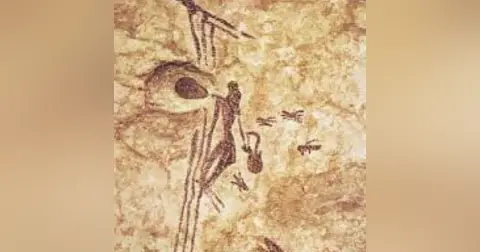
19:22 We depend on all of them to eat. So let's talk about a little history just so you all understand how dependent we really are on bees. The practice of keeping bees has been around for centuries. The first evidence of honey hunting comes from a cave painting in Spain that dates back to fifteen thousand years ago. Many wild hives are found on steep cliffs, so the ancient honey hunters would have to work as teams to climb the cliffs, using ropes for descent, and ultimately finding honey. These people were not necessarily bee keepers, they were honey hunters. The painting depicts a woman hanging on a rope ladder on the side of a cliff, reaching into a hive to gather honey.
20:18 Early honey hunters would sometimes knock the hives out of trees, essentially destroying them. Then they would run or be lined out of there until the bees calmed down. After that, they would come back and harvest the honey from the hives. They also knew that fire and smoke would deter bees, so they would carry lighted torches to keep the bees away from them while they were harvesting the nests. This was not a sustainable way to harvest honey. The bees would often be killed before the honey was harvested. Many times this was done by holding a piece of burning sulfur to the opening in the hive, suffocating the bees inside. Once the bees were dead, the harvesters would break open the hive and collect the honey. Ten thousand years later, the Egyptians would write about organized beekeeping. It's thought that beekeepers would transport the hives in large pots up and down the Nile to follow the blooming flowers and warm weather.
21:22 The Egyptians kept bees in natural settings, like hollow trees or logs, so that they could imitate the natural settings that the bees would nest in. Honey was a luxury in ancient Egypt, and would often be included with other treasures at burial sites for royals. Soon, the practice of beekeeping spread from Egypt to Greece and Rome. The Roman poet Virgil wrote guides to beekeeping. The Spanish took beehives with them when they discovered South America during the seventeenth century. George Weller, an English clergyman and travel writer, described his experiences in Greece, where the hives had removable frames so the honey was easier to harvest.
22:10 Thomas Wildman wrote a treatise on the Management of bees in seventeen seventy. In this book, Wildman gave guidance on hive building that prevented the killing of bees. It included a skeep with an open top and a woven removable lid. He also developed hanging frames, which provided structure for the bees to deposit honey rather than building a free form structure. This design also prevented harm to the bees by allowing for stacked steps, and it also provided a new space for bees to migrate after filling the first step. Ultimately, this allowed beekeepers to harvest the honey from the skeep that was filled without disturbing the bees. In eighteen fifty one, Lorenzo Lorraine Langstroth, known as the father of American beekeeping, improved upon Wildman's design. He found that by allowing only one centimeter of bee space between the scips, bees would refrain from building bridges of comb and propolis between the structures. This allowed beekeepers to remove the frames without destroying any structures that the bees had made. This helped the bees and the keepers.
23:33 The bees were happier that their hives were not being destroyed, and the keepers could more easily monitor their bees for problems. Langstroth also replaced the woven skips with wooden boxes in eighteen sixty three. Charles Dedant found that using larger boxes increased honey production. He noticed that after mating, the bees didn't want to move up the stacks of skeeps to lay their eggs. They wanted to lay eggs in a single box. Ddant found that by making the boxes larger, the queens could lay more eggs. This meant there would be more worker bees available. His design gave the queen plenty of room to lay the maximum number of eggs since the box was deeper. In seventeen fifty, the role of bees as crop pollinators was first recorded during the nineteen hundreds. This became a practice in the US in the nineteen thirties. Denmark began renting bees as pollinators to farmers for their crops. Today, fifty percent of bees are transported to California to pollinate crops, particularly almond trees. Ancient Egyptians learned to use bees wax to embalm their dead and seal the coffins. They used beeswax in their writing instruments and in skin creams and healing ointments. The Chinese, Egyptians,
25:08 and Greeks made candles out of beeswax, and these candles were preferred at religious sites since they didn't have any other elements in them. Many bee hives were found in ancient monasteries and abbeys. Now, beeswax is used in soaps, creams, and other health products, not to mention food supplements and candles. Today there are bumper stickers, t shirts, and other merch out there proclaiming that we should save the honeybees. But as I said earlier, the honey bees are doing fine. Colonists brought the first European honeybees to North America sometime around sixteen twenty two. These bees, which were referred to as the white man's flies by the Native Americans, spread westward with the colonists as they moved across the country. As large scale farming took hold across the country. It took habitat away from the native bees and other pollinators. The use of pesticides led to a severe decline in the populations of native bees, resulting in declined pollination. The solution was to truck the honeybees that the colonists had brought so many years before and have them pollinate the crops. This is how honeybees became known as the best pollinators. But while the best pollinators in North America are
26:40 indeed bees, they're native bees, not honeybees. In fact, honeybees are more of a problem when it comes to saving bees or pollinating. Here's why native plants need native bees. As I mentioned earlier, native bees co evolved with native plants. The native bees have adapted behaviors that make them better pollinators. Let's talk buzz pollination for a second. This is when a bee takes hold of the flower and shakes the pollen loose. Large bodied bumble bees do this, and they're really good at it. Honey Bees lack this sort of behavior. In fact, honey bees are really subpar pollinators. Honey Bees groom their pollen and make it all nice and neat and form little cakes out of it. This makes it less likely to contact the part of the plant that needs to be pollinated. They're also known to be nectar robbers. They access the nectar through the base of the flower by biting a hole in it and never come in contact with the pollen at all. Native bees dive right into that flower to get that nectar. They carry pollen as dry grains all over their bodies. Then they move on to the next plant where they can dive in and leave the pollen where it needs to be. One single hive of
28:14 honeybees can mean that fifteen thousand to fifty thousand more bees are competing for food in an area that may already be lacking in flowering plants. This means that the native bees have to work harder to find food. One study on honeybees calculated that over a period of three months, one single hive collects as much pollen as could support the development of one hundred thousand native solitary bees. Honey Bees spread diseases to the native bees, then those bees bring the diseases back to their hives. We've talked about this and we'll talk about it more next.
28:59 Thea and urban honeybee hive densities are far too high in most areas. A recent study from Montreal showed that the number of species of native bees declined as the number of honeybees increased in that area. The London Beekeepers Association found that some parts of London had as many as four times as many hives as the cities, gardens and parks could support. Bug Life is a conservation organization dedicated to saving many species of insects and they recommend that five acres of habitat should be created for each hive. That's a lot of land for one hive.
29:56 And this is why when it comes to the extinction of bees, it's not the honey bee that should be concerning. It's the native bees that we risk losing. And when it comes to plant survival, the native bee is a much better pollinator. It's ninety seconds to midnight and one third of our food supply is in danger of becoming nonexistent if we don't start taking care of our most prominent pollinators. Thank you so much for listening to Cause of Death one hundred seconds to midnight. Check the show notes for ways you can help the native bees in your areas survive and Thrive. If you love the show and would like to contribute, there's a link to my Patreon page where you can get several cool incentives like ad free listening, and early release. Yes, I'm also working on bonus content too. My day job has been a little crazy lately, so it's been taking up a lot of my time.
31:00 Hopefully it'll calm down soon. There are also links in the show notes to my sponsors. This month's sponsor is Easy Melts. I really love their vitamin choices, so if you're thinking of getting yourself on a vitamin regimen but can't stand the thought of swallowing a bunch of pills, check them out. Not only do I look forward to taking my vitamins every morning, but I feel so much better now that I'm on a healthy regimen. This is the second to the last episode in this season. The season finale is going to address the nuclear arms race and what it means today. I thought that would be a fitting end to a whole season one hundred seconds to midnight episodes. It'll also fall right after, if not on the day that the Board of Atomic Scientists announces the movement of the doomsday clock for this year. Should we be worried about nukes again. Thank you for listening to Cause of Death one hundred seconds to Midnight, where in two weeks you'll find out if the nuclear threat is really a threat. Until then, keep the bees in your life buzzing, and support those pollinators in in

