S7 E5: 100 Seconds to Midnight: Super Eruptions

There have been rumors about Yellowstone being overdue for a super volcanic eruption circulating for years, but is there actually a timer on super eruptions? Can we predict that? And what would the consequences of a super eruption be? It’s 90 Seconds...

 Apple Podcasts

 Spotify

 Spreaker

 Podchaser

 Castro

 RSS Feed

 Goodpods
There have been rumors about Yellowstone being overdue for a super volcanic eruption circulating for years, but is there actually a timer on super eruptions? Can we predict that? And what would the consequences of a super eruption be? It’s 90 Seconds to Midnight and the earth is rumbling with volcanic activity. Could any of these eruptions mean the end of life as we know it? You can reach me on the website at http://www.causeofdeath100secs.net or you can email me at mailto:Jackie@causeofdeath100secs.net. My Link Tree can be found at: https://linktr.ee/CauseofDeathpod Volcanic Eruptions Show Notes: https://climate.nasa.gov/faq/42/what-do-volcanoes-have-to-do-with-climate-change/#:~:text=Volcanic%20eruptions%20are%20often%20discussed,by%20more%20than%20100%20times https://byjus.com/ias-questions/what-are-the-3-main-causes-of-volcanic-eruptions/ https://www.cdc.gov/disasters/volcanoes/facts.html#:~:text=Volcanoes%20spew%20hot%2C%20dangerous%20gases,drinking%20water%20contamination%2C%20and%20wildfires. https://www.bgs.ac.uk/discovering-geology/climate-change/what-causes-the-earths-climate-to-change/#:~:text=Volcanoes%20affect%20the%20climate%20through,interacts%20with%20the%20volcanic%20material. https://www.usgs.gov/programs/VHP/volcanoes-can-affect-climate https://climate.nasa.gov/climate_resources/340/graphic-volcanoes-and-climate-change/ https://scied.ucar.edu/learning-zone/how-climate-works/how-volcanoes-influence-climate https://www.cam.ac.uk/research/news/effect-of-volcanic-eruptions-significantly-underestimated-in-climate-projections https://www.scientificamerican.com/article/get-ready-for-more-volcanic-eruptions-as-the-planet-warms/ https://www.nyu.edu/about/news-publications/news/2023/october/lethal-climate-change-millions-of-years-ago-was-due-to-volcanic-.html https://climate.nasa.gov/news/3204/tonga-eruption-blasted-unprecedented-amount-of-water-into-stratosphere/ https://www.science.org/content/article/massive-volcanoes-could-cool-earth-more-warming-world https://www.pdx.edu/news/new-research-shows-climate-change-will-increase-impacts-volcanic-eruptions https://theweek.com/world/495053/6-volcanoes-that-could-shut-down-the-world https://education.nationalgeographic.org/resource/when-sleeping-giant-awakes/ https://www.usgs.gov/volcanoes/yellowstone/questions-about-future-volcanic-activity-yellowstone https://www.forbes.com/sites/robinandrews/2019/03/25/volcanoes-are-never-overdue-for-an-eruption-heres-why/?sh=58f65cc433a5 https://www.cbsnews.com/news/campi-flegrei-volcano-closer-to-erution-last-erupted-1538-researchers/ https://www.nhm.ac.uk/discover/what-is-a-supervolcano.html https://www.usgs.gov/faqs/what-a-supervolcano-what-a-supereruption https://www.nps.gov/articles/000/-super-volcanoes.htm https://www.usgs.gov/volcanoes/yellowstone/questions-about-supervolcanoes https://www.usgs.gov/volcanoes/yellowstone/questions-about-supervolcanoes https://geologyscience.com/gallery/geologic-lists/10-most-powerful-super-volcanoes/?amp https://www.nationalgeographic.org/forces-nature/volcanoes.html#:~:text=Magma%20rises%20from%20the%20hot,were%20formed%20in%20this%20way. https://www.nationalgeographic.org/forces-nature/volcanoes.html#:~:text=Magma%20rises%20from%20the%20hot,were%20formed%20in%20this%20way. https://seagrant.soest.hawaii.edu/eruption/ https://www.nature.com/articles/s43247-023-00842-1 https://www.ucl.ac.uk/news/headlines/2023/dec/italys-campi-flegrei-volcano-ready-erupt https://www.cbsnews.com/news/hawaii-volcano-kilauea-erupts-third-time-2023/ https://pbsinternational.org/programs/kilauea-hawaii-on-fire/ https://apnews.com/article/kilauea-volcano-erupts-acbd84358872fafe63b3244af7d4d2a9 https://www.usgs.gov/volcanoes/kilauea/science/recent-eruption-september-10-16-2023#:~:text=USGS%20Volcanoes&text=Overview-,K%C4%ABlauea%20was%20erupting%20at%20the%20summit%20most%20recently%20from%20September,Hawai'i%20Volcanoes%20National%20Park. https://www.nature.com/articles/s41467-021-21166-8...
0:00 The Mythical True Crime Podcast is now proudly joining the Dark Past network of indie podcast creators. Join us as we delve into the mysterious and the macabre, exploring captivating tales of true crime legends and unsolved mysteries from the realms of mythology and reality. Uncover the dark true tales of modern legends with our spoken narratives and the blend of history, crime and the supernatural. Hey, Murder it is. I'm Danica and I'm here. We are the mother daughter hosts of Murder and Mimosas a true com podcast, this drops to focus on lesser known cases. We personally think these episodes go down a little bit better with Mimosa Lisa be sure so grab you are asking Maddy. Every Saturday at brunch time is another episode you can listen to us on an indipod capital latorm. Hey, I'm Gina and I'm Amber, and we are here to bring you the Weird true crime podcast where we cover true crime cases that will leave you asking yourself, did that really happen? We'll dive into well known and not so known cases throughout history. Some are unsolved and some are just unbelievable. We'll also talk about current news topics that range from kookie to questionable on episodes that we like to call weird headline. Be sure to subscribe and listen on your
1:32 favorite podcast service, dark Cast Network. Come on over to the dark Side. We're really nice people once you get past the true crime and scary science. Hello, and welcome to Cause of Death one hundred seconds to Midnight. I'm your host, Jackie Morante. This season is called Countdown and it's a collection of one hundred seconds to midnight episodes on various subjects that could affect the survival of mankind. I've offered up some pretty heavy topics this season. I hope that you've all learned some things about how humankind can destroy itself, from the opioid crisis to terrorism. I find that we are our own worst enemies.
2:30 This season is almost over. There will be two more episodes in this season. Then we'll go back to talking about disease. Season eight is called Creepy Crawley's you guessed it. It's all about parasitic diseases. There will still be a few hundred seconds to midnight episodes sprinkled in. There's a lot to talk about with those, But for the most part we'll talk about brain eating amiba, and maybe I'll throw in a pry on or two. It'll be fun to miss it. For today, I'm going to talk about another environmental aspect to the end of the world, volcanoes. There have been rumors about Yellowstone being overdue for a super volcanic eruption circulating for years. But is there actually a timer on supereruptions? Can we predict that? And what would the consequences of a supereruption be. It's ninety seconds to midnight and the Earth is rumbling with volcanic activity. Could any of these eruptions mean the end of life as we know it? Volcanoes were once thought to be under control of the gods. The word volcano comes from the Roman god of life, vulcan.
3:54 There are currently about fifteen hundred potentially active volcanoes worldwide, one hundred and sixty nine of those are in the US. And while volcanic eruptions can cause widespread death and devastation, they can also be beneficial. They create valuable mineral deposits like gold, aluminum, and nickel. The volcanic ash brings nutrient rich, fertile soil. Lava flows also create land. In twenty eighteen, the Kolue eruptions created a new island off the coast of Hawaii. Much of the energy that powers Iceland comes from geothermal sources, and geothermal energy is created by volcanoes.
4:42 Volcanoes are found in the lithosphere, the outermost layer surrounding the Earth. The lithosphere consists of the crust and part of the mantle of the Earth. This is broken up into large slabs called tectonic plates. The North American Plate covers most of North America, Greenland, and part of Siberia and encompasses about twenty nine million, three hundred and five thousand square miles. There are seven major plates on the Earth's surface, and volcanoes are usually located where the plates meet. These are called plate boundaries. The Ring of Fire is a twenty five thousand mile chain of volcanoes and seismically active sites that circles the Pacific Ocean.
5:33 About seventy five percent of active volcanoes exist in the Ring of Fire. The best way to explain the tectonic plates was described in an article by the Australian Museum called how are Volcanoes and earthquakes interrelated. I'm going to read a section of the article verbatim because I can't come up with a better way to explain it. My peanut butter sandwich logic is going to fail me on this one, so quote. The outer layer of the Earth is made up of solid rock called lithosphere. The lithosphere is broken up into seventeen major separate pieces that fit together like a bad jigsaw puzzle. A piece of the puzzle is called a tectonic plate. The plates are horribly placed with overlapping pieces gaps, and are forced to fit with each other even when they don't. Because the tectonic plates don't go well together, it creates earthquakes and volcanic activity when two plates collide, diverge, or slide past each other. There are three types of boundaries caused by the tectonic plates on Earth. First, transform boundaries when two plates slide or grind past each other. Transform boundaries are horizontal movements of plates and do not create or destroy plates. Second, divergent boundaries when two
7:04 plates create a gap in between each other. Divergent boundaries create ocean basins when plates move apart from one another. Third, convergent boundaries are when two plates crash towards each other and overlap to form a subduction zone. Tectonic plates are extremely large and can encompass both land and ocean. These tectonic plates interact with one another because of the Earth's internal heat. This heat causes movement and material beneath the Earth's crust and releases energy in the form of earthquakes and volcanic eruptions.
7:48 Interactions between the tectonic plates occur in three main places. First oceanic continental convergence, where the continent meets the other ocean. Second continental continental convergence where two continents meet. Last oceanic oceanic convergence where two oceans meet. So how are volcanoes and earthquakes interrelated? Both volcanoes and earthquakes are caused along the boundaries of tectonic plates due to their movements and interactions. End quote. They explained in a few paragraphs what would take me a whole episode to explain. The term supervolcano was first used during the nineteen forties. It's not a scientific term.
8:43 It just became a popular way to describe a volcano of higher magnitude during the two thousands and this made it an accepted term. There are about twenty supervolcanoes on Earth. Volcanoes are measured on a scale from Z zero to eight on the Volcanic Explosivity Index by magnitude. Where a volcano appears on the scale is related to the amount of material that it emits and the frequency in which they erupt. Hawaiian eruptions are named after the type of eruptions that are typically found in that state. The lava fountains produced by these eruptions average in temperatures around eleven hundred degrees celsius, and the lava flows reach speeds of roughly one hundred meters per second. They also rise to heights of a few hundred meters.
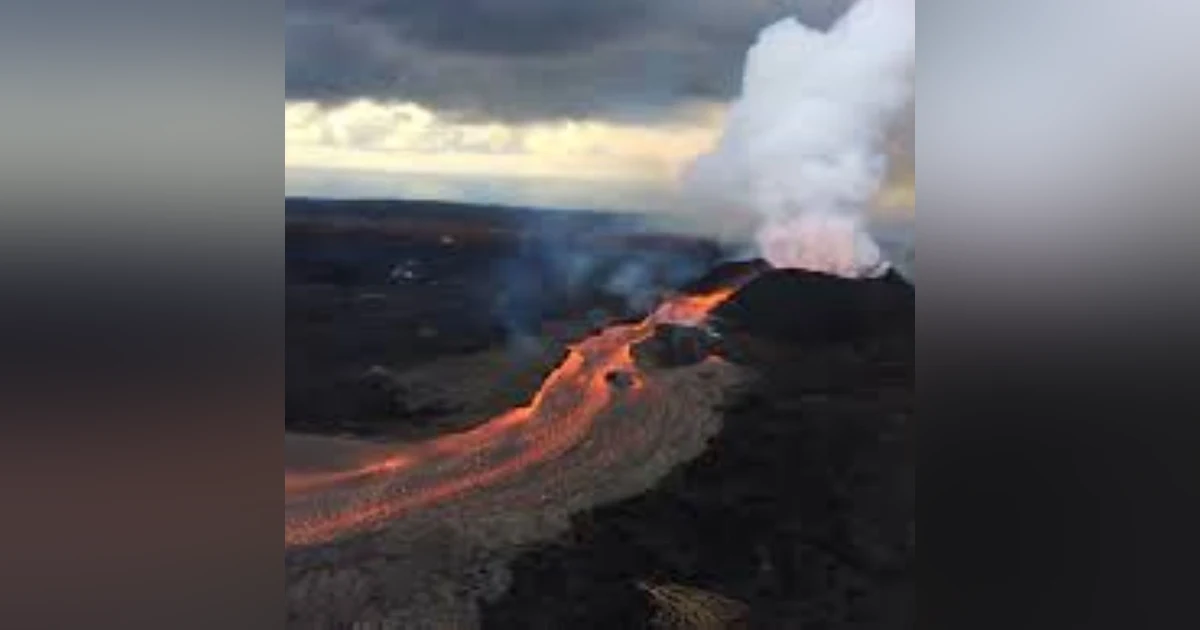
9:39 The lava flows cover the landscape, destroying everything in their path. The Kaylilie Volcano in Hawaii has been extremely active over the last several years. In twenty twenty three, the volcano erupted three times. In twenty eighteen, the poa U collapsed. That event triggered an eruption that lasted for four months. Lava flowed underground and tore through the surface of the earth. These eruptions spewed lava at up to twenty six thousand gallons per second. Dangerous levels of sulfur dioxide filled the air, and several earthquakes were recorded, some registering as high as six point nine on the Richter scale. When it was all over, seven hundred and sixteen homes were destroyed and approximately three thousand residents were displaced.
10:37 The eruption caused two hundred and thirty six point five million dollars in damages to public infrastructure, twenty seven point nine million in farm losses, and four hundred and fifteen million dollars in tourism revenue losses. This eruption was considered a level one eruption on the Volcanic Exit plusivity Index, but it goes to show that even a small volcano can cause a lot of damage. Plinian eruptions shoot eruptive columns of lava that travel up to fifty five kilometers into the atmosphere. Magma and volcanic gas are a part of these eruptions, and the volcano shoots out volcanic glass and boulders. Plinian eruptions were named after Pliny the Elder, who documented the eruption of Mount Vesuvius in seventy nine AD. This eruption destroyed Pompeii and Herculaneum, wiping out everything in its path and killing sixteen thousand people along the way. This eruption was considered a five magnitude on the Volcanic explosive Index.
11:56 Supervolcanoes can spume more than one thousand kars cubic kilometers of material into the atmosphere before an eruption. Magma collects in a chamber below the surface and pressure builds until the magma eventually ruptures the Earth's crust. A caldera is created when the magma leaves the chamber during the eruption, the overlying rock becomes less supported and the ground collapses. Supereruptions produce calderas that can be more than thirty miles wide. Supereruptions with a magnitude of eight on the Volcanic Explosivity Index are extremely rare, the most recent being New Zealand's top Of volcano twenty six thousand years ago. We're going to take a break to hear from our sponsors. Then we'll be right back to talk about Yellowstone. Let's take a minute to look at Yellowstone. Yellowstone National Parks sits in a caldera that measures forty by thirty five miles in size. It has super erupted three times in recent history, well recent by the standards of the planet anyway. The largest of these occurred about two point one million years ago. At that time, the volcano released about five hundred and eighty eight cubic miles of material. So what does that
13:28 mean exactly? If Yellowstone were to produce another supereruption, the states of Wyoming, Montana, and Idaho would take direct hits. The lava flows would travel about one hundred and eighty six miles per hour and travel distances of over sixty two miles. Volcanic ash, pummice, gases, and rocks would cover those three states. Nothing would be left alive. There would be nowhere to run and nowhere to hide. This eruption would impact the entire continent For five hundred miles Beyond the pyroclastic flows, the land would be covered in volcanic ash so thick that nothing would be able to grow. Now, I just told you that this eruption is an extremely rare occurrence, So why am I even talking about it? Well, there's a rumor that Yellowstone was overdue for an eruption, and this peaked my interest in volcanoes. I wanted to know if Yellowstone was due to erupt. As it turns out it is not. There is no schedule for supereruptions. They don't have a timer that ticks down until the next colossal explosion. What geologists do know is that it's probably not going to happen anytime soon. In fact, it won't happen in our lifetimes. The
15:03 last time that Yellowstone erupted was six hundred and thirty thousand years ago, but there are no signs that it's going to erupt again anytime soon. There are ways to tell when a volcano is going to erupt. Geologists look for heat anomalies, changes in the amounts of fumerolic gases, and earthquakes near the volcano. These events can be detected with seismographs. Ground deformation can be identified with satellites and other surveying equipment. The small Hawaiian eruptions seem to occur fairly regularly, as do Strombolian eruptions, but larger Plinium eruptions are rare, and even less frequent are super eruptions. But two other supervolcanoes have been showing signs of seismic activity. Lung Valley Caldera in California has been seismically stirring since the eighties, a warning sign that the volcano could erupt. Scientists studying the volcano have recently become less concerned about an eruption since the magma under the Earth has shown signs of cooling. Now that doesn't mean that the volcano won't erupt at all, but it does mean that if it does, it probably won't be a supereruption. Now, don't wipe your brows with relief and tell yourself that another crisis was averted, because even small volcanoes have an impact on the environment.
16:40 The greatest impact on the climate from volcanic release into the atmosphere comes from the conversion of sulfur dioxide to sulfuric acid. When the sulfuric acid condenses, it becomes aerosolized. These aerosols reflect the radiation from the Sun back into space. The effect is that the troposphere cools. This in turn cools the Earth temporarily. Now many of you are thinking that's great, we need the Earth to cool so the global warming will be negated, But it doesn't work. Like that. When Mount Pinatubo erupted on June fifteenth, nineteen ninety one, it was one of the largest eruptions of the twentieth century. It shot twenty million metric tons of sulfur dioxide into the stratosphere, reaching an altitude of more than twenty miles. This was the largest sulfur dioxide cloud ever to be observed by satellites. At the height of the impact, it cooled the Earth by roughly one point three degrees fahrenheit, but the cooling period only lasted for about three years. Then the temperature of the Earth began to rise again. Another thing to consider is that the sulphuric acid released by volcanoes can deplete the ozone layer.
18:11 This is the concentration of ozone that surrounds the Earth and absorbs ultraviolet B radiation that's given off by the Sun. Without the ozone layer, we would just burn to a crisp. And let's not forget that volcanoes emit co two into the atmosphere, causing the climate to warm. It's believed that extreme volcanic activity over millions of years caused a global warming event that changed the Earth so severely it caused mass extinction. Science changes. It has its own evolution, and progress can either be at a snail's pace, or one particular finding can make it a landslide of information can't be Flagray in Naples is currently on the list of volcanoes to watch for scientists. Campy Flagray has been going through several rupturing sequences, developing across four episodes of ground uplift. The series started in nineteen fifty and ran through nineteen fifty two. There was another occurrence between nineteen sixty nine and nineteen seventy two. A third occurrence took place from nineteen eighty two to nineteen eighty four, and this episode began in two thousand and four and has been ongoing ever since. Before a long sleeping volcano can erupt,
19:41 the Earth's crust has to rupture to allow the magma to escape. Generally, this occurs through seismic activity, more specifically earthquakes. Researchers studying the Caldera have found that the activity in and around the volcano has changed the structure of the volcano's crust. The last time that Campi Flegre erupted was in fifteen thirty eight, after a resting period of three thousand years. Intervals before that were as short as decades or maybe centuries, so it is possible that this leaping giant is about to awaken. The caldera has a very interesting structure. It's roughly seven to ten miles wide and is the largest active caldera in Europe. It extends west from the outskirts of Naples to the Tyrannian Sea, and about one third of the caldera is partially submerged beneath the Bay of Pizzuli. The rest is home to more than three hundred and sixty thousand people. At the center of the most recent seismic activity, the ground has risen more than thirteen feet in the coastal town of Pazzuos. This activity has twice triggered the evacuation of more than forty thousand residents. The last uplift has been occurring since two thousand and five. In a paper published on June ninth, twenty twenty three,
21:15 by Christopher R. J. Kilburn and his team called potential for rupture before eruption at Clampflagary Caldera, Southern Italy, these researchers surmise that the uplift behavior has been caused by magmatic gas accumulation about two miles below the surface. This is causing a slow rupture in the crust of the Earth. When the rupture is complete, it will give the magma and gas an avenue of escape and possibly trigger volcanic activity in the area. Historically, earthquake activity at volcanic sites over long periods of time has triggered eruptions at those sites because the seismic activity weakens the crust, causing fissures. Think about those poorly fitting puzzle pieces coming apart. It's believed that the crust has been becoming less and less elastic since nineteen fifty and the continued seismic activity is leading to a breakdown of the crust, allowing the magma that's trapped underneath to eventually escape. No one is saying that this is going to happen tomorrow or even next week, but it may happen soon, and there's really no way to tell whether this will be a supereruption or a Hawaiian eruption. There's no way to know when volcanoes are going to erupt. The science is getting better, but it's not there yet and
22:48 we're not even close to knowing the size or velocity of an eruption, and just as earthquakes can trigger volcanic eruptions, volcanic eruptions can trigger earthquakes. Earthquakes are caused by movement of the tectonic plates. These are what we commonly refer to as fault lines. Heat and energy released from the core of the Earth can cause the plates to move. If the tectonic plates move severely enough, they can trigger volcanic eruption. On the other side of the coin, volcanic eruptions can trigger earthquakes when the magma moves through the volcano. Iceland is no stranger to volcanic activity, and on December eighteenth, twenty twenty three, a volcano on the rech Jains Peninsula began erupting. This was a fissure eruption.
23:48 Three events of lava began pushing through a crack in the earth that was about two miles long. This was a very small, short eruption, so the details are pretty straightforward. Residents of Grindevec, which lies two miles from the eruption, were evacuated earlier in the year as the eruption was predicted to happen any time. Iceland's Civil Protection Agency said that the magma tunnel formed by the volcano could reach Grindevec, but they were unsure where the magma might break through because Grindevec had been evacuated. The eruption didn't pose a threat to life, but gas pollution was a concern for populated areas as far away as the capital Reyquavec. During the eruption, the Meteorological Office recorded more than three hundred earthquakes over the magma channels. This was the fourth eruption in the area since twenty twenty one, and the largest one to date. The following day, the eruption had slowed and it appeared that there was no structural damage. Iceland sits on a tectonic plate boundary that constantly splits apart. This activity pushes North America farther from Eurasia along the line of the mid Atlantic Ridge. This area is home to more than thirty two active volcanoes. Iceland experiences several volcanic eruptions every
25:23 year, but most of them happen in wilderness areas far away from human settlements. About forty five volcanoes have continuing eruptions, and about eighty erupt every year. Most of these are small eruptions that can be dangerous, but aren't threatening unless people are caught in the eruption. This has been a rather anti climatic episode. I don't have a doom and gloom for you. Yes, volcanoes are dangerous, but most of them are rather small, and most recently they've been fairly easy to predict. There is no way of knowing exactly when the next super eruption will be, but it's unlikely that'll happen in our lifetimes.
26:11 There has not been an uptick in volcanic activity due to global warming over the last several decades, so that's not super exciting. I don't have much else for you on this one. It was suggested by a longtime listener who was concerned about Yellowstone, and to tell you the truth, I was a little concerned about it too. I'd been hearing that it was overdue for a major eruption for years, but when that turned out to be a false lead, I started looking at other things that could affect volcanic activity, and I came up with nothing on all of them. So good news. We don't have to worry about volcanoes in twenty twenty four, but I'll still end with something scary. So here we go. It's ninety seconds to midnight, and if any of the super volcanoes does decide to erupt, it would cause a global catastrophe through a mass extinction event. Over the past five million years, all five of the largest mass extinctions have coincided with massive lava eruptions. Could it happen during our lifetime. It's pretty unlikely, But while geologists can predict an eruption with some accuracy, no one knows how big that eruption will be.
27:41 Thank you all for listening to Cause of Death one hundred seconds to midnight. Happy New Year everyone. I wanted to thank everyone who voted in the poll for adding a few humorous episodes here and there. If you've listened to the Halloween episode on Demons and Disease or the Christmas episode on Norad, you know what I'm talking about. I appreciate that everyone who voted said that they would like a little humor mixed in, but many of you said it was okay as long as I didn't overdo it. This will never be a comedy podcast in most episodes, I interject a bit of dry humor, but the podcast is intended as a learning experience, even for me. There are things that I talk about that I know, like certain diseases and their propensity to cause pandemics. But there are things that I know nothing about, like volcanoes and their chances of eruption. That's what keeps the podcast going. I learn right along with all of you, especially in the hundred Seconds to Midnight episodes.
28:49 That being said, this is a very hard podcast to do. There's a lot of research, writing, verifying, then more writing, all about subjects that can be terribly depressing. Most of these episodes don't have happy endings. I'm hoping that by injecting a little humor, maybe as a bonus episode or during some holiday, it will help me push through some of the more depressing subjects that are on my list to talk about. With that, I'll give you the list of episodes for the rest of this season. Countdown is Counting Down. I was only going to do one more episode in this season on bees in the environment, but I'm adding another one. The last episode will be on nuclear arms. After all, we can't talk about the atomic clock ticking down without talking about the one reason that the clock was created in the first place. The next season will be on parasitic diseases. Season eight is called Creepy Crawley's and It'll make you think twice about eating raw sushi. If you love the show, please take a moment to rate, subscribe, and review and share these episodes. Reviews really do help the show grow. Of course, getting your friends hooked on Cause of Death one hundred sex is the best way to ensure that I'll be around for a long time. If you'd like to get ad free episodes, please check out my Patreon page or subscribe
30:22 on Apple subscriptions. The link to my Patreon page is in the show notes. The show notes are also full of all the information that I read through to find out if we were going to experience an apocalyptic volcanic event. It's pretty interesting reading. Go check them out. If you'd like to get a hold of me, you can email me at Jackie at Cause of Death one hundred sex dot net or leave a message on my website at www. Cause of Death one hundredsex dot net. Next time, I'll talk about bees and what would happen if they ceased to exist until then don't go near any erupting volcanoes.

