S6 E8: We All Go Around in Circles: The Story of Whirling Diease

Hello and welcome to Cause of Death – 100 Seconds to Midnight. I’m your host, Jackie Moranty. I changed my mind mid-script. I decided that I needed to finish this season with a 100 Seconds to Midnight Episode on extinction. I thought that would be...

 Apple Podcasts

 Spotify

 Spreaker

 Podchaser

 Castro

 RSS Feed

 Goodpods
0:00 This is Jackie Moranti, host of Cause of Death on the Darkcast Network. On my show, we usually discuss war, death, destruction, and disease, and as you can imagine, my tastes are a bit on the dark side, So when I shop for unique novelties and gifts, I always keep an eye out for something a little out of the ordinary. That's why I shop at bat Wings and Butterflies. Bat Wings and Butterflies is an independent, creator owned, and operated boutique of handmade knit creations that run the gamut from the wild side to the dark side. Here you'll find knit toys and stuffy like baby bafflements and giant tarantulas, household knits like blankets, doilies, and water pipe cozy. Every item is an original work of art, handmade with love by a talented order. You're one of a kind creations Today. Find Batwings and Butterflies at Batwings and Butterflies dot big Cartel dot com or on Instagram at bat Wings and Butterflies. My favorite product is the giant tarantula, the perfect thing for cold nights in the New Mexico desert. After all, eight arms are much better than just two. It's the perfect snuggle while listening to
1:30 Cause of Death, available wherever you listen to podcasts and on the Darkcast Network. Do you hate getting stuck in rush our traffic? Do you find yourself dozing off trying to get home? Do you start daydreaming about the paranormal and forget you're sitting behind the wheel. If the answer is yes, then don't wait another minute. Tune into the Paranormal Pieces podcast. We are ready to entertain you Darkcast Network. Come on over to the dark Side. We're really nice people once you get past the true crime and scary science. Hello and welcome to Cause of Death. One hundred seconds to midnight. I'm your host, Jackie Morante. In the last fifty years, more than four thousand animals have become extinct, from invertebrates to mammals. We've lost four thousand species that are vital to their habitats. It's ninety seconds to midnight, and our wild life suffers under the heavy burden of human encroachment. From logging to oil drilling, over to development of wild lands to water diversion. Animals are disappearing,
3:05 never to be seen again. Hello and welcome to Cause of Death. One hundred seconds to midnight. I'm your host, Jackie Moranti. I changed my mind mid script. I decided that I needed to finish this season with a one hundred seconds to midnight episode on extinction. I thought that would be more appropriate. So this week I'm going to talk about the last disease in this season. We're going to look at whirling disease in fish. Let's begin with ideology and pathology. This will be a new pathogen for us. Mixobolus cerebrallus is a mixozoan parasite. Whirling disease is caused by the actinosporean spores of the parasite. This parasite has a complex two host life cycle. The parasite alternates
4:39 between the sledge worm tube effects tube effects and the salmonid host. The Triactino Mixon spores are water born and when they are released from the infected sledge worms, they attach to the salmonid host by a polar filament extrusion brought on by nucleoside and thigamotropy stimuli. This is rapidly followed by active penetration of the sporoplasms into the fish epidermis. Once the parasites are in the sporoplasms multiply and travel along the peripheral nerves and the central nervous system to reach the cartilage, where they form trophosites, which continue to multiply and produce more spores. M.
5:28 Celebrellus mixospores are released into the environment when infected fish stye or when they are consumed and excreted by predators. Mixospores that are released into the water are ingested by t tube effects, where they develop intercellularly in the intestine over a period of about three months. They go through four developmental stages inside of the worm, then they mature as actinospores. The salmonids then ingest the worms, and the parasite cycle begins all over again with a new host. That is pretty much the life cycle of M. Cerebrallas. Most parasites will begin as larvae in the environment, then they'll move to an intermediate host, then to their final host. Let's talk about salmon. It's for a minute. Salmon Idia is a family of elongated bony fish. The last three vertebrae of these fish are upturned. The fish that are specifically affected by M. Cerebrallas are salmon and trout. The main species of fish that are infected are rainbow trout.
6:42 I'm going to make a quick mention that rainbow trout are considered an endangered species in some areas of North America. They've not only been threatened by whirling disease, but pollution and invasive species taking over their spawning grounds has also caused a decline in populations. I promise that while I'm on my break, I'll be releasing the house that Jack built. That episode is all about how invasive species are threatening native species across the world. In the next episode on Extinction, I'll be talking about how pollution affects wildlife. They're both really important topics.
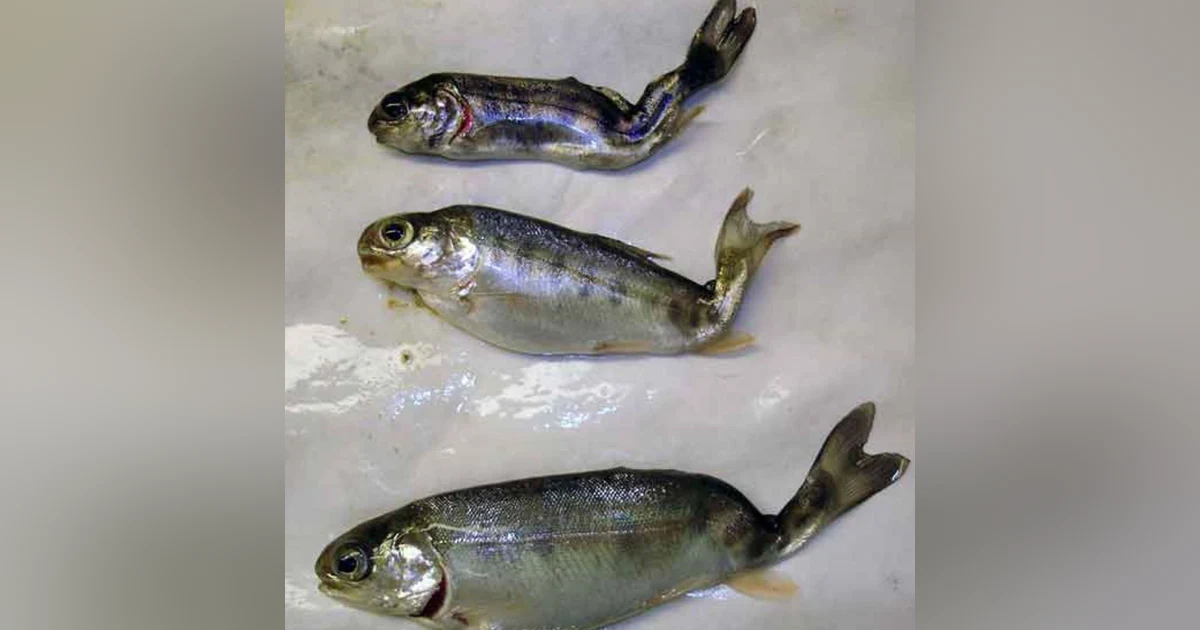
7:24 Whirling disease has become a serious threat to salmond species, and it's just about impossible to control. The pathogenicity of the parasite is due to the host immune response. The parasite evades the immune system of the salmonid, and this allows m cebralus to proliferate within the host during the first stages of infection. The lack of an appropriate regulatory response from the immune system results in an excessive inflammatory response. With special focus on T and B lymphosite and immunoglobular responses. The parasite attacks the cartilage of the head and spine. Symptoms increase as the parasite invades the nervous system. Fish infested with the parasite may exhibit a whirling behavior, head deformities including a sloped head where the cartilage has been eaten away, twisted spines, crooked tails, and a darkening of the skin from the vent to the tail. Due to nerve compression. The rate of breathing will be increased. Mortality is very high among fry. This disease makes these fish more vulnerable to predation, and as the disease progresses, they can no longer find food, causing many of them to die of malnutrition. There is no known cure for whirling disease, but research is ongoing. The modes of transmission for
8:58 whirling disease are contact within effected animals, the sledge worm, contaminated equipment, and contaminated water. Keeping this in mind, there are things that we can all do to help stop the spread of whirling disease. The best method is to control the tube effects worm. Many states that are considered hotspots are working on eliminating the worm that carries the parasite and this would be the most effective mode of control. The problem with the elimination of the tube effects worm is that it can involve chemicals that are also toxic to fish and other aquatic life. Copper sulfate, formulin, and malachite green have all been considered, but this is considered a last resort. The starvation method can also be used, but this involves draining the waterway and allowing it to dry out until the worms die. This is also impractical since it would have negative effects on the aquatic wildlife living in those streams and ponds. Of course, quarantining fish stock before transfer as a must. If any fish are exhibiting symptoms of whirling disease, they should not be used to stock ponds. Fishermen, boaters, and anyone else who enjoys a day at the lake can take some simple precautions to help stop the spread of whirling disease. Remember to rinse any mud or debris from your equipment. Dispose of any unused bait in the trash or on land rather
10:31 than in the water. Tube effects worms can't survive without water. Never transfer live fish from one body of water to another. Don't use trout, salmon parts, or mullusk as, cut bait, and never discard fish and trails or skeletal parts in a body of water. I'll be doing a season on parasites eventually. There's a lot to talk about with them. Even if their etiology is is pretty simple. It's important to remember that m cerebrallas does not affect people. I won't encourage anyone to eat any raw meat because there are other things that are human pathogens, but not this one. Feel free to catch and eat any trout or salmon. It's good for you. We're going to take a quick break to hear from our sponsors, then I'll be back to talk about the history of m. Cerebrallas. Did you know that planting cover crops in fall will help replenish the soil for spring. Cover crops add organic biomass, keep the soil bacteria healthy, add nitrogen and other nutrients so that when spring comes around, you're ready to plant vegetables and fruits and the soil is ready to support them. Cover crops also attract pollinators to your gardens.
11:54 I've talked a lot about how important bats are, but you also want to attract bees. But are flies and other beneficial insects. Amphibians are struggling with fungal disease, and planting cover crops may also give them a safe place to hibernate for the winter. Cover crops improve soil structure and prevent erosion. Whether you're planting backyard gardens, containers, or raised beds, cover crops will keep your soil healthy. It costs less than twenty five dollars for most backyard gardens, and the improvement in next year's harvests will save even more money. Trueleaf Market has been the choice for over one million growers for heirloom and organic garden seeds since nineteen seventy four. It's the only place that I buy seeds for my plants. They have a great selection of seeds including they're all purpose garden cover crop mix, and I have a deal for you. Trueleaf Market is offering listeners ten dollars off any order of fifty dollars or more. Free shipping is included on orders of seventy five dollars or more. Go to www dot truleafmarket dot com and use promo code co f D ten to start rehabilitating your garden today. That's www. Dot Truleafmarket dot Com and use promo code
13:28 COFD ten for ten dollars off any order of fifty dollars or more. Limit one use per customer. Offer expires October thirty first, twenty twenty three. The first report of whirling disease came out of Germany in the late eighteen seventies. It was seen in rainbow trout and brook trout. Some stories say that the eggs had been imported from the United States into Germany so that they could supplement the culture of the native trout, but that is not confirmed as there were never any reports of M. Cerebrallus in the United States before Germany started reporting it. The disease killed most of the fish in the fish farms where it was found. Bruno Hoefer was the first to find the parasite. He was very active in the field of fish parasitology and pathology. He was known for his work in environmental protection. He wrote over two hundred papers addressing the importance of clean water. He also wrote several papers on Mixabolis cerebrallus. The original report described a mixosporidian of trout that infected the brain. Hence the parasite was called Mixabolis cerebrallus. When Marianne Plan came along in nineteen o four, she noticed that this was a parasite that tacked the skeletal tissue, and she
15:01 proposed changing the name to Mixabolis chandraphagis. The change was not accepted by the scientific community at the time because it didn't follow the rules of zoological nomenclature, so the name Lentosporas cerebralis was introduced. This genus described something similar to Mixabolis, but that particular genus didn't have a vacule within the spore. Plan was the first to give a detailed description of the disease in nineteen oh five. She described the initial stages of infection and the erosion of the cartilage. She also found the large lesions that contained parasites and the debris from cartilage degradation.
15:46 She speculated that since the cartilanogis region around the auditory capsule was invaded, either the toxins were released by the parasite or the destruction of the capsule was causing the fish to have war equilibrium. This is what was causing them to whorl. The weakening of the vertebral column posterior to the twenty sixth vertebra was thought to exert pressure on the caudal nerves. This disrupted the melanin and caused the black tail. Cranial deformities such as sunken eyes and a predominantly open or twisted lower jaw were chalked up to the loss of cartilage during bone formation. She noticed that fish that made it to their second year developed epithelioid granulomas, resulting in secondary damage to the fish. She surmised that when the cartilage ossified, the spores became encapsulated, and this would stop the occurrence of new infections.
16:49 She believed that the fish acquired the disease by ingesting the spores. She also did experiments on the spores themselves, exposed them to drying and freezing, and found that the spores had an ability to survive for long periods of time in harsh environments before finding a viable host. This led her to believe that the eradication of spores would be almost impossible. At this time, the Germans didn't know where the disease came from, but it was devastating fisheries. In nineteen twenty two, speculation arose that the disease had come from feeding rainbow trout raw cod, but this was unlikely. Whirling disease exhibits symptoms that mimic other diseases of fish. This meant that researchers had to accurately identify the disease before they could really figure out what caused it. Diagnostic methods were limited to observing the symptoms and fish that were aged zero plus in fish that had passed their first winter and were longer than ten centimeters. The spores could be found in histological samples, and this was done by dissecting the vestibular organ. Wilhelm's shaper Claus noticed that the disease was spreading across Europe by fish breeders. He accused the breeders of hiding fish that were exhibiting symptoms from buyers and essentially lying about the
18:23 health of the fish that they were selling for transport to other parts of the continent. By nineteen thirty one, when Shaperclaus was observing the spread of infected fish, whirling disease was well established and it was decimating fish populations. Trout production was failing and severe losses were occurring. Shaperclass noticed four classes of disease symptoms, the whirling movements caused by impairment of the vestibular apparatus, premature death without significant signs other than weight loss, chronic disease with darkening of the tail caused by damage to the sympathetic nerves, and chronic infection without external signs.
19:07 The fourth condition was particularly worrisome since fish that weren't exhibiting any symptoms could be transported and the breeder would be none the wiser. These were the fish that were the primary cause of the spread. Shaper Class was the guy that shot down the theory that the disease was spread by feeding saltwater fish to trout. He had seen that hatcheries all over Europe were affected, whether they fed cod to their fish or not. He thought that contact between infected fish was the culprit, and he was right, but he mistakenly thought that the brown trout were the carriers, not the rainbows. He thought that the brown trout were probably carriers since they didn't exhibit symptoms like the rainbow trout did. Reports began to come in about infected eggs being transported between facilities. Shaperclass thought the explanation for this was that the eggs were coming into contact with shipping materials that were transporting the disease. He thought that the pathogen was adhering to the egg's surface.
20:18 His observations gave rise to a few guidelines for breeders. The fish were to be incubated in well water, and all equipment was to be disinfected before transport so the eggs couldn't come into contact with any infected fomites. Snails lived in many of the infected ponds where the disease was prevalent, so shaperclass began to study them to see if they were the cause of the disease. He examined several snail species in ponds where whirling disease was prevalent and found that they were not the carriers. Had he kept going and studied more invertebrates, he may have landed on two effects to effects as the carrier, but he quit too soon. He further suggested that breeders set low flow rates to avoid stirring up sediment and limiting the availability of spores. He also suggested that breeding and rearing ponds should be separated. When this didn't work, he suggested disinfecting unused ponds with caustic lime and calcium cyanimide, removing mud from the bottom of the pond and throwing away the sickest of the fish. Scientists are prideful people, and there's nothing more exciting than naming a disease. This was still a subject of a debate in nineteen thirty three, when the name was changed again to Mixosoma cerebrallus. The Mixosoma spores were differentiated from the Mixobola spores by their lack
21:52 of an iadiphorest vacuule. Between nineteen fifty two and nineteen seventy the disease had come full circle. After becoming endemic in several regions of the USSR and making its way from Czechoslovakia to Scotland, it landed in the US. By nineteen sixty eight, seven states were reporting whirling disease. In nineteen seventy one, the disease was reported in New Zealand. These reports included symptoms of violent whirling motion accompanied by heavy mortality. The fishery where it was detected had been experiencing the disease since nineteen fifty five, off and on, but they didn't make a report on it for twenty years. Upon examination, spores resembling M.
22:45 Cerebrallus were isolated from the vertebrae of rainbow trout at the fishery. Further examination on preserved samples showed that the disease had been present for at least five years before the report was made. At that time, any fish that were imported into New Zealand were supposed to be heat treated to keep the disease from entering the country, but it was too late. It had been there since at least nineteen fifty five, and possibly since nineteen fifty two. Let me stop the story here for just a minute. I want you all to see this trend. This disease could have been stopped in the nineteen thirties. It could have been contained and wiped out if only the fish had been destroyed and the ponds had been cleaned. The ponds didn't have to be cleaned with any harsh chemicals that would be detrimental to other wildlife either. All that needed to be done was let them dry out completely, so the worm couldn't live and proliferate.
23:49 Ignorance is bliss unless you're a rainbow trout. In the US, hatcheries were stocking ponds with trout that had been infected for the spread of whirling disease. In California, between nineteen sixty five and nineteen eighty five, four commercial growers, one state fish chattery, and one federal fish hatchery had fish that had been diagnosed with whirling disease. Prior to nineteen eighty four, any fish that had been diagnosed with the disease were destroyed. Control measures had been taking place in Europe beginning in nineteen seventy. The International Office of Epizootics included whirling disease in the International Zoo Sanitary Code, but further legislation by the government was quashed for fear that the US government would close US markets to any country that couldn't guarantee that they were transporting fish that were disease free. And still no one was sure what was causing the disease. They knew it was a parasite, but they didn't know what the reservoir was. It was assumed that it was being transmitted vertically, but that didn't seem to be the cause, because when eggs were removed from infected waters, the fry wouldn't exhibit symptoms of the disease. It was also rightly assumed that the fish were giving it to one another on contact, but that wasn't much help. With no original reservoir,
25:22 they needed to find the intermediate host. In nineteen eighty four, Lam and Noble changed the name of the pathogen. Again. It all had to do with that Iadophorus vacuole. The researchers noticed that the vacuol wasn't always present in the specimens. This led them to the belief that the original name Mixabolus cerebrallus was correct. That same year, Wolf and Mark discovered a species of triactinal Mixon that was alternating life stages with M. Cerebrallus, one stage undergoing development in an aquatic worm and the other in the fish. They had finally found the intermediate host tube effects. Tube effects the worm was required to complete the life cycle of the parasite. Without the intermediate the parasite couldn't proliferate in the fish. Concrete raceways had replaced earthen ponds in many hatchrees with some success.
26:27 However, in those countries still using earthen ponds, the parasite could live in the worm for several years. When fish were reintroduced to the ponds, the life cycle started all over again, as did whirling disease. An earthen pond had been free of fish for almost thirty years. When fish were reintroduced, the fish got infected and most of them died. Many of these earthen ponds were being fed from streams where wild populations lived. As the water washed through the ponds, it brought tube effects tube effects with it, and the wild populations were soon infected. Gaining an understanding of the parasite hasn't done much to help prevent the disease from spreading. Today, twenty five states report cases of whirling disease in wild trout. The mortality rate in the wild is unknown.
27:23 When it comes to diseases that affect wild populations, it's always a guess. In fisheries, mortality rates vary anywhere from twenty five to ninety percent. This disease is not going to wear itself out, but many government agencies are acting like it will. In nineteen ninety three, Mixabolus cerebrallus was taken off the list of injurious pathogens. The US government isn't regulating the transport of the diseased fish either. I guess maybe the government has bigger fish to fry, but if they allow this parasite to continue killing off our native fish, we may not have any fish to fry. Thank you so much for listening to Cause of Death one hundred seconds to midnight. If you'd like to support the show, you can do so on Apple Subscriptions or Patreon for as low as a dollar a month. Don't forget to stop by True Leaf Market and support my wonderful sponsor. Get your friends interested in learning about disease and global crises, have them drop an ear on the show. I can be found on all podcast apps, and if you're so inclined, I'd ask that you run by Spotify or Apple Podcasts and give a five star review. They not only help the show grow, but they also help me keep going when I get really frustrated. Check out the show notes for the four one one on whirling Disease.
28:59 You can also find links to my sponsors and ways to support Cause of Death one hundred seconds to Midnight now. As a side note, I've had a few people contact me with personal medical issues. I want to remind everyone that I'm not a medical doctor. I'm a research scientist. I can give you all kinds of information about a disease that you may or may not have, but I can't diagnose, prescribe, or even advise. The only advice that I'll give you is to go see your doctor. On the brighter side, I've hit fifteen thousand downloads. That's a big deal. I never thought this podcast would attract as many listeners as it does, and I want to thank everyone for coming back and passing the word. Don't forget that. My daughter and I are starting a new show in October. It's called Diving into Unsolved History. We're going to be talking about historical mysteries and some of the theories that surround them. We may even talk about a few that have been solved. It's going to be a fun look at mysterious deaths, disappearances, and buried treasure. If you find any of that treasure, though, you have to share it with us. Thanks again for listening, and I'll see you in two weeks For the final episode for this season, Who's Who Outside
30:32 of the Zoo will be ending this season with a look at how man drives animals to extinction. Until then, don't watch the Whirling Fish they'll make you dizzy.

