S6 E6: Excuse Me, But You Have Something On Your Nose: The Story of White Nose Syndrome

Hello and welcome to Cause of Death – 100 Seconds to Midnight. I’m your host, Jackie Moranty. In the last episode, I briefly mentioned White Nose Syndrome. It’s a terrible disease that has killed off about 90% of some species of bats in North America....

 Apple Podcasts

 Spotify

 Spreaker

 Podchaser

 Castro

 RSS Feed

 Goodpods
0:00 During March of twenty twenty, I did what so many of us did during that time. I took up a new hobby. I decided that I was going to propagate plants. I bought all kinds of seeds. I had the idea that I could grow any kind of herb that I wanted, and I would be able to use these herbs to do everything from infusing oils to throwing them on some amazingly tasty meals. Well, I failed miserably. I had no idea what I was doing, and most of my plants died. I didn't know how to start them correctly, I didn't know how to cut them correctly. So there I was with a bunch of empty pots, starting over and over again, and failing every time. Then I found true Leaf Market.
0:50 True Leaf offers seed packets, grow kits, and even planters for roughly the same price that I was paying at the local stores. Seed packets started about two forty nine and organic seeds start at two ninety nine. For the last fifty years, true Leaf Market has offered a huge selection of non GMO seeds, including vegetables, grains, flowers, cover crops, specialty seeds, sprouting and microgreen seeds, and of course my favorite herbs. They offer heirlooms, organics, and hybrids of all kinds too. With super fast shipping and free shipping on orders over seventy five dollars, you can't go wrong. No matter whether you're an in home gardener with grow lights and raised garden beds in the living room or a bulk wholesaler, True Leaf Market is the place to look for all your seed needs. Remember all those past failures that I had, well, True Leaf Market has my back with growing supplies and starter kits.
1:53 Plus they have a ton of how two PDFs that I can download to my computer with all the info I need to be successful with my herb garden. I'm already more successful than I have ever been. I want you to succeed in your gardening ventures too, so I'm teaming up with true Leaf through June thirtieth to offer you ten dollars off any order of fifty dollars or more when you use promo code cod ten. Go to www dot true leafmarket dot com and use the promo code cod ten for ten dollars off any order of fifty dollars or more, and don't forget You'll also get free shipping on orders of over seventy five dollars. This offer is only available through June thirtieth, so get your seats today and have a great gardening season. Dorcast Network The light shines Brightest on our indie podcasts. Hey their Rainbow Warriors. I'm CJ hosted Beyond the Rainbow, True Crimes of the lgbt My episodes focus on crimes committed by and against the LGBTQ community. I've covered cases you probably have heard of, such as Matthew Shepard, Brandon Tina, and the Orlando puls nightclub massacre, as well as some lesser known cases like the murder of Ray Hainish,
3:23 the Australian gay beat murders, and the suspicious disappearance of Lisa Lynde Stone. I cover cases brought to me by listeners like Penny Brummer, who I believe was wrongfully convicted, taboo cases such as lesbian corrective rape and murder in South Africa and Pray the Gay Away Camps. I discussed gay serial killers, women who pretend to be men to hook up with other women, and trans murders. I'm opinionated and uncensored. I know I'm not everyone's cup of tea, but surely I'm someone shot at tequila. No matter what your gender orientation in life might be, Please join me as I tackle rainbow crimes in search of unicorn justice. Remember it's not a crime to be gay unless you're a murderer. If you like weird, spooky and strange history, then I have the podcast for you. My name is Brenda and I'm the host of Horrifying History. Are you into the Dark Side of History? Horrifying History tells you about the side of history that people don't normally talk about. We tell the tales of haunted places, infamous true crimes, the paranormal and unsolved mysteries, and then we look to history to see where the truth actually lies. Want
4:55 to get spooky with us? Get your Horrifying History fixed by subscribing today on sp if I, Spreaker, or if you find your favorite podcasts. Hello, and welcome to Cause of Death one hundred seconds to midnight. I'm your host, Jackie Morante. I'm hoping that all of you have enjoyed the Who's Who Outside of the Zoo season as much as I have. I've really gotten some great feedback, especially on the last episode about bats, disease and the environment, and I really appreciate that In the last episode I briefly mentioned white nose syndrome. It's a terrible disease that is killed off about ninety percent of some species of bats in North America. If you haven't listened to the last episode, I suggest that you go back and give that one to listen before you start this one. It gives a pretty good overview of the importance of bats to several ecosystems and to people. If you have listened to that episode, then you already know how invaluable this order is. Without them, we wouldn't have several species of plants, nor would we have many vaccines. We may not even have echolocation technology. Bats have given us so much, and
6:30 now we need to think about what we can do for them. Let's begin with the eediology and pathology of white nose syndrome. White nose syndrome is caused by a pathogenic fungus called Pseudomya genascus destructtions that was formerly known as Geomiases destructis. After close study, the fungus was reclass suffied because it more closely resembles other fungi from the pseudo Eurotiatia family. P. Destructions is a psychrophilic or cold loving fungus that forms asymmetrically curved canidia. It was likely introduced to North America by human trade or travel from Eurasia to North America. This fungus grows well at temperatures between four degrees celsius and twenty degrees celsius, but will not grow at temperatures above twenty degrees celsius. This is the perfect temperature range for caves and other areas where bats hibernate during the winter months. The fungus produces brown and gray colonies, secretes a brownish pigment, and reproduces asexually via characteristically curved canidia. These canidia are produced at the tips or sides, singly or
8:01 in short chains. This is an opportunistic pathogen that grows on bats as they hibernate, but it has also been found to grow in cave environments as a separate troph It can grow and sporelate on dead fish, mushroom, fruit bodies, and dead insects. While the entire genome of P. Destructions has been mapped out, there is not a lot that's known about it. There is an arm of the fungus that carries an RNA viral component, but that, as far as I could tell from my research, has not been fully identified.
8:43 So not only do we have a pathogenic fungus, but we also have a viral component. The natural hibernation cycle of bats has contributed greatly to the success of P destructions as a pathogen. Hibernation is typically characterized by long cycles of sleep, torpor, and intermittent arousal. This allows endotherms to survive harsh weather conditions and food and water shortages. During hibernation, however, immune function and metabolism are downregulated dramatically, sometimes to the point of total inhibition. Body temperature also drops significantly, bringing the bodies of the bats into the perfect range for cold loving P destructions to proliferate. To add to the problem, several bat species have found survival depends on more humid conditions in their hibernacula, and most will cluster together to conserve energy and decrease moisture loss. This combines with the downregulation and immune function to create a perfect recipe for disaster for the bats.
9:58 As their immune system falters, the fungus can invade any immune response that the animal may give off as a defense. This makes the bat the perfect host, providing nutrients, ideal conditions for growth and proliferation, and little to no resistance to infection. Most of the time we see pictures of white nose syndrome on the animal's faces, but this isn't the only area on the body where the fungus manifests itself. To get a more direct view of the seriousness of the disease, we have to look at the most vulnerable and arguably one of the most important parts of the animal, their wings. Bat's wings are very delicate. The wing membranes consist of two layers of epithelium separated by a thin layer of blood and lymphatic vessels, nerves, muscles, and connective tissue.
10:58 When the wings of healthy bats are contracted and extended, there is a suppleness to the wing. The tissue is elastic and there is a great deal of muscle tone. The arms and digits move easily and smoothly. When the wing membrane is compromised, the folded surfaces adhere to one another, the tissue tears easily. There is a loss of muscle tone, tensile strength, and elasticity, and this has been compared to crumpled tissue paper. Microscopic examination shows fungal colonization of skin with epidermal erosions that are filled with fungal hyphae. There will be fungal destruction of the apicrine glands, hair follicles, and sebaceous glands that compromise the adnexa and deeper dermal invasion is also common. The fungus replaces connective tissue, blood and lymphatic vessels, glandular structures, elastin, and muscle fibers that previously existed. Essentially, as the fungus takes over, it eats the animal from the outside in, digesting each part and replacing it with more fungus. The loss of oxygen and blood flow in the areas distant from fungal growth causes infarction of those areas of the dermis, contraction of tissue, and
12:28 hyper eosinophilia. Because the immune response is inhibited during hibernation, there is no inflammation, so the body doesn't force blood flow to the infected areas before the fungus can take over. P destructions also causes dehydration since the wing membranes are exposed, causing them to experience as much as a ninety nine percent water loss. Bats don't expend a lot of energy during hibernation. Much of their energy is burned by maintaining a core body temperature close to the ambient temperature of the environment, but they do experience brief periods of arousal during hibernation. It is believed that bats experience these periods to maintain homeostasis. This would include restoring neural and muscular function and excreting waste. A longstanding hypothesis for arousal is that bats need to drink to restore their water balance. At one point, it was believed that bats infected with white nose syndrome would wake and leave the hypernacula in the middle of winter to find insects to replenish the fat stores that the disease was eating away at, but now it's thought that possibly they're leaving in search of water. Infected bats are often seen flying over and drinking from water surfaces or eating snow in a last ditch effort to restore their water balance. Abnormal
14:07 arousals can cause bats to raise their body temperature about twenty five degrees celsius over the course of minutes. It takes quite a bit of energy to heat a small body with a large skin surface area while hanging upside down inside of a cold, dark, damp cave, especially when their skin has been largely eaten away by a fungus. This expenditure of energy, combined with the lack of food during the winter months when bugs are scarce, contributes to starvation as well as water loss. Several antifungals have been tested against P destructions, and many have worked. The problem is getting these cures to the bats. P destructans can also be killed with UV light. It has been suggested that UV lights be hung at the entrance of known hibernation sites so that as the bats fly through the openings, they are exposed to the UV rays, which would in turn kill the fungus. It has also been suggested that antifungals be periodically sprayed in areas where bats congregate in order to dose them against the disease. Now, I have no idea if either one of those plants would work, but it's also possible that the bats have a better plan for themselves. The results of several studies show that bat guano can carry the disease to plant species where
15:39 the fungus will survive and proliferate. The fungus uses nitrogen sources including nitrate, nitrite, ammonium urea, and uric acid to proliferate, and plants and soil are rich in these nutrients. Interestingly enough, two of the studies that I read show that the fungus survives best on wood, then autoclaved guano, distantly followed by fresh guano, and finally soil. The intriguing parts of these results were first of all, that they were repeatable in two studies that I read. Then think about autoclaved guano. This just fascinates me. Autoclaving essentially cooks everything out of the thing that you're autoclaving. Between pressure, heat, and steam, nothing survives. So keeping that in mind, why would the fungus grow better on autoclaved guano than it did on fresh guano or dirt for that matter. In the last episode, I talked quite a bit about diseases that bats carry and why they don't get sick from them. One of the diseases that bats carry is pseudomonas species. We'll talk more about Pseudomonas in a future episode, but for now know that Pseudomonis is a motile bacterium. In several studies that I read, the Pseudomonius species moved toward the p. Destructans fungus
17:11 and inhibited the growth of the fungus. What this means is that it is possible that at least one of the bacteria that the bats carry naturally could fight off white nose syndrome. In the last episode, I talked about the amazing immune systems that bats have and how that natural immunity allows them to harbor several diseases that are detrimental, if not fatal to humans. I mentioned that their immune systems evolve so as to evade the diseases that they carry. We may be seeing this with white nose syndrome, only this time one of the diseases that they carry may actually be fighting off the disease that has killed so many members of the order. This is the perfect segue into morbidity and mortality of white nose syndrome. P Destructans is appropriately named. This disease has a mortality rate between ninety and one hundred percent. Several species of bats have been declared endangered or at risk of extinction due to white nose syndrome. As of October twenty twenty two, six point seven million bats have died of white nose syndrome.
18:37 P destructance affects hibernating bat species. More than forty seven bat species in North America depend on hibernation for winter survival. There are twelve North American species that have been confirmed with diagnostic symptoms of P destructions. The big brown bat, cave bat, Eastern small footed bat, fringed bat, gray bat, Indiana bat, little brown bat, northern long eared bat, Western long eared bat, tricolored bat, and the Yuma bat. The gray, Indiana, northern long eared, and tricolored species have been put on the endangered list.
19:26 The little brown, northern long eared, and tricolored bats have seen a ninety percent decline in their populations. They have been virtually wiped out in the last ten years due to white nose syndrome. The disease has also affected the big brown and Indiana bat populations. However, the Indiana bat has been on the endangered species list for quite a while. More species have been diagnosed as having P destructions, but they haven't developed white nose syndrome, the Eastern red bat, Mexican freetailed bat, Raffanesque's big eared bat, silver haired bat, Townsend's big eared bat, Virginia big eared bat, Ozark big eared bat, and the Western small footed bat. These populations have seen an uptick in white nose syndrome, but they don't seem to be getting sick from it. This disease has spread through thirty nine US states and eight Canadian provinces and shows no indication that it's slowing down. I put a link in the show notes to a website that has an interactive map trucking the spread of p destructions across North America.
20:48 I've also copied a current map so that you can have just a quick look if you want. Okay, we're going to take a break to hear from our sponsors. Then we'll come back and I'll talk a little about the history of white nose syndrome. Are you a truecrime advocate? Are you passionate about uncovering the truth and bringing justice to victims. Do you love the paranormal and spooky tales? Then you don't want to miss the True Crime and Paranormal Podcast Festival in Austin, Texas. It'll be going on from August twenty fifth to the twenty seventh in twenty twenty three. This festival features panel discussions, workshops, live podcasts, all focusing on ethics and advocacy in the true crime sphere. Get your tickets now at www dot Truecrime Podcast Festival dot com and join us in Austin for an unforgettable experience. Don't miss out on the chance to connect with other advocates and take your passion for true crime and paranormal to the next level. Use Code Consequences at check out for fifteen percent off the ticket price. That's Truecrime Podcast Festival dot Com with promo Code Consequences at checkout for fifteen percent off the ticket price. Special guests will include Julie Murray, Terra Newell, and Call your Landry to name a few. I'll be there
22:21 representing another podcast that I'm involved with, True Consequences. Come by and meet Eric Carter Landein and I We would love to meet you. The history of white nose syndrome can be a little confusing. Dates vary, places, very people vary. So what I'm going to do is give the most popular version of events then I'll talk about some murkier water as we go. Normally I try to stay to a chronological sequence of events, but I don't think that's going to work here. A very popular phote is floating around that dates back to two thousand and six. This photo shows several dead bats on the floor of House Cave in New York. This is the first evidence of white nose syndrome in the US. House Cave is still a very popular tourist attraction.
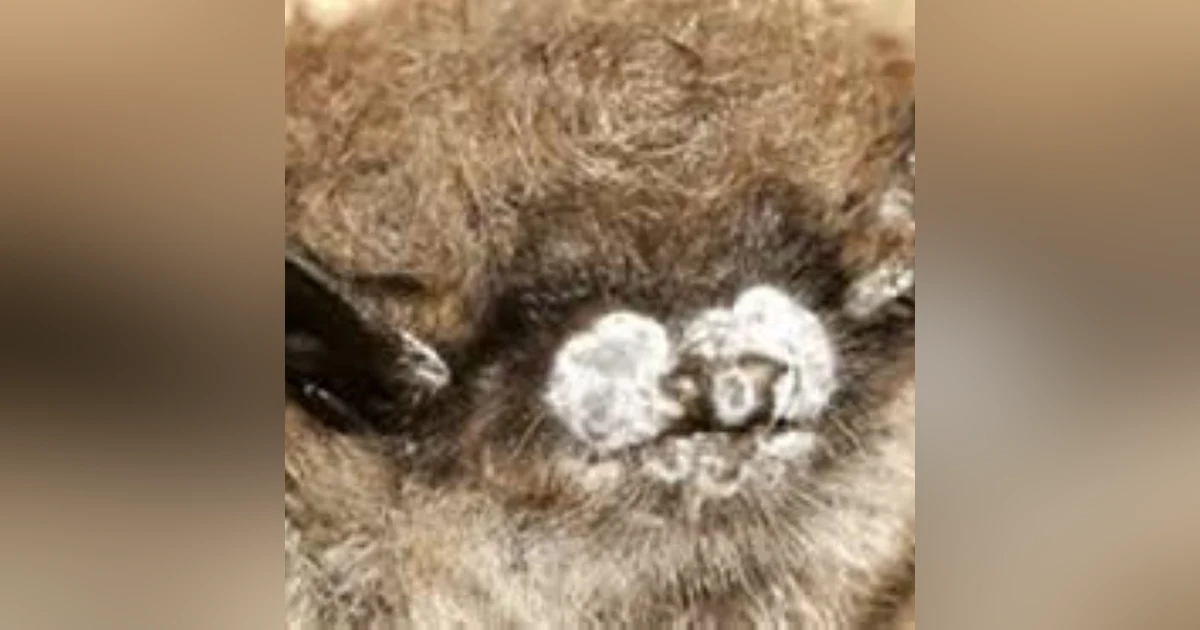
23:19 Hundreds of thousands of people come from all over the world to visit the cave each year. It's thought that this cave is where it all began. Biologists from the New York State Department of Environmental Conservation we're making their rounds to various bat habitats in the late winter of two thousand and seven. Every year, these conservationists would visit hibernation areas to check on the bats and make some general observations about the order and the local species. Upon entering one of the caves, the researchers came upon a horrible site. Piles of dead bats were covering the floor of the cave. More bats were seen flying out of the cave into the snow and cold. Many residents had reported seeing bats in flight during the winter, but no one expected this. The researchers brought several of the carcasses back to the facility for necropsy, and this is when they noticed that there was a white fungus growing on the faces of the bats that had died.
24:29 This was how white nose syndrome got its name. Now we all know that no good research begins before the pathogen is identified and named. In two thousand and eight, Blehart and his team described the fungus associated with white nose syndrome as a member of the genus Genomiases. A year later, in two thousand and nine, Gargas's team came along and described the unique identifiers of the species of fungus. They gave it the name Genomiases destructtions. In Latin destructens means destroying, and this is a very fitting descriptor for this disease. In two thousand and eleven, the fungus was definitively identified as the cause of white nose syndrome by scientists at the United States Geological Survey. Before this research was released, it was unknown whether the fungus was the cause of white nose syndrome or an opportunistic pathogen that was separate from the disease. In two thousand and thirteen, an analysis of the phylogenic relationship indicated that this fungus was more closely related to the genus Pseudogemnoascus than to the genus Geomiases. Thus the fungus was renamed Pseudogemnoascus. Destructis oh Latin for a dead language. You still make lives
26:06 miserable. You'll notice that I'm only using common names for the bat species in this episode. It's because I didn't want to butcher any more Latin than I absolutely had to. In two thousand and eleven, several anti fungals, fungicides and biicides were tested against P destructions. Many of them were successful in inhibiting the growth of the fungus. Another study from twenty fourteen identified several volatile organic compounds that demonstrated inhibition of milocelial extension and growth from canidia. In two thousand and fifteen, Rhodococcus root a chorus was shown to inhibit the growth of P.
26:52 Destructtions. Research appeared in the scientific journal Nature in twenty eighteen that showed that due to a lost enzyme P destructis lax and ability to repair DNA which has been damaged by UV light. This is when researchers began studying practical methods of having bats activate a UV system as they enter and leave a hibernaculum, ultimately as a treatment for their infections. While this wouldn't be a permanent solution, it may be sufficient to save several species until they can evolve their own immune systems to fight off the disease themselves. Okay, here's where things get confusing. Where did white nose syndrome originate? We know that in New York white nose syndrome just sort of appeared in two thousand and six, but where did it come from? The earliest known historical incident of P destructives was detected in a museum specimen of a bat collected in France in nineteen eighteen. This strain, however, differs from the strain that we're seeing in the US today.
28:12 Researchers also noted that samples taken from bats preserved in formaline and ethanol from eighteen sixty one to nineteen seventy one in the US showed no signs of P. Destructing's infection. It's known that the fungus exists in several species of Eurasian bats, but they don't seem to be affected by the disease. What this means is that p destructings was introduced to North American bats during the early twenty first century from Eurasia and found naive populations to infect and subsequently kill. This is the explanation for the mass death that we're seeing with white nose syndrome across the US today. It was likely introduced to house Cave in either two thousand and five or two thousand and six by tourists from Eurasia and has spread from bat to bats since, eventually making its way across the country through migration patterns and shared hibernaculum. I think smallpox. That's how smallpox eradicated millions. As people traveled across the world, they brought the disease to naive populations and the disease spread, eventually eradicating several of those populations. So what can be done?
29:41 I love to go spelunky. There are so many neat things in caves. It's like a totally different world. The caves and old mines are homes to bats. So for now I'm staying out of them. Many caves across the country are now closed to visitors so that hibernating bats and maternity colonies can be protected against white nose syndrome. If you are a frequent caver, familiarize yourself with common WNS decontamination procedures. If you choose to build a bat house in your yard, check to make sure that whatever stain you're using is resistant to fungus. Of course, if you see a dead bat, don't take care of it yourself, call fish and wildlife to dispose of it. White nose syndrome doesn't affect people at all, but the carcasses of bats are used in research and tracking programs that help stop the spread of the disease. If you'd like to get involved with bat conservation programs in your area, there is a website www. Dot White Nose Syndrome dot org that lists groups across the country that are working to preserve the order and stop the spread of white nose syndrome. White nose syndrome is the leading killer of bats in the US.
31:08 It's up to us to help save one of the most important orders in the environment worldwide. Bats do so much for humankind let's return the favor. Thank you so much for listening to Cause of Death one hundred seconds to midnight. Please take a look at the show notes for the research on white nose syndrome and bats. There is some very extensive research being done to save this order, and it's worth digging into. I believe that very early in the podcast, maybe the first or second more than you ever wanted to know, episode, I explained how layman can read research papers without having their heads explode.
31:56 In case you don't remember and would like to go through some of the white papers associated with this or any other episode, remember that you don't have to try to slog through every bit of the research unless you really want to. Most of the time, the abstract, the introduction, and the conclusion will give you a very good overview without getting into methods, analytics and raw data. Of course, if you like methods, analytics and raw data, go forth and read the whole paper. You can learn a lot about research. If you have questions, I can be reached at Jackie at cause of Death one hundred sex dot net or on the website at www cause of Death one hundred sex dot net. Someone asked me about my Patreon, they couldn't find it, so even though I do list it in the show notes every week, I'll give it to you here. That web address is www dot Patreon dot com slash Jackie Moranti. You can also go and sign up on Apple subscriptions. Patreon just gives you more perks. Check the show notes for other ways you can support the show, and don't forget to visit this month's sponsor, True Leaf Market. Remember that cover plants will help entice bats to your yard and that house that you built for them. We have three more episodes
33:31 left in season six Who's Who Outside of the Zoo. Then I'm going to take a short hiatus so that I can sort of get my poop in a group. I'd like to take some time off so that I can get a few episodes ahead again. Next time, we'll be talking about another fungal disease that's decimating another order frog fungal disease. Until then, visit www. White Nose Syndrome dot org and get involved with that conservation. Do you have a story of survival? A parent goes to residential school, You know they haven't had that family connection, those traditional values and ceremonies that many of us exposed to are taken or have a lost loved one that was involved in human trafficking, exploitation, missing, or murdered. My name is Jasmine Castillo and I am the host of Hands Off, my podcast that brings to the forefront specifically from Asian American Native, Hawaiian Pacific Islander, Black Indigenous people of color.
34:39 Anderson jam one most electation of your emergency man, what's going on out there you're staying as well as nonprofit organizations when now they're prime investigated. Five years ago, we picked up a case that Wish needs Harris case that help and advocate families of lost loved ones with they're closure from sometime from his shift they worked to that next day, he was either robbed or apprehended at some point with someone coming into the restaurant and opening a cold case. So that to me was his way out and it negatively impacted our money's investigation. Please join me on Thursdays on any podcast platform wherever you listen to your podcasts. We are voiceless no more.

