S6 E3: Greed and Avarice: The Story of Chemical Spills and Wildlife

For hundreds of years, man has been the greatest destroyer of the planet. As the highest being on the food chain, our impact on the environment is the greatest contributor to the loss of species worldwide. Breeding grounds are being destroyed and...

 Apple Podcasts

 Spotify

 Spreaker

 Podchaser

 Castro

 RSS Feed

 Goodpods
0:01 Hello. I'm Ashley from Fuck That, a true crime podcast, and I want to share with you the details of a case I've recently covered. Chad Zachary Hower was a prominent Microsoft employee living overseas, and he seemingly had a promising future ahead of him. He had full custody of his son, Alex, whom he had during a previous marriage with his ex wife, Nancy Oberlander. He was remarried, planning on extending his family, and for all intents and purposes, Chad was on top of the world, but his ex wife, Nancy did not intend to let him off that easily. Nancy fled Tennessee, the states that had jurisdiction over their son Alex's custodial arrangement, moving to Pennsylvania without notifying the courts or Chad. This was the first of many deliberate moves Nancy made to prevent Chad from his inherent right to see his son.
0:57 Once Chad was granted custody in two thousand five and Alex was removed from Nancy's home by Venego County Sheriffs in Pennsylvania, he felt relieved at the thought of his son finally being able to establish roots, but Chad's troubles were just beginning. Pennsylvania, a state where Alex lived for only a few months, in violation of Tennessee's custodial agreement, took emergency jurisdiction over the case, creating a domino effect that would forever change not only Alex's life, but Chad's life. Forever joined me as I delve into the custodio battle that ultimately led to Chad Howard becoming the TikTok fugitive wanted by the FBI for international kidnapping, ultimately leading to an interpoll red notice. This case delves into the corruption at not only the state level, but the federal level as well, uncovering lies and corruption from the FBI, National Center for Missing and Exploited Children and United States Assistant Attorneys all well, Chad fights for his independence and his life overseas. You can listen to Chad Hower The TikTok Fugitive Parts one through three wherever you listen to podcasts? Are you tired of speculative, sensational, poorly researched, and disrespectful true crime podcasts? Me too? Hi? I'm Eric Carter Londean and I'm here to introduce you to True Consequences Podcast, an advocacy focus show that sets itself apart from the rest you see. True Consequences is a love letter
2:29 from my baby brother, Jacob Londean, who was murdered nearly four decades ago, and he still needs justice. What sets my show apart is the deep dive research I do, the first person accounts I bring to light, and the empathetic lens through which I approach each case. I know what it's like to fight for justice for a loved one, and I'm committed to helping other families seeking justice. You can listen to True Consequences wherever you get your favorite podcast. Join me Eric Carter Londean on this journey to uncover the truth and advocate for justice. Together we can make a difference. Don't settle for sensationalism. Choose True Consequences podcast for advocacy focused true crime. Subscribe now and be part of the movement for justice. Darkcast Network, come on over to the dark Side. We're really nice people once you get past the true crime and scary science. Hello, and welcome to Cause of Death one hundred seconds to midnight. I'm your host, Jackie Moranti. For hundreds of years, man has been the greatest destroyer of the planet. As the highest being on the food chain, our impact on the environment is the greatest contributor to the loss of species worldwide. Breeding grounds are being destroyed and access to resources is diminishing due to industrial and residential development, logging, crop farming, livestock grazing, mining, road and dam building, and pesticide use. All of this is
4:02 in the name of progress. Today, I'm going to talk about what happens when progress gets out of hand and there is a man made disaster. What effects to these disasters have on ecosystems and the wild life that depend on those habitats to survive. It's ninety seconds to midnight, and the struggle to live in a place that should be their own is becoming more and more desperate for the animals that have to adapt when their habitats are destroyed through human error and carelessness. This is a topic that really hits me where I live. Nothing angers me more than a chemical spill that kills countless animals and has long lasting effects on their habitats. I'm going to talk about three instances where greed, human error, and indifference caused permanent damage to huge swaths of land and ocean.
5:03 I'm going to talk about the Exxon Valdez oil spill, the Chernobyl nuclear incident, and the train derailment in East Palestine, Ohio. These aren't the only chemical spills that have ruined countless miles of habitat and cost thousands of animals their lives. But these are hallmarks of what can happen when companies and their employees cut corners and refuse to follow the rules. The Chernobyl Nuclear Power Plant was in disrepair and routine maintenance was not being done on the facility. Employees were not trained well, and the Soviet government was not willing to put a lot of money into the plant. On April twenty sixth, nineteen eighty six, reactor number four at the Chernobyl Nuclear Power Plant exploded during a mandatory safety test. This incident released large amounts of radioactive material into the atmosphere. Shortly thereafter, an unexpected power surge led to a break in another one of the reactors. This caused air to reach the graphite moderator. The entire reactor went
6:33 up in flames. This resulted in a radioactive jet emission of iodine one thirty one, closely followed by caesium one thirty seven and caesium one thirty four. Non Volatile strontium isotopes like strontium ninety and transuranic elements such as plutonium and americum were also released. The nonvolatile substances were mainly deposited in the immediate vicinity of the power plant in Ukraine and Belarus, The highly volatile iodine and caesium reached heights of over one kilometer as a result of thermal uplift caused by the high temperatures of the burning graphite in the reactor. This gave rise to these elements traveling across the Northern Hemisphere and into Europe. The prevailing winds at the beginning of the release transported radionuclides over Poland towards Scandinavia. A second radioactive cloud moved over Slovakia, the Czech Republic and Austria towards Germany. The third cloud reached Romania, Bulgaria, Greece and Turkey. These chemicals were released into the atmosphere over a period of ten days before the reactor could be contained. The effects of this disaster will be felt in the affected areas for hundreds of years to come. The amount of radioactive material released to the western edge of Russia in
8:11 Central Europe was one hundred times more than the bombs that were dropped on Hiroshima and Nagasaki combined. Higher contamination rates were found in regions where it rained as the radioactive clouds passed over. As the rain washed the radionuclides out of the air, they settled in the ground. The intensity of the rain dictated how severely each area was contaminated. The effect of the Chernobyl disaster on wildlife is a topic that's hotly debated among researchers to this day. There are so many variables that exist, it's hard to tell what impact radionuclides had on the environment and how much is still ongoing. It's unknown how many animals died in the immediate fallout. An area known as the Red Forest was observed to have been hit the hardest. There. The detrimental effects included mass mortality of pine trees, reduced pine seed production, reductions in soil invertebrates, and mass death of small mammals. Today, some researchers tout the Chernobyl exclusion zone as a wildlife paradise devoid of people. They claim that several species have thrived in the seas and continue to do well. Other researchers claim that the wildlife living in the SEEZ are subject to genetic mutations and have far shorter lifespans than animals who live
9:43 outside of the SEZ. Radioactive dose rates in the CEZ remain high enough that we would expect adverse effects on wildlife living inside of the zone. Immediately after that accident, detrimental effects on wildlife were observed as far away as Germany, and for many years after, mutations were observed in several species living inside of the zone. So what makes this so complicated? Several factors are involved in studying the radiation levels inside of the c Z, one of which is the way that radiation is determined in the field. Researchers use handheld doscimeters to measure radiation in field studies. This is not a totally accurate way to measure radiation in the environment. Measurement height varies and units may not be applicable to wildlife.
10:41 Seabirds are used to measure radiation in people, but the docimeters that are in use often use graze as a measurement. The measurements between the two can vary about fifteen percent, and that's a lot when you're trying to get an accurate dose measurement for a study. Then, to top it off, there's no way of knowing how much radiation existed before the accident. Remember that radioactive rain that fell all along the fallout zone. Remember me saying that there were areas that got more rain than others. It was the same inside of the c e z. Anywhere the rain fell harder or it rained more, there was more radiation on the ground. What this means is that dosemitar readings can be taken in various places within one hundred square meters, and those readings may vary by several orders of magnitude. It all depends on the ten days of radioactive weather that occurred right after the explosion. When considering the effects on wildlife, their home range needs to be examined. Also. While mice, rats, and other small mammals have relatively small ranges, larger animals like wolves, bears, and horses have much bigger home ranges, so they travel in and out of the cez to find food and water. This would have an effect
12:11 on their survival. Smaller animals may have higher radiation levels than larger ones that are traveling out of the CEZ. Since the CEZ has a variety of radionuclides present, to really get a handle on the dose rates, one would have to consider all contributors. Most studies focus on radio caesium and strontium ninety, but when we consider caesium one thirty seven, strontium ninety, americum two forty one, and plutonium isotopes and focus on the internal dose rates in the organisms of interest. In this case, it was the vole. Strontium ninety is the major contributor in most but in other organisms, caesium one thirty seven contributed similarly or even more than strontium. The contribution of americus two forty one and plutonium is typically less than ten percent. In earthworms, the contribution of americus two forty one and plutonium is forty percent of the whole. In bats, strontium ninety contributed ninety percent of the dose rate, Caesium one thirty seven contributed about three percent, and plutonium isotopes contributed less than one percent. Several species have been studied over the years since the accident, and those studies will continue until answers to the mysteries are found. There are a ton of questions to
13:43 be answered. Researchers are asking whether or not the mutations that the animals have experienced have helped them live in a radioactive environment for all these years. Have the animals in the Cez just adapted to radiation? Have they become immune to it? Has there been some genetic change in the animals over the course of generations that has contributed to their immunity. If we found the answers to these questions, could that lead to a cure for cancer? Before we leave the Ukraine and go to Alaska, I want to leave you with two more thoughts.
14:24 Many researchers believe that the lack of human presence in the seas is the reason that the wildlife in the Sez thrives. There are no people there to reak havoc on the habitats that they've seemingly adjusted to. It will be more than one hundred years before the levels of radiation subside to a habitable range in the Cez, but somehow the wildlife has persevered. I'll keep my eye out for more research and let you know what happens as studies continue in the zone. My last thought on this takes us to Germany, where high levels of caesium one thirty seven are still present in the forests that were affected by radioactive rains. It's known that caesium one thirty seven will cling to the soil, and often it will be absorbed by the roots of plants. Forty years later, the older trees are holding on to the caesium that they absorbed as saplings.
15:28 Remember in the beginning of this story, I told you that reactor number four melted down during a safety test. This plant had been suffering from lack of oversight for years. It was one of the biggest nuclear reactors in the world at the time, and it was being run poorly. Routine maintenance was often overlooked, safety checks were not performed regularly. There was a lack of oversight by any government entity. Employees weren't trained properly. The list goes on and on. If there had been proper management of the facility, this might have been avoided. But instead, the largest nuclear disaster to date occurred at this plant, and the effects are still being felt today. We're going to take a little break to hear from our sponsors, and then we'll be back.
16:47 Oil companies seem to enjoy the freedom to run their businesses in any way they please. After all, the US runs on fossil fuel, and politics play a large role in the way that oil companies run their businesses. Oil companies and railroads are largely funded by the US government, even though their private businesses. Both of these businesses enjoy the right of eminent domain. The difference between the two is that oil companies are regulated by the EPA, but railroads govern themselves. More than seventy oil spills are reported in the United States on any given day. It would seem that oil companies would rather pay the fines for polluting the planet than put money into prevention. Poor oversight, mismanagement, and a drunken captain were all contributors to the Exxon Valdi's oil spill that killed thousands of marine animals off the coast of Alaska's Prince Williams Sound in nineteen eighty nine. This was the largest oil spill in history before the Deep Water Horizon spill in two thousand and ten. The Exon Valdis struck Bly Reef at four minutes after midnight on March twenty fourth, nineteen eighty nine, dumping eleven million gallons of Prudehoe Bay crude oil into the ocean. The Exon Valdez was carrying
18:21 a total of fifty three million gallons of crude bly Reef is a well known navigational hazard in Prince William Sound, but the captain, Joseph Hazelwood, had been drinking and he allowed an unlicensed third mate to steer the ship. The Exon Valdi's oil spill would leave hundreds of thousands of sea animals dead in its wake and would ruin the pristine waters of Prince William's Sound forever. Thirteen hundred miles of coastline were virtually destroyed after the single whole ship ran aground in nineteen eighty nine. There were very few response mechanisms in place, and entire ecosystems were destroyed. Oil spills contaminate everything they touch algae, plants, invertebrates, fish, amphibians, reptiles, birds, and mammals. These plants and animals are virtually smothered by oil. They experience hydrocarbon toxicity, hypothermia, and long term effects. Animals that live close to the surface or come to the surface to feed. Are often the most affected by oil spills. Whales, dolphins, turtles, birds, seals, and otters are a few of the animals that most often die immediately after a spill. These animals become covered in sticky
19:53 oil, and since their fur and feathers regulate their body temperature, the oil prev this regulation and they die from hypothermia. The oil can also make their fur or feathers retain water. This makes the animal heavy and it loses its buoyancy, causing it to drown. Birds love to preen themselves, and if the oil is stuck to their feathers, the birds will ingest it. This causes severe organ and neurological damage. The oil sticks to everything it encounters, and plants that are food supplies for many marine animals become affected. For the long term, animals will often suffer from malnutritions since they won't eat the contaminated plants. Those that do will often be poisoned. Future generations suffer since poisoning will often cause birth defects in mammalian populations, but the contamination will also cause thin shells in the eggs of amphibian and bird populations. Unfortunately, the only way to save the animals is to clean the oil off of them, and many times that's not possible. In nineteen eighty nine, there were no emergency response plans in place, and the animals died. For months After the spill, XON employees, federal responders, and more than eleven thousand Alaska residents worked to clean up the spill. These people, many of whom were volunteers,
21:26 worked around the clock to skim oil from the water surface and spray oil dispersing chemicals into the water and on shore, and wash oiled beaches with hot water. They also rescued and cleaned as many animals that have been trapped in the oil as they could. Exon paid about two billion in cleanup costs and one point eight billion for habitat restoration and personal damages caused by the spill. The Exon Valdi's spill was the first of its kind in the world at the time, but environmentalists knew that it wouldn't be the last. They purposefully left large swaths of shoreline untreated so that they could study the effects of clean up measures and find out how long it would take for that area to recover. On its own. One of these areas was Mern's Rock. Conservation scientists have returned to the area every year since the spill to study animal and plants that live there. They found that life returned to relative normalcy in the area about four years after the spill after essentially powerwashing the shoreline with hot water to get rid of the oil. They found that this method killed the remaining plants and animals on shore, so it caused more damage than it reversed. The spill was responsible for killing roughly two hundred and fifty thousand seabirds, three thousand otters,
22:59 three hundreds eels, two hundred and fifty bald eagles, and twenty two killer whales. About forty percent of the sea otters living in the Sound were killed in the spill. The population didn't fully recover for twenty five years after the spill. In nineteen ninety, the salmon and herring populations collapsed, as did the fisheries in Prince William's Sound. The economic impact on towns like Valdez and Cordova was devastating and it took several years for the economy to recover. The salmon population has declined as much as twenty percent since and has never rebounded.
23:44 It's hard to say whether the oil spill is directly responsible for the declining salmon population, but the coincidence of a permanent decline just a year after a major oil spill is a compelling coincidence. Nineteen ninety, George HW Bush signed the Oil Pollution Act into law. The Xon Valdes oil spill prompted the government to increase penalties for companies responsible for oil spills, and it also required that oil tankers in the US have a double hull. Had the Exon Valds been built with a double hole, the damage that the ship sustained may have been minimal, and most of the oil may have been contained on board. This disaster also taught conservationists and first responders how to deal with massive oil spills. By the time that the Deepwater Horizon came along, much better disaster response measures were in place. The Exon Valdis continued to sail throughout the world, moving from one country to another until virtually the entire world banned oil tankers with single holes.
24:59 She carried or for a while off the coast of China, but was decommissioned after running aground again in twenty twelve. In March of nineteen ninety, Joseph Hazelwood was acquitted of felony charges related to the oil spill. He was convicted of a single charge of misdemeanor negligence find fifty thousand dollars in order to perform one thousand hours of community service. Exxon remains one of the largest and richest oil companies in the world. Today, pockets of crude oil remain in some locations of Prince William's Sound, and while the environment has compensated, the area will never be the pristine wilderness it was before the spill. Railroads have been the favored sons of the US government for over two hundred years. The contribution of the railroad to settling the nation and westward expansion has earned the railroad VIP status across the country. Railroads are privately owned businesses. As I mentioned before, railroads and oil companies are the only two privately owned businesses able to
26:32 execute eminent domain and condemnation. Their status with the government, and I kind of like to say that they're incahoots allows railroad companies to remain tax exempt. Let that sink in a second, Railroads govern themselves, They have their own oversight boards, and they police themselves. This gives rise to more than seventeen hundred and four train derailments per year in the US. That breaks down to roughly five a day. The Federal Railroad Administration only investigates about a hundred accidents per year. This includes derailments, collisions, and other incidents. Most of these derailments are caused by poor maintenance to either tracks or the train cars themselves.
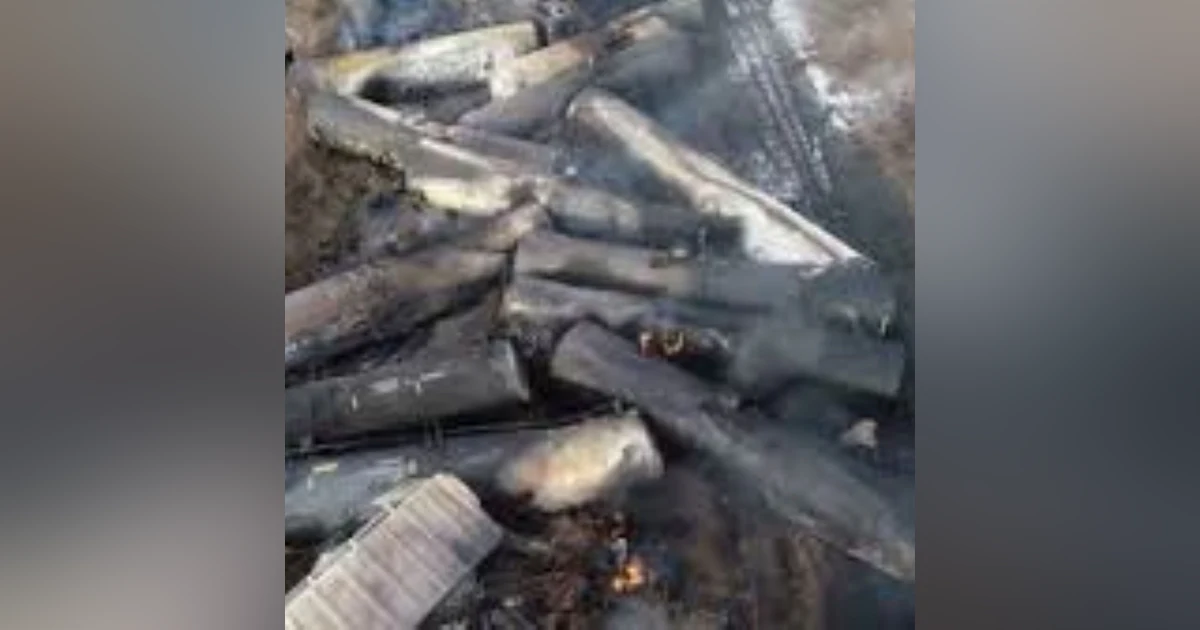
27:30 No one is watching, and any attempt by the federal government to intervene is answered with scoffs from the railroad associations. In the monopoly game of life, it's better to own a railroad than the Trump Towers. Let's go to East Palestine, Ohio and find out what can happen when poor maintenance and a lack of oversight is in place. What happens when a train derails. On February third, twenty twenty three, operators of a Norfolk Southern train carrying at least six different hazardous chemicals were alerted that a wheel bearing on the twenty third car was overheating. They had tried to stop the train and the train was coming to a stop when it derailed near the town of East Palestine, dumping vinyl chloride onto the ground, into the water, and into the air.
28:29 Fifty cars derailed and twenty of those cars were carrying hazardous materials. For several days after, aquatic life continued to die as the chemical spill took its toll on the land. At the time, a low estimate was that three thousand, five hundred fish were killed. The number of aquatic animals effected was raised to forty three thousand on February twenty third. There were also report it's of pets dying immediately after the spill. There were no reports of wildlife other than fish, being affected by the spill. This doesn't mean that larger animals weren't affected. It means that no one knows how much damage was done. Concerns have been raised about the chemicals settling into the sediment of the streams and rivers, causing long term damage to the local aquatic life and to any animals that eat the contaminated fish. Immediately after the spill, a preliminary assessment was done on the surface water surrounding East Palestine. The EPA reported that concentrations of petroleum products were so high that they suspected malfunctions in their equipment. Excessive levels of tetraphene and chrysine, both carcinogenic compounds that are known to persist in soil and water, were also present. Water isn't static, so the residents are concerned
30:00 that these chemicals may make it into the ground water. The water table in East Palestine is about thirty five feet underground. This could not only harm human inhabitants, but wildlife as well for many years to come. The Railroad performed a controlled burn on five unstable rail cars that were carrying vinyl chloride. This burn was given the nod by Ohio Governor Mike DeWine, but the railroad was in charge of the project and no other government agencies were made aware of the burn. When burned, vinyl chloride breaks down into hydrogen chloride and phosgen.
30:42 Phosgene was used in chemical warfare during World War One and is a highly poisonous chemical that was responsible for many deaths during that campaign. Other chemicals on board the train could also cause severe illness. Butyl acrylate is used in paint, adhesives and sealings. Ethyl hexyl acrylate is used for making paint printing, inks, and plastics. Both are toxic to the lungs and nervous system. Ethylene glyco monobutyl ether is an industrial solvent that can be absorbed through the skin and is toxic to the liver and kidneys. Isobutylene is a gas used in antioxidants, packaging, plastics, and high octane jet fuel. The release of multiple chemicals into the air complicates the situation. We may never know the total impact this spill has had on local wildlife or what combination of chemicals is responsible for the damage. The dystopian plume dissipated after a few days, but people in Ohio and Pennsylvania where I reporting symptoms of chemical exposure from miles away. Remember air isn't static either. These chemicals could be carried for miles, and it
32:13 would depend on which way the wind blew. Recent air analysis has shown that concentrations of nine of the fifty chemicals that the EPA has been monitoring since the derailment are higher than normal in the area. This includes a chemical known as acroline. This chemical is used as a bioside to control plants, algae, fungi, rodents, and microorganisms. Inhaling Elevated levels of this chemical short term only causes throat and lung irritation, but long term the effects could be much more severe and permanent. Carcinogens such as vinyl chloride and benzene have been detected and higher than normal ranges, along with toleuene, ethyl benzene, methylene chloride, trichlorofluoromethane, and mp xylenes. Dioxins are biproducts of chlorinated organic compounds that are released through waste incineration. They accumulate in animal fat, fish, and shellfish. Dioxins cause cancer, disrupt hormones, lead to reproductive and developmental problems, and damage immune systems. The food chain could be contaminated for several generations due to the release of dioxins into the air, water, and soil after
33:43 the fire. The environment works in a circle. These chemicals were released onto the ground and into the air, and as they fall from the air onto the soil, they will be released back into the atmosphere for many years to come. That cycle will continue until the chemicals reach their half life or until there is some major cleanup effort. Most of the chemicals, like vinyl chloride, have half lives of about one to four days, but others could be around much much longer. The real unfortunate truth is that it may take years to figure out what the real impact was on people or animals in the area.
34:30 While remediation efforts are taking place, some of the areas affected lye in areas where it's hard to remove the soil, including beneath train tracks and buildings. On February twenty first, EPA Administrator Michael Reagan ordered Norfolk Southern Railway to pay for the contaminated soil and water cleanup and reimburse the EPA for the private cleanup of residential homes and businesses. This order forces the Norfolk Southern to adhere to a plan set and managed by the EPA. It's been estimated that the spill contaminated at least fifteen thousand pounds of soil and one point one million gallons of water. The EPA is finding the rail company seventy thousand dollars a day until the mess is cleaned up. Put that on top of the original cost to clean up, and maybe Norfolk Southern will get the hint that even the government is sick of their crap. The streams that were hardest hit where locals were photographing the damage caused by the oily sheen that ran down The tributaries to the Ohio River were reintroduction sites for the hellbender salamander. The hellbender has been on the endangered list for some time and the reintroduction was sup host to help
36:00 the species recover. The Agency for Toxic Substances and Disease Registry has opened an investigation tracking chemical exposure along the tributaries. They will be studying the effect that the spill has had on the hell bender. The sulfur run stream was the most impacted by the derailment because officials rerouted the water there with damming and pumps. A portion of the stream was dammed and rerouted to protect water downstream. This water will be treated with booms, aeration and carbon filtration units. Pennsylvania Governor Josh Shapiro made a criminal referral against the Norfolk Southern on February twenty first.
36:50 He listed three critical failures of the Norfolk Southern Railroad in his complaint. One, the Norfolk Southern made its own plan and did not implement a unified command, which confused first responders and emergency management. As a result, the state and local agencies had to react versus work in tandem. Two, the Norfolk Southern gave inaccurate information and conflicting modeling about the impact of the controlled release of chemicals. Three, the Norfolk Southern was unwilling to explore any alternative to burning chemicals and released and burned the chemicals without warning government agencies. Since the derailment, national attention has been focused on the influence that the railroad industry has on Congress. They've been able to write their own rules when it comes to what they ship and how they ship it, and who they report to.
37:58 If the railroads were better regulated, many accidents and derailments could be avoided, But for decades the freight and rail industry has lobbied against congressional approval of standards and mandates that include appropriate staffing, braking systems, and hazardous material limits. The Federal Railroad Administration does regulate and inspect freight and passenger rail travel, it does not monitor the active transportation of freight. In other words, they can come and look at a train before it leaves the station, but if they find something wrong, they can't shut it down. If the regulation over the breaking systems had gone through legislation, it would have reduced the number of cars that derail by a fifth and would have only cost the industry four hundred and thirty nine million dollars over a period of twenty years, but the railroad associations refused to comply. The railroad has been historically corrupt since its beginnings. It's been used as a method to extort the federal government and launder money, all done with bribes and backscratches to Congress and other government leaders. And while the railroad continues to do what the railroad does in the areas surrounding East Palestine, researchers will continue to monitor the effect that this derailment has had on the wildlife,
39:35 especially the aquatic species. In years to come, there may be problems with reproduction, mass die offs, short lifespans, and other indicators of chemical contamination. The Norfolk Southern refused invitations to talk about the derailment at town hall meetings immediately after the derailment. They refuse to address the problems that the SPI had on human populations, never mind the local wildlife. The Norfolk Southern contractors threatened locals with arrest for taking pictures of the dead and dying fish and amphibians in the streams that were affected by the spill. One reporter was arrested at a press conference after being told that he was covering the event far too well.
40:23 These charges have since been dropped. Essentially, the railroad is trying to cover up the damage done by the spill rather than mitigated. Multiple class action lawsuits against the Norfolk Southern have been filed citing the dangerous practice of precision railroading. This strategy maximizes profits by running longer, heavier trains as frequently as possible. While several new laws are being passed by various government agencies across the country to control the railroad, the railroad is effectively flipping them all the bird and insisting that they can make their own emergency responds planned to derailments. It's deja vu all over again. At the end of the day. The railroad is the prime example of what happens when businesses have no government oversight, when they're allowed to make their own rules and police themselves. The effects on the environment that the derailment in East Palestine, Ohio has had will be felt for years and the consequences may not even be known for decades. Now. Remember those train operators that were trying to stop the train in the beginning of this story.
41:46 They later told the Federal Transportation Administration that the alert came too late. The bearing on the wheel of the twenty third car had already reached temperatures of over two hundred degrees fahrenheit before they got the alert. It was too late to stop the train and keep it from derailing. In thinking of that, the train was heavy and once it got going, it was going to take miles of track to stop it. That legislation that the Federal Transportation Safety Administration is trying to put through, the one with the better breaking systems, Yeah, it may have prevented this derailment from happening. And so would running fewer cars as slowly as possible. It's ninety seconds to midnight, and corporate greed, mismanagement, and poor oversight are claiming the lives of thousands of animals every day across the world through chemical spill. These were major instances, but we also need to consider deforestation, plastic waste, pollution, car emissions, encroachment, and all the other ways that man adversely affects wildlife. If we look
43:16 at it all, we can see why our wildlife populations are becoming extinct at alarming rates. Thank you for listening to Cause of Death one hundred seconds to midnight. Please take a moment to click on the subscribe button in your favorite podcast player, then go rate and review the show. Your contributions keep this podcast going. Your continued support through Patreon and Apple subscriptions is greatly appreciated. If you haven't headed over to check out the subscriber feeds, please do so. There are a ton of perks when you sign up, plus you help me pay for equipment, subscriptions, white papers, research, editing music, and keeping my stomach from growling during a recording. If you have questions or comments, or just want to say hello, you can drop me a line at Jackie at Cause of Death one hundred sex dot net. You can also head over to the website where you can leave a voicemail, sign up for my mailing list, read the blog, and just generally catch up on all the HAPs at the podcast. Take a look at the show notes for some really enlightening information on chemical spills and their effects on wildlife and the environment.
44:43 There will be a subscriber only episode dropping within the week on the House that Jack built. This episode will explore the ways that feral species can decimate native species in the environment and what we can do about it. Season six of Who's Who Outside of the Zoo continues in two weeks with rabbit hammorrhagic disease. You'll find out how this virus can wipe out entire populations of wild and domestic rabbits once they become exposed. Until then, don't buy any monopoly railroads.
46:10 M bigger, bigger, bigger, M

