S5 E7: That's a Little Campy: The Story of Campylobacter

Campy Show Notes: Cause of Death has a website! Come visit me at http://www.causeofdeath100secs.net. I also have an email address for the show at https://causeofdeath100secs.net. Feel free to interact with me in either place! I’m going to be doing a...

 Apple Podcasts

 Spotify

 Spreaker

 Podchaser

 Castro

 RSS Feed

 Goodpods
0:00 Dark Cast Network. Come on over to the dark Side. We're really nice people. Once you get past the true crime and scary science, we have to talk about our show. Okay, who are we? What do we do? I am Martha Madrigal and I'm Charles Tyson Jr. We are the hosts of Full Circle the Podcast. You are a beautiful white trans woman I will take that of a certain age, and you are a gorgeous black cis pan man who has shared my life for ten years and we're engaged. I put a ring on it. Yeah, you did put a ring on That's a pretty ring too. Now we have a podcast. Yeah, there's not much we don't talk about here, It's true. We talk about LGBTQ issues, headlines of the day. We talk about fun things too, like movies and music and television and pop culture. And we talk about what it is to be black in America and what it is to be trans in America, and now those things intersect and collide and child it gets interested and you can check us out every Tuesday wherever you get your podcasts, because once again where Charles Tyson Junior and Martha magical and this is Full Circle the Podcast. Are we done now, I think, so okay. Do you love true crime but are looking for something different. Do you like learning about cases so off the wall they can't possibly be true. Do you love history but want to
1:32 hear about what they didn't teach you in school. Do you like laughing awkwardly about cases that are bizarre and a little strange. Then we have the podcast for you. Join me Lindsay and me Madison for Yield Crime, where we discuss the funny, strange, and obscure crimes of yesteryear. Listen every Wednesday wherever you get your podcasts, and we'll see you next time with another tale as Old is Crime. Welcome to Cause of Death one hundred seconds to midnight.
2:17 I'm your host, Jackie Moranti. I'm a laborate and I've been a lab rat for sixteen years now. I study infectious disease, chemical warfare, and the effects that these things have on communities. I have a Bachelor of Science degree from Colorado State University in microbiology, immunology, and virology. I do this show to bring science to everyone through the lens of history and my personal experiences in the lab. You do need to know before we dive into this week's disease. I want to catch up on a little world news. Some interesting stuff is happening right now. Avian flu has not only made the price of chicken and eggs almost triple, but now who and the CDC are fearing it may jump to people. H one N five has hit the US chicken farmers so badly that they've seen a twenty nine percent decrease in marketable birds.
3:19 Epidemiologists have seen it spread from wild bird populations to farmed minks in other countries, so they know that the virus could be perfectly happy to mutate and make its home in a mammalian host. People are indeed mammals flu covid any upper respiratory thing, minks are going to get it. Minks are closely related to ferrets, and ferrets are the model of choice for researching upper respiratory infections. Go back and listen to the episode on av and flu, so you know how devastating it could be if this jumps. We're talking at least a forty percent mortality rate. As a side note to this, covid killed off so many ferrets that pet stores quadrupled their prices after the pandemic was over.
4:08 I went in to buy a pet ferret and found the little critters had gone from eighty dollars to over three hundred after so many died off during the pandemic. In other news, Cameroon and Equatorial Guinea are both reporting outbreaks of Marburg virus. We'll talk a lot more about Marburg when we get to the season on Ebola. These diseases are very closely related and are both hamorrhagic diseases that spread very easily through blood and body fluids, and they are deadly. There is no cure. There's only a vaccine that's been tested but not proven, and very little can be done to slow or stop the spread. The mortality rate for these viruses is roughly sixty to eighty percent. I'll talk about the outbreak in cr leone during twenty sixteen that killed approximately one hundred thousand people then just suddenly stopped. Ebola and Marburg are some of the scariest things out there on the American front. Mississippi has seen a one thousand percent increase yes, I said, a one thousand percent increase in infants born with congenital syphilis.
5:31 That's a real problem. We haven't talked about STDs yet, but we'll definitely get there. Syphilis is one of the worst. It's so easy to cure, but if you let it go untreated, well, you can pass along to your kids. Syphilis can also cause severe mental illness of left untreated. People with untreated tertiary syphlis literally go insane. It's one of the diseases that can cross the blood brain barrier. Men will know if they have a venereal disease. It's pretty hard to miss the open wounds on the penis, but women often don't know since the wounds are inside the vaginal cavity. They think they just have a yeast infection that won't go away. So Mississippi, maybe you better start worrying more about using condoms than taking ivermectin. It doesn't work for syphilis or COVID. Another amazingly crazy thing that I heard was a commercial about monkey pox. The CDC actually produced a commercial that said only you can stop mpox. They then went on to describe something that sounded oddly like shingles to me, something terribly uncomfortable, but not too serious. They made sure to say that it was only spread by intimate contact, so no worries about hugging someone or shaking someone's hand. I had to listen to this thing a
7:06 couple of times, honestly, mpox. I kept wondering what they were talking about. The symptoms didn't help much, and then there was the mode of transmission. Okay, I get that we don't want to promote fear and get all hysterical, but could we at least be honest about this. Monkeypox is serious. Historically the mortality rate hung around eleven percent, not super high, but high enough that people should be concerned. No one knows how many asymptomatic cases there are or what that looks like. Yes, it does resemble shingles, a very painful rash, blisters, fever. All that monkeypox isn't the primary cause of death after infection, bacterial superinfection is certainly secondary. And the idea that she can only get it from having sex, let's not go there.
8:05 There does have to be contact, but yes, you can get monkeypox through casual contact. Now do we need a panic? Now? I'll certainly tell you when you need a panic, But please, let's not do with this what we did with COVID and make it out to be a minor cold when we all know that. Firstly, secondary disease is a cause of death, and people do die. Secondly, it can be spread through casual contact if the situation is right. Take an open wound on someone's hand when they shake the infected person's hand, contact with the blisters a rash is what passes it. Thirdly, as we've seen up close and personal lately, viruses mutate.
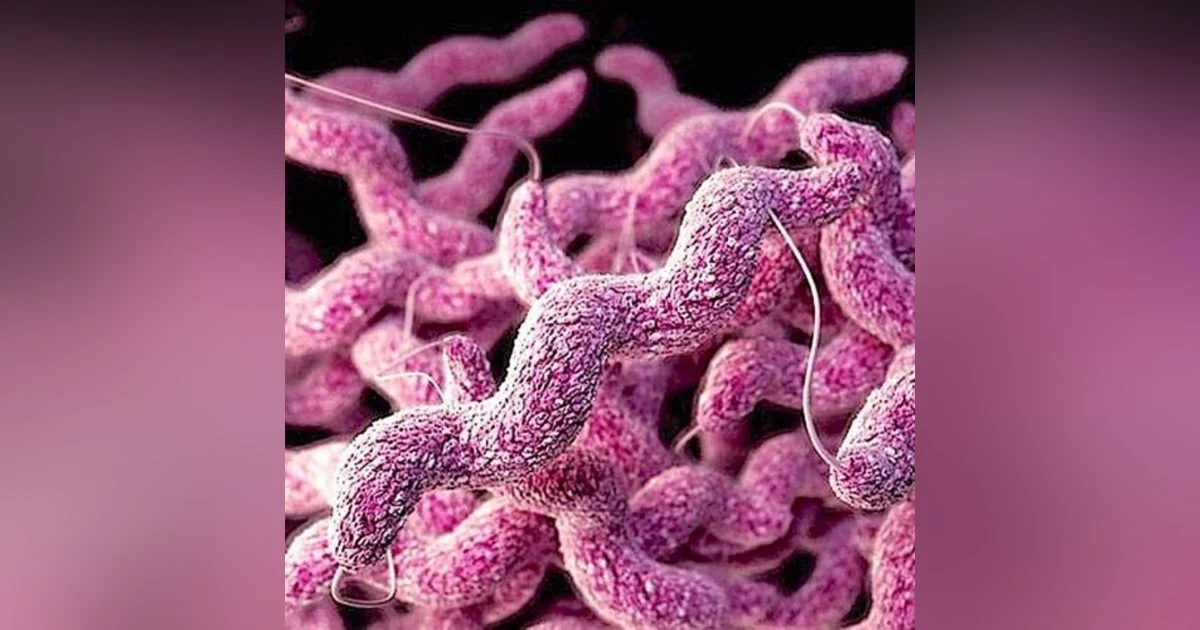
8:50 Sometimes they become particularly virulent. So even if this strain is not horribly virulent, the next one may be. Don't pan it, but be smart about this. I'll talk about it all, but there is just so much to talk about. I will never run out of material. Today we're talking about the third food borne disease in season five, restaurant Rogues. I lie d. Last time I said it would be salmonella, but I already talked about that. We talked about typhoid Mary. I could have talked about salmonella and tereca, but really, how much do you want to hear about the same eediology and pathology? So I change my mind yet again, and we're talking about Campelobacter. Campelobacter to juni is a small point two to point eight micrometer in width by point five to five micrometers in length gram negative curved or spiral shaped Bacillus species. It is motile, having either unipolar or bipolar flagelli.
10:05 Its movement is described as a corkscrew behavior. Caterpiliobacters belong to the family Campiobacter bacteriacea. There are only two genera in this family, Campiobacter and Arcobacter, and both can affect humans and domestic animals. They obtain energy from amino acids or from tricarbacilic acid cycle intermediates. Caliobacter Ja juni hydrolyzes hipperate, indoxyl acetate and reduces nitrate. It's a very slow growing bacterium, usually taking about seventy two to ninety six hours. It grows best at forty two degrees celsius.
10:54 The infection is generally self limiting and is characterized by abdominal cramps, diarrhea, and fever. Most of the time, the diarrhea is loose and watery or grossly bloody. When the illness is that its peak, a patient can experience eight to ten bowel movements a day. Campy, as we so enduringly call it, can resolve in about a week without treatment, but sometimes will reoccur and last several weeks. About fifty percent of patients are asymptomatic. Long term illness can occur with CAMPY. Many patients will suffer coleosistitis, pancreatitis, and periatonitis. In extreme cases, gastron testinal hemorrhage can occur. More rarely, meningitis and acarditis, septic arthritis, osteomyelitis, and neonatal septis can be factors. This disease will more often strike the very young, the very old, and those who are immuno compromised. The mortality rate for CAMPY is very very low. About five and every ten thousand patients will die of sepsies.
12:11 Guilian Barr's syndrome is the most common complication of campy infections. This is an acute demilinating disease of the peripheral nervous system. About thirty percent of patients will experience GBS after recovering from CAMPY. I'll talk about GBS in a future episode, so I'm not going to go too far into the weeds with it this time. Most food born infections are reportable. CAMPY is no different. This became a reportable disease in the early nineteen eighties. This doesn't mean that the incidents numbers are always accurate. Though most doctors don't even think about testing for campy. They move right to shigella or salmonella when they test for food born infections, even though campy is detected more often than either salmonella or shigella.
13:05 Currently, only one and thirty eight cases of campy are reported simply because no one thinks to test for it. Okay, let's talk about how this is spread. Consuming undercooked chicken or poor handling are the single most important route for campy infections in the industrialized nations. Chickens carry campy and salmonella fun fat. One drop of raw chicken juice can carry as many as five hundred infectious organisms. That is more than enough to make someone severely ill. Sometimes, even good hand washing practices and careful attention to cross contamination through surfaces isn't enough to keep the disease from spreading. Heat does kill campy, So good news is that we don't have to swear off chicken to avoid it, but up those clean kitchen practices. Unpasteurized milk is another frequent source of infection. There is a very good reason that it's illegal to purchase unpasteurized milk or juice from the grocery store. Other sources of infection include undercooked sausages or red meat, contaminated water, contact with hats, especially birds and cats, and international travel.
14:28 So on a side note here, I once had a microbiology professor who swore that cats were going to be the death of us all. She was convinced that cats carried every disease on the planet and spread them around willingly to everyone. On one hand, this was hilariously funny to me, but the more I studied micro the more I realized that cats do carry an abundance of diseases. After a few seasons, the most dedicated people who listen to me will be giving them meal machines. The side eye all right. Back to campy.
15:09 Campy infections are very common in the developing world, especially among children under the age of two years old. There are more asymptomatic infections in the developing world. Asymptomatic cases are extremely rare in industrialized countries. In developing countries, outbreaks are rare, and the disease doesn't follow the seasons the same way. It does in developing countries. As I said, the disease is mostly self limiting, so antibiotics are not normally recommended. There are exceptions to the rule, though, If the disease causes an extremely high fever, bloody stools, or the illness lasts more than one week, then antibiotics are recommended. They are also recommended in cases where the patient is pregnant, has HIV, or any other immunocompromising illness. At one time, flora quinolones were the drug of choice. Flora Quinolones were a great, broad spectrum antibiotic that could knock out any food borne infection, so doctors would prescribe them and get a patient on the road to recovery without waiting on a lab result. However, in recent years, the disease has become increasingly resistance to flora quinolones, so there's that these days, Areythromyacin is the drug of choice to combat campy infections. Now, let's talk a little bit about the history of campy. It's pretty short, but it's rather interesting. Theodore es Rich, who made all kinds of
16:44 enteric bacterial diseases his study of choice, first described campolobacter in eighteen eighty six, he published a series of articles called mu Quinchner menzinch Houshencrift. In these articles, he described a spiral bacteria that he had isolated from the colons of children who had died of something he called cholera infantum. He tried to plate the bacterium and grow it, but he couldn't get it to grow, so instead he studied the stool samples themselves under a microscope. He saw the spiral organisms, but he thought that they didn't play a role in the cause of disease. His work remained unknown until nineteen eighty five, when a researcher named Kissed reported Ashrich's findings at the third International capliobacter Workshop. In nineteen o nine, mcfaddien and Stockman, two veterinary surgeons, were studying spontaneous abortion in sheep.
17:47 They reported an unknown bacterium that resembled Vibrio that had been isolated from the fetuses. Smith, another veterinarian, studied infectious abortions in cattle in nineteen nineteen in the US. He referred to it as Bacillus of Bang and described it as a spirillum. While he was working on his observations, he became acquainted with the work of McFadden and Stockman and thought that they may have been studying the same bacteria. He then proposed the name Vibrio fetus for the disease. In nineteen forty nine, Stanega and Terpstra demonstrated the role that V. Fetus fenerrealis was having on cattle. In their study, they found that this disease was passed through the breeding chain and caused sterility. By the time nineteen fifty nine rolled around, Florent found that there were two types of V. Fetus.
18:44 V. Fetus feneralis caused sterility and V. Fetus intestinalis caused diarrhea or what some ranchers call scours. V Fetus intestinalis had been around forever, and Frank it's still around. Ranchers battle scours and calves every calving season. In nineteen thirty one, Jones attributed the winter scours, which is just another name for dysentery, to infection with a Vibrio infection that they called Fibrio jijuni. Doyle would go on to describe the same bacterium associated with swine dysentery in nineteen forty four In nineteen forty seven, Vincent isolated V. Fetus from the blood of three pregnant women. These women had been admitted to the hospital because they were spiking fevers and no one could figure out why. The illness lasted about four weeks, and during that time two of the three women miscarried. When the placenta was examined, large necrotic inflammatory areas were found. The most well documented case of human Capito bacter took place in Illinois of nineteen thirty eight, when three hundred and fifty five inmates at two institutions became ill with campy.
20:08 Pasteurization had been a thing since the eighteen seventies, and by nineteen seventeen laws were in place to ensure that milk would be pasteurized before it became available to the public. But well in nineteen thirty eight, people who were institutionalized didn't get the same treatment that everyone else got, and this outbreak was milk related. Fecal cultures from seventy three patients at the institution showed negative results, but the microscopy was a positive. In thirty one cases, organisms resembling Vjjuni were grown in blood cultures of thirteen of these patients. In nineteen fifty seven, King described Vibrio as having several characteristics in common with the bacterium that Vincent had studied years before. The bacterium looked like a Vibrio species, but these had different biochemical and antigetic properties, so King called them Vibrio related. Even in nineteen seventy two, this bacteria was hard to isolate and grow. There was no augur that could ensure the growth of this particular species of Vibrio. Sebald and Vron finally found that if the bacterium were to be isolated, it had to be taken from blood, not feces. This gave rise to the idea that this was not a Fibrio or a Vibrio like species at all. They renamed the bacteria campeleobacter since they didn't think that it was that closely related to
21:44 vibriospecies. King believed that this infection was more common than reports led to anyone to believe, and she was dedicated to finding a way to isolate it from feces. While she wouldn't see that done in her lifetime, she would be a driving force behind more recent search. Then, on July nineteen sixty eight, a twenty year old female was admitted to Saint Peter University Hospital in Brussels. She presented with severe diarrhea and a high fever. There seemed to be no underlying pathology that would cause this disease. The cause was found to be vibriorelated or camping a bacter ju juni as it was becoming known, and after isolating the bacterium for blood, the feces were sent through a special filtration technique.
22:33 This technique consisted of differential filtration of fecal suspensions through several point six five micrometer filters. This would allow the bacterium to pass through, but would hold back everything else. This filtrait was then plated on selective medium. No other enteric pathogens were isolated from this patient. This culture demonstrated intestinal infection as the cause of bacteremia. This first case encouraged Butler and Decazir to take up the torch with research into campy. They began by researching for the bacterium in the stools of healthy patients, then in stools with patients with diarrhea. They also began looking for certain serum antibodies and they were looking for a cure. They began by exploring siege of juni and se coli resistance to several antibiotics, and they found that erethermiasin won out. Erethermiasin had no effect on common intestinal pathogens, but it would certainly wipe out campy. Researchers began tracing campy infections around the world and they found it was a global scourge. In nineteen seventy nine, the first full account of campy infections in Man was published, and during the nineteen eighties sterotyping techniques became more refined. Fluoroquinolones such as ciproflaxin were used
24:07 for years and they were very successful against campy infections, but then chicken farmers around the world began using ciproflaxen as a prophylactic against the disease. In the nineteen eighties, as chickens began being fed the antibiotic on the daily, resistance to the drug arose, and now there are several strains that are resistant to fluoroquinolones. There's been no resistance so far to urethramyacins, so there is still something to fall back on. But resistance does happen when antibiotics are used as prophylactics rather than cures. Drug resistance is caused by several factors, and we will talk about all of them in an upcoming episode. It's a huge problem since many gold standard drugs are becoming obsolete due to drug resistance, and cocktails are becoming more and more necessary. Okay, so that's campy. It's a nasty one, for sure. We have one more disease to talk about in this series, but before we do that, I'm going to do a one hundred seconds to Midnight episode on misinformation campaigns. After that, I'll tell you all about botulism. Then I'll talk about the difference between food poisoning and food intoxication. Then we will dive in to season six, Who's Who Outside of
25:44 the Zoo. I am super excited for that season. I love talking about wildlife. I want to thank everyone for listening to Cause of Death one hundred seconds to Midnight. I especially want to thank those who contacted me after the last show to tell me how much they liked it. I've heard from so many of you, and I was absolutely overwhelmed. So many shared stories about growing up close to a nuclear facility. I loved hearing your stories. That said, I'm extending an invitation for those of you who have stories to tell them on an upcoming episode. If you want to be a guest, that would be amazing. I can arrange that. If you'd rather write your story in an email and have me read it, I can do that too.
26:33 But I'd love to share these stories. If you'd like to participate in that episode, please drop me a line at Jackie at cause of Death one hundred sex dot net. You can also leave a voicemail or a message on the website at www. Cause of Death one hundred sex dot net. I wanted to also ask all of you who actually read through the links in the show notes to keep an eye out for broken links. If you click on something that doesn't take you to a website, would you please let me know. I really want to make sure that you're getting all the papers and all the information that I had when I wrote the script. I have a Patreon page where you can listen to episodes that follow outside of the scope of the normal feed. I'm going to be dropping one soon on the distillation of liquor during prohibition and doing a comparison with drugs that showed up recently in truck stops, things like bath salts and spice. I would love to have more Patreon members.
27:37 It's a great place to engage and membership, either in Patreon or on Apple subscriptions, really does help the show. Check the show notes for a link to my Patreon page, where there are several levels that will give you access to bonus content, merch scripts, outtakes, and a bunch of other stuff by becoming a member. I'll see you in two weeks, and until then, don't eat anything I wouldn't eat.

