S5 E5: Normal Flora? The Story of E. coli
E. coli Show Notes: Cause of Death has a website! Come visit me at http://www.causeofdeath100secs.net. I also have an email address for the show at mailto:Jackie@causeofdeath100secs.net. My Link Tree can be found at: https://linktr.ee/CauseofDeathpod...

 Apple Podcasts

 Spotify

 Spreaker

 Podchaser

 Castro

 RSS Feed

 Goodpods
0:01 It's a true crime podcast with two friends, I'm Ford and I'm Vegas, who hate each other. The only if I filled down the stairs, the only reason I would die is because I had a heart attack. That's the only reason one could help. Yeah you wish Truly a true crime podcast for the ages. She has an Oklahoma grandmother and she's based like a murder charge after her a three year old granddaughter was found dead in a trash can. Like a Prime Night Baby, a true crime podcast that tells it like it is. That's obvious. It's obvious. It could still be allegedly, but it's obvious that he did it. Well, no, it's allegedly. It's allegedly obvious. Ford in Vegas a true crime podcast for the ages with two friends who hate each other. It happens weekly on YouTube and wherever you get your podcasts. Don't forget to hit the subscribe bunches. I don't often make a big deal out of the podcast that I promote in the beginning of the show, but I'm addicted to this one. It's called Smoke Filled Rooms.
1:10 Gregory does an excellent job with his show. I'm absolutely hooked. If you like historical politics, mixed with a dash of corruption and true crime. This is your gig, give a listen to Smoke Filled Rooms. Hello everyone, my name is Gregory Zinc and I'd like to welcome you to my political true crime podcast called Smoke Filled Rooms. With my background and political science, I present deep dive storytelling shows that focus on history's most infamous governments, leaders, parties, policies, and discontents. For at the core of society's dysfunctions are the criminal powers that lured over us and the attempts by competing interests to strike back at the system. So grab a couple of cigars and meet me behind the Capitol Building for biweekly episodes featuring the political realm's most diabolical. The Smoke Filled Rooms podcast is a member of the Darkcast Network and is available wherever you get your podcasts. And make sure to visit Smoke Filled Rooms dot net to sign up for my mailing list. Listener discretion is advised for topics including violence, course, language, substance use, sex, and disturbing situations. We'll see you see me Darkcast Network. Come on over to the dark Side.
2:35 We're really nice people. Once you get past the true crime and scary science. Hello, welcome to Cause of Death one hundred seconds to midnight. I'm your host, Jackie Morant. I'm hoping you all made it through the holidays safe and sound and without food poisoning. I might be too late to save you from that food poisoning this holiday season, but at least I can tell you that you probably won't die, at least not if you have the common run of the mill Ecoi affection. I'm going to talk about one seven and some other more pathogenic Ecoli strains in a future episode. O one five seven deserves some special attention, and here's my shameless plug for all of you to rate reviews, subscribe, and share these episodes. Seriously share. I'm really not as geeky as the beginning of the show makes me out to be.
3:45 There are some really interesting episodes on Patreon and Apple subscriptions, so if you want to hear what's on my mind, that's the place to be. My last one was on how failure supports success in research. I think it's pretty good. Join up and give a listen. The links to join up are in the show notes. I'm still deciding on this month's bonus, but I did put some extra bonus content up. There is another conversation over beers with Eric Carter lundein of True Consequences podcast. This one is a little less intense than usual. I asked you all to vote on next season and Wildlife Diseases won that pole. So season six will be all about wildlife conservation and the diseases that affect animals in the wild. There will also be a couple of one hundred seconds to midnight episodes sprinkled in there, having to do with wildlife conservation and ecosystems. A close second in that race was a season of one hundred seconds to midnight episodes, four of those back to back. That is going to be season seven, so get rid for that. I also wanted to tell you that I was interviewed for Voyage Ohio magazine. That was a lot of fun. If you want to take a look at that, the link is in the show notes. And on to the last bit of business.
5:16 The Bulletin of Atomic Scientists will reset the doomsday clock on January twenty fourth this year. The announcement will be made in Ukrainian and Russian as well as English. It sounds like I might have to change the name of the show to thirty seconds to midnight. The topic of my show in two weeks will be the follow up on the announcement, the concerns for this year, and the time left until doomsday. It'll be an interesting chat. I'm sure I might try to watch the live stream at work, but don't tell anyone. I'll give the rest of my shameless plugs at the end of the episode.
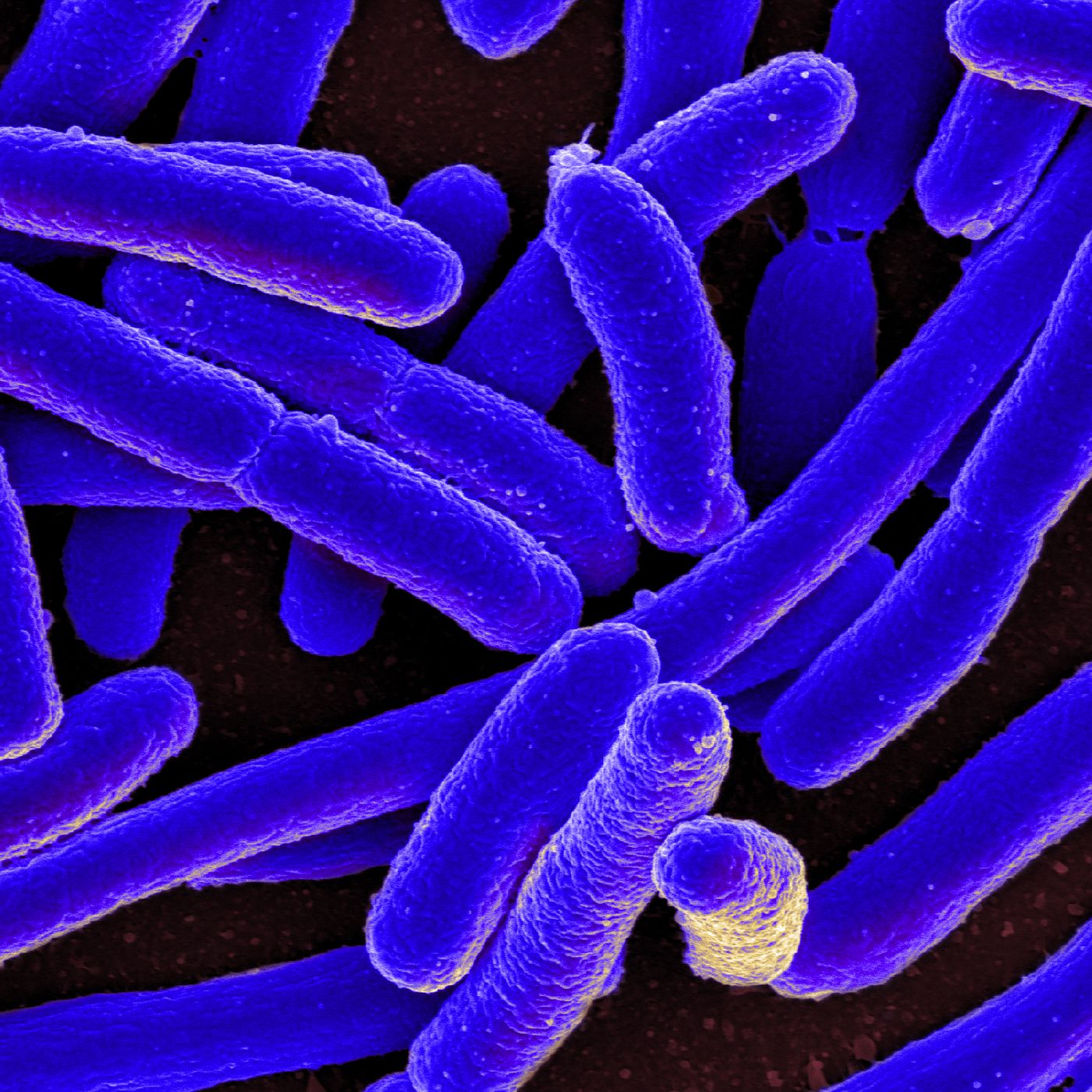
5:56 Let's begin with ediology and pathology. Escheratia coli is the most intensively studied and best understood organism on the planet. It's easy to handle, it's a hearty little germ, and it's versatile. It's used as a model in many antibiotic studies. Recent studies have found that wild Ecoli has a distinct presence in the environment. It's also a normal flora in the gut. Ecoli is kind of your run of the mill Bacillus. It's a gram negative facultative anaerobe in the family enterobactery Sia, and is closely related to some other bacteria that will talk about later, such as Salmonella, Clubsiella, ceratia. And of course we've already talked about your Cinea pestas it grows happily at a temperature of around thirty eight celsius, but it doesn't handle temperature fluctuations or changes in pH very well.
6:57 It won't degrade pollutants or phoe to synthesize. It will, however, degrade lactose. While it is found mostly in gut microbiomes of mammals, it can also be seen in the gut microbiomes of birds, reptiles, and fish, as well as being found in soil, water, plants, and food. It lives in the lower intestine of most mammals. Ecoli commonly makes up about point one to five percent of the total microbiome of the normal flora of the gut, with its niche being the mucous membranes that line the gut. Basically, the normal flora of the gut helps digest food. Without it, bad things happen. The host organism regulates normal ecoli through immunoglobulin a IgA helps facilitate the formation of ecoli biofilms on the intestinal mucosa. Ecoli seems to have a mutualistic relationship with its host. It produces vitamin K and B twelve, and both of these are required for mammals. To remain healthy. Ecoli also keeps the gut a safe place for anaerobes that live there by consuming oxygen.
8:16 Most importantly, ecoli keeps invaders out. It will fight off other bacteria that threatens to invade its domain in the mucosa. This relationship begins at birth. As a baby is born, it is inoculated with ecoli from the mother's fecal matter and from handling immediately after the child is born. Ecoli becomes more abundant in the mother's microbiome during pregnancy, thus increasing the chances of her newborn being exposed. The colonizing strains have secretion systems and pillai that allow them to attach to and interact with the infant's gut epithelium. Children who are born by caesarean section don't get this advantage, and it's found that they have a higher rate of colonization by Staphylococcus Arius. Staph areas has been linked to an increased risk of developing a variety of disorders, including asthma, obesity, and diabetes.
9:16 So long story short, keep your good gut flora intact. Ecoli is constantly being shed by mammals through their feces, and it has adapted to the harsher life outside of the perfect environment of the gut, at least long enough to make it back to a host. Some Ecoli strains can survive fairly well outside of the host and will establish themselves as part of the soil, water, and plant communities. There are strains of Ecoli that have adapted perfectly well to the outside world. Now, don't go out and start eating dirt. Normal flora is one thing, but when that normal laura explodes into an overwhelming population, that is a completely different matter. E Colia is the cause of diarrheal diseases, peritonitis, colitis, bacteremia, infant mortality, and urinary tract infections that kill about two million people every year. So how does that happen?
10:24 Well? If E. Coli is introduced to an organism outside of the lower intestine, it no longer has that mutual relationship with the host. Rather, it makes itself at home and reaks havoc. There are also pathogenic strains of Ecoli. These strains include teroaggregative, entrohemorrhagic, entropathogenic, entrotoxogenic, europathogenic, meningitis associated, and septocemic associated strains. I'm going to give a quick run down of the different stereotypes of ecoli so that you can get an idea about who's who at the zoo here. This is a very short introduction. I could actually do a whole season on ecoli alone. Entropathogenic ecoli is also known as EPEC EPEC. This was the first pathotype of ecoli to be identified.
11:26 Back in nineteen forty five. Researchers in the UK took samples from children who were healthy and children who were presenting with severe diarrhea. The team found that different strains of ecoli were present in these children. EPEC attaches to the intestinal epithelial cells, causing some pretty intense cite of skeletal changes. The microvili of the intestine are effaced, and the pedestals that the bacteria usually camp out on will rise up from the epithelial cells. A particular gene causes us to happen. That gene is called the locus of enterosite effacement or LEAK. This particular locus is found in other pathogens as well. We'll get to that later.
12:16 Trust me, We'll be talking about entrohemorrhagic ecoli or eh ec. EHEC was the first recognized as a cause of human disease in nineteen eighty two. EHEK causes bloody diarrhea, non bloody diarrhea, and himiletic uremic syndrome. EHECK hangs out in the intestines of cattle. O one five to seven belongs to the EHEC family of pathogenic ecoli. I'll get into this a lot deeper in the one hit wonders, but the key virulence factor for EHEC is STX or piero cytotoxin STX. STX is produced in the colon, then travels through the bloodstream to the kidney, where it causes renal failure. Sgalatoxin also exists in several other diseases that are well mostly fatal. Entertoxogenic e Coli or etec. Etach causes watery diarrhea and stomach cramps that range from a mild self limiting thing to a purging and fun fluids to replace all the fluids you lost kind of thing.
13:37 This is the cause of most childhood diarrhea around the world, and is certainly the main cause of traveler's disease worldwide. This is also the one that you normally get when you think you have the quote twenty four hour flu Etach invades the small balmucosa and proliferates entratoxins, giving rise to the intestinal secretion fibriller Colonization factors mediate the colonization of the bacteria in the small vowel. These colonization factors are antigenetically diverse. As many as twenty different variations exist. Etech produces enterotoxins, which belong to one of two groups, heat liable enterotoxins or heat stable entrotoxins, and each etex strain can have either heat liable, heat stable, or sometimes both. Entera aggregative E. Coli or EAEC is the pathogen that can cause mild long term damage to the intestinal wall, causing often persistent diarrhea. EAEC colonizes the intestinal mucoses and secretes enterotoxins and cytotox and then the bacteria will adhere to one another and form a stacked brick configuration. The bacteria
15:09 will attach to have two cells and intestinal mucosies by fimbrial structures known as aggregative adherence fimbree or AAFS and tero Invasive ecoli or EIEC, are very closely related to Shigella species. At the species level, they're indistinguishable, but when you look a little deeper, they're different enough that the nomenclature remains. EIEC may cause an invasive inflammatory colitis with blood and mucus in the stools. It occasionally causes dysentery, but in most cases you pretty much get watery diarrhea that's pretty much the same as other ecoli pathogens. EIEC will invade the epithelial cells of the gut, then light the indesitic vacuole, multiply intercellularly move through the cytoplasm, then the adjacent epithelial cells. It also induces apoptoses in infected macroflages, so they die while fighting the infection. This has been implicated as the cause of diarrheal infections in children under twelve months of age. Diffusely adherent e coli or DAEC are defined by the presence of a diffused pattern of adherence to P two cells. About seventy five percent of DAEC strains produce a fibril adhesin called
16:41 F one eight four five. These use daf as a protein which normally protects cells from damage through the complement system. DAEC strains induce a cytopathic effect that is characterized by the development of long cellular extensions that wrap around the adherent bacteria. Then they all just hang on for the ride. It has been thought that DAEC could cause inflammatory bowel disease as a long term morbidity. Europathogenic E Coli or up ec upec invades the urinary tract and causes urinary tract infections.
17:26 Upets are from a small number of oceerro groups and have phenotypes that are associated with cestitis and acute Payello nephritis in the normal urinary tract. This includes expression of P fimbria, hemolysin, aerobactin, serum resistance, and encapsulation. Likely, this infection will begin in the belle and then move to the urinary tract through poor hygiene. Remember when they used to tell you to wipe from front to back, ladies. Ecoli causes about seventy five percent of UTIs meningitis. Sepsis associated ecoli or MNEC is the most common cause of Gram negative neonatal meningitis.
18:15 The mortality rate in this type of infection ranges from fifteen to forty percent, and the morbidity rate is almost one hundred percent in the survivors of the disease. MNAC causes severe and irreparable neurological defects in those who manage to survive the illness to begin on it. Eighty percent of these pathogens are K one capsule type, with a minority of O type sprinkled in for good measure. This strain of ecoli doesn't spread through the oral fecal transmission. It's blood borne. High levels of bacteremia correlate with the development of meningitis. The bacteria can cross the blood brain barrier and take up residency in the central nervous system.
19:06 They do this without damaging the blood brain barrier at all. Electron microgaffs have shown that the bacteria can translocate from the blood through the central nervous system by employing a zippering mechanism that doesn't affect the trans endothelial electrical resistance in the least the host cell membrane is not disrupted during entry. Okay, I'm going to get all down and dirty with one five seven during the one hit wonders, so I'll talk more craft during that season. You'll be horrified. You'll never eat an undercooked camberger. Again. This gave a really short introduction to the genomes of some of the Ecoli strains. Yeah, there are more. It's a really fast mutator. So there are strains of Ecoli for days and months and years of podcast episodes. Some of them are nonpathogenic and others are well highly pathogenic. And while I'll get pretty far into the genome of one seven H seven when we get there, for now, I feel like I should explain how one little bacterium can cause seven types of disease and still be normal.
20:23 Flora. E. Coli survives by genetic diversity. For instance, the K twelve strain that's commonly used in labs as an escape pathogen one five seven H seven and the europathic strains CFT seven three share about thirty nine percent of their genes. E. Coli has a gene structure that contains roughly sixteen thousand genes, and many strains share less than twenty percent of them. Horizontal gene structure plays a huge role in the gene structure of the bacterium. Flexibility of the gene structure can be found in prophasias, transposable elements, and accessory genes.
21:12 These genes encode for traits like improving the bacterium's health in certain environments, increasing or decreasing the bacterium's metabolism, and of course, pathogenicity. All this means is that a coaline mutates extremely quickly, and novel pathogens could arise from the mix of H gene structure that the bacterium has chosen as a survival technique. Symptoms of E. Coli infection include bloody or watery diarrhea, abdominal cramps, possibly a low grade fever, and possible vomiting. Let's not forget the common flu like symptoms of headache and general ways. If you find yourself with any Coli am action, do not allow yourself to become dehydrated. If pediolite isn't getting it, get to a hospital. Patients die from dehydration. Ecoli is really really easy to avoid. It's super easy. Don't cut vegetables on the same cutting board you use for meat, especially if those veggies are going to be served raw. Cross contamination is a thing. People wash fruits and vegetables before you cut them or eat them. I don't care if the package says they've been washed. Wash them again. Cook your meat all the way
22:42 through. In roasts, an internal temperature of one hundred and forty five degrees fahrenheit is acceptable, but let the meat rest for at least three minutes after you remove it from the grille or the stove. Ground beef, chicken, and pork should be considered instantly measured at a minimum internal temperature of one hundred and sixty degrees fahrenheit. Avoid raw milk, unpasteurized dairy products, and unpasteurized juices. Don't drink out of streams, lakes, rivers, or swimming pools. Most importantly, wash your hands. I still can't believe that I have to tell people to do this. Wash them often with soap and warm water.
23:30 Scrubby, scrubby, my friends. Now it's time for me to give you which you came for. The story. The late eighteen hundreds were a time of microbiological development. In eighteen sixty one, Pasteur disproved the spontaneous generation of life theory. In nineteen seventeen, Deharrell coined the term bacterio flages. These are viruses that invade bacteria many different bacterial species were found and identified as pathogens that could infect animals and humans. Alike Louis Pastor, Robert Cooke, Joseph Lister, Albert Nisser, Friedrich Laufer, Karl Joseph Eberth, David Bruce, Alexander Yeerson, Shibasaburo Katsoto, and Paula Yerlich were all living in the Golden Age of microbiology. These men put all their efforts into finding pathogens and subsequently curing the diseases they caused. However, there were other microbiologists and immunologists that were studying mutualistic interactions between microbes and their hosts. Theodore Essich and el Metschnikoff were delving into the nonpathogenic microbes that were naturally in the body. These recalled normal flora Eschurch and Metschnikov wanted to know if there were certain organisms that
25:08 could be more beneficial to a host, and they wanted to do a deep dive into the coexistence of the bacteria and the gut and figure out how it was regulated. They particularly wanted to study the interactions between the bacteria with other bacteria and the bacteria with the host. Alfred Niesel had been working since nineteen twelve as a first medical assistant in hygiene and bacterology at the Hygiene Institute of the Albert Ludwig University of Freiburg, Germany. From nineteen fifteen until nineteen thirty eight, Niesel was head of the Budden Medicinal Investigation's Office for infectious Diseases in southwest Germany. By nineteen thirty eight, Niesel had left the Hygiene Institute and opened his own private laboratory in Freeburg, where he did research until his death in nineteen sixty five. During the early nineteen hundreds, when medical students were studying microbiology, one of their assignments would be to take human feces and plaited it to see what grew. Most of these samples would have pathogenic salmonella at it. Niesel found that salmonella would grow out of the lawn of other bacteria, but in some cases salmonella would either grow poorly or sometimes not at all.
26:37 In those cases, ecoli would be the most prevalent. Niesel began to postulate that ecoli could prohibit the growth of other pathogenic organisms. In this case, he was thinking salmonella. He began working on research and He was successful in proving that certain strengths of ecoli take him from healthy people could prohim the growth of salmonella and other intropathogens. Niesel called this phenomenon antagonistic activity. He proceeded to create an antagonistic index based on quantitative essays that he called the antagonistic test. From this, he gleaned which strains of Ecoli were antagonistically strong and which were antagonistically weak. Niesel nineteen seventeen was a strain of Ecoli that Niesel had isolated from a German soldier during World War One. This man was in a field hospital near Freeburg, but had been in the Balkans before this.
27:45 He had been on deployment in the Dobrdia region for some time. This region had seen major outbreaks of shigela, but this man had never experienced illness. Niesel took steel samples from this man and isolated the normal Ecoli from them. The COOLi from this soldier showed strong antagonistic activity against many different pathogens. Remember this was in the years ba before antibiotics, so Niesel didn't move forward with his research to find which biochemical substances were responsible for the effect. He was more interested in seeing if E. Coli could actually treat gastrontestinal disease caused by other pathogenic bacteria. He presented his research on June twentieth, nineteen sixteen, in front of the Freeburg Medical Association. His lecture was called on the Fundamentals for a Novel Causal Control of pathological gut Flora. The lecture was also published in the Deutsche Medician Witchcraft. This work was the spring word for others whom wanted to study the ways that normal flora can be used as a prophylaxis and therapy. With the advent of antibiotic therapy, research in treatment options using antagonistic
29:17 bacteria declined. However, over the last twenty years, antibiotic resistance has been steadily increasing, so interest in an alternative biochemistry has grown. It's important to note that the gold standard antibiotics that we use today also have their basis in nature. Penicilling comes from mold, doxcilling comes from a plant. You get the picture. Most drugs are like this nasal nineteen seventeen is still in use today. It's called mutifloora. Today we call it a probiotic. Probiotics are used to stimulate the growth of normal flora. If you've ever had to take a heavy dose of antibiotics to knock out of bacterial infection, you've probably been encouraged to take a probiotic. Beautiflora may have even been prescribed for you by your doctor. Okay, so that's the short version of eco life. The next episode will be a one hundred seconds to midnight episode on the movement of the doomsday clock. This year's message could be the most important one in the recent history of the doomsday clock. Don't forget to rate and review the show wherever you get your podcasts. Importantly share with everyone. Then thank you for
30:53 listening, and I'll see you in two weeks when we'll explore the doomsday clock and the message have for this year.

