S6 E5: Have You Gone Batty? The Story of Bats, Disease and the Environment
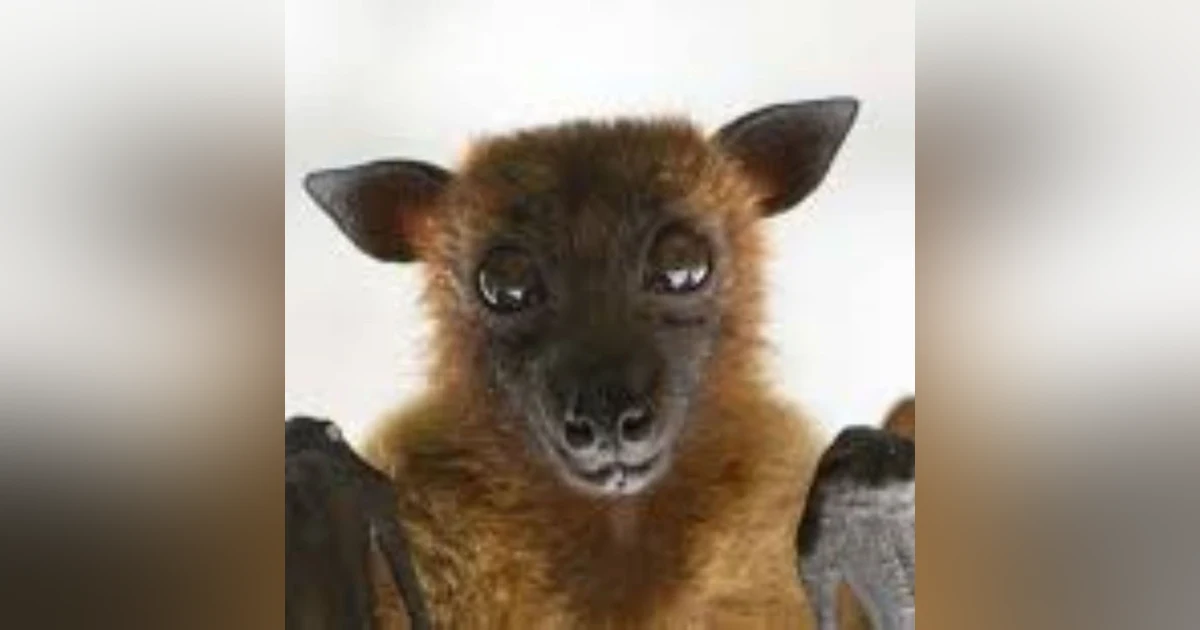

Bats are the base of several ecosystems and without them those ecosystems would fail, and with them, several food sources would also fail, but bats also carry some of the most deadly diseases known to mankind. SARS, MERS, coronavirus, Ebola, they all...

 Apple Podcasts

 Spotify

 Spreaker

 Podchaser

 Castro

 RSS Feed

 Goodpods
0:00 Do y'all like weird stuff about mysterious stuff? Are you a skeptic or a believer? Want to hear the legend and the fact and the Lord and the science and Smith and the theory. Come on down to None of this is Real the podcast for all Things mysterious and weird with us Doomsday Demeani and Sarah Sincole, lifelong friends who have spent years poking their fingers through the veil, all while making each other laugh till with her find us on all the major podcast platforms and social media. That's none of this is real the podcast. You don't have to believe any of this, but you do have to believe on yourself. Believe all over yourself. Do you hate getting stuck in rush our traffic? Do you find yourself dozing off trying to get home? Do you start daydreaming about the paranormal and forget you're sitting behind the wheel. If the answer is yes, then don't wait another minute. Tune into the Paranormal Peeps podcast. We are ready to entertain you. Dark Cast Network. Come on over to the dark Side. We're really nice people once you get past the true crime and scary science. Hello and Welcome to Cause of Death one hundred seconds to Midnight. I'm your host, Jackie Moranti. Today we're talking about some of my favorite animals. I love bats. They're probably the most
1:33 amazing creatures on the planet. Bats are the base of several ecosystems, and without them, those ecosystems would fail, and without those ecosystems, several food sources would also fail. But bats also carry some of the most deadly diseases known to mankind. Stars, mirrors, coronavirus, ebola. They all have their natural reservoirs in bats. People fear bats, maybe because they carry disease, maybe because they have visions of Dracula in their heads, maybe because they don't understand how invaluable they are. Bats have become targets of the people who consider them pess Now several species are endangered, and that could be far worse for the ecosystems that they are a vital part of. It's ninety seconds to Midnight and a vital part of the chain of wildlife is coming under attack by humans who don't understand that bats are the intermediary between human life and death in more ways than one. I thought it would be cool to take a look at the dichotomy of the bat. We would die without them, but they could kill us off just by existing. Bats are mammals of the order chirrup Tera, meaning handwing. They are the only mammals capable of sustained flight.
3:00 They have four limbs that are adapted as wings, and their digits are covered in a thin membrane called a pedagium. Bats are more agile in flight than most birds. That flexible membrane and the movable joints of the four fingers and thumb allow them to change direction very quickly and catch mosquitoes and other insects in midair. If you've never seen bats fly, it is a sight to behold. They are amazing to watch Bats roost upside down. There are several theories on this, but the most widely accepted theory is that they do this because they have to fall into flight in order to get enough momentum to go up.
3:46 They have to let gravity take control first. There are thirteen hundred species of bats living in almost every country in the world. Some are no bigger than a child's palm. Others have six foot wingspans. There are two types of bats, microbats and megabats. Microbats eat insects that come out at night. Vampire bats are the only species of bat that survives on blood rather than insects, and they usually get this blood from cattle and horses, not humans. Microbats live in caves and hunt after dark, so to get around they rely on echolocation to locate objects using sound waves. They make a high pitched sound that travels until it hits an object, then bounces back to them.
4:41 This tells them how far away something is and how big it is. Megabats live in the tropics and they eat fruit, nectar, and pollen. These bats have larger eyes and a stronger sense of smell, but since they don't echolocate, they have smaller ears. These bats are usually larger than microbats. Bats haven't gotten a fair shake by humans historically. They've been associated with disease, vampires, and overall creepiness and all sorts of negative things. But before I get into the negatives, I want to talk about the positive things that bats offer ecosystems. Bats live in a variety of places, forests, caves, addicts. Their habitats are called roosts, and normally they live in colonies.
5:34 It's rare to see a single bat in a roost. They have different roosting conditions for different times of year. Most bats don't build their roost They use whatever's there, and most of the time these roosts are close to water and very dark and quiet as the weather worms, Pregnant females will gather together in a warm, safe place. These are called maternity roosts. Many bats will use the same maternity roosts every year to have they're young. The gestation period for a vat is between six and nine weeks. Bats will usually give birth to a single pup every year. They're very good moms and keep their pups close. Bats are mammals, so they give birth to live young and suckle them until they're weaned at about four or five weeks old, and then they're old enough to fly and they can forage on their own. Bats are very sensitive when they're pregnant and just after giving birth. If they're disturbed before the pups are weaned, they may abandon them, so it's better to stay away from their habitats during early summer. Bats mate in the fall, but they don't become pregnant until spring. The females will store the sperm until after hibernation so that they have enough energy to make it through pregnancy. Most bats will hibernate during the winter months. During hibernation, the animal will experience a
7:12 drop in body temperature, their metabolic rate slows, and they'll survive on the fat they've stored up over the summer. Also during hibernation, bats will choose a place that remains the same temperature no matter what the weather is outside. Caves make perfect hibernation roosts since the temperature doesn't fluctuate a whole lot. Not all bats hibernate, though several species migrate to warmer climates when the weather doesn't suit them. Several species will roost in trees. About three quarters of the British bat populations are known to roost in trees. Trees not only provide shelter for the animals, but they also attract a diverse range of bugs to eat.
8:01 Bats will also roost and abandoned buildings, or if there's an opening in an attic, they'll get in there and roost. They'll make homes and houses, bridges, barns, and occasionally public buildings. There was a very old building on the CSU campus that was a bat sanctuary. Not on purpose, mind you, but there were just enough gaps in the attic that the bats made a huge roost in there. For any of you CSU alumni listening, this is the Gibbons Building. It used to be where students in need of food, shelter, tutoring, or scholarships would go. That was a long time ago, though, so I'm not sure where those services are on campus now. But if you were walking along the northeast side of campus at dusk, you could watch the bats come out of the building when they went to forage at night, and it was pretty cool. Bats are known to live in urban areas, and if you know what you're looking for, they can be seen foraging all over even the biggest cities. From Denver, Colorado, to Austin, Texas, to Baltimore, Maryland, and Los Angeles, the largest cities in the country, are home to millions of bats. They've adapted to city life pretty well, and city bats are probably some of the best fed bats. There are plenty of bugs to eat out there. Bats live
9:33 close to where they can forage for food, and they usually live near a water source. Their foraging grounds are as varied as the bats themselves. Microbats are carnivorous, mostly eating bugs like mosquitoes. See how valuable they are already. On an average night, a single bat will eat its body weight in insects. These little flying acrobats save the agricultural industry over three point seven billion dollars a year in pesticides. And this doesn't include the amount of insects that bats eat in forest habitats, which helps the lumber industry, nor does it include the number of insects that bats eat in urban areas. Macro bats are important crop pollinators. These bats live by eating the nectar from plants, so as they move from plant to plant and flower to flower, they pollinate them.
10:33 Without bats, we wouldn't have seguirocactus or pipe cactus. There would be no bananas, no mangoes, no avocados, no nuts, figs, coco or coffee, nor would there be tequila. Bats pollinate agave. Think about it. Bats pollinate over three hundred species of fruit. They spread seeds for various other plants. Some of the plants that bats pollinate are used for medicines. Yes, folks, many of our medicines are made from plants. They're not all engineered by magic. About eighty species of medicinal plants are pollinated by bats. And I don't know about you, but without coffee, chocolate, guacamolian mangoes, I don't think I can survive. Bats have helped us use ecolocation in radar systems. They've also helped us figure out navigational aids for the blind, and research on bats has helped us develop vaccines. That's how important bats are. We depend on them for all of that. That three point seven billion dollars that helps the egg industry and bug control, that number just went to priceless. These animals are very much worth protecting, which means that we need to protect their habitats as well. Noise and light pollution, pesticides
12:07 and wind turbines are some of the biggest hazards to bats. While some bats have adapted to street lights and will catch as many bugs as hang out there, others have not. A study was done on the effects that light pollution has on the lesser horseshoe bat by Emma Stone, a PhD student at the University of Bristol in the UK. Doctor Stone is a researcher at the University School of biological sciences. Now, I'm not going to go through the entire setup of the study or we'd be here all night, and I have other things that I need to talk about, but I do want to sum up the findings. When the lights were turned on in a known commuter path used by bats, forty two percent flew through the lights, thirty percent reverse direction and left before they got to the lights, seventeen percent flew over the hedgerows that were fully illuminated, nine percent flew through the densest part of the hedgerows, and two percent flew in circles to avoid the lights. Doctor Stone's team also observed bats flying between the lights in darker areas, but then flying up and down repeatedly, as if trapped by the lights. On nights where the lights were left off, the bats began their nightly forage at twenty nine point
13:39 nine minutes after sunset, but when the lights were turned on, they began their forage at seventy eight point six minutes after sunset. On the nights that the lights were on, the bats never got used to it. They didn't go back to their normal activity or timing all right, So what does this actually mean for the bats. The results of this study suggest that light pollution may extend the routes that the bats will take to their normal hunting grounds. This increased time could increase the energy expended and put undue stress on the animals, and eventually this could impact their reproductive success. Other studies have found that when roosts are exposed to artificial lights, the bats will either delay leaving the roost or not leave at all. They may completely abandon that roost, and this also affects their feeding behavior away from the roost. Noise is probably the worst type of pollution for humans and animals, but noise invades our lives twenty four, seven, three sixty five. Many species of bat use echolocation to find food and avoid objects, and even find one another. Noise pollution threatens their survival. It makes them less active, and they often abandoned roots where noise pollution is high. This forces more and more bats to move to areas
15:13 that are quieter, and we're running out of quiet areas. Several studies have been done on the ways that noise and radio waves affect bats, and most of them come to the same conclusion. Much like light pollution, noise can confuse them and put them under more drest than is necessary. Doctor Domnall Finch performed a two year study that was funded by the Vincent Wildlife Trust on the effect of road noise on the horseshoe bat. His team recorded road noise from a busy highway and took the recordings into a natural bat habitat. They used both sonic and ultrasonic spectrum of traffic. They found that from twenty meters away from the noise, bat activity dropped approximately two thirds. They also noticed that there was a reduction in feeding buzzes, meaning that the bats weren't feeding as well as they did before the noise. The sonic spectrum seemed to have the highest impact on bat activity. They didn't necessarily think that the noise was jamming their echolocation, but rather that bats were just trying to avoid the noise.
16:33 At the end of the experiment, doctor Finch's team surmised that road noise could potentially have a negative effect on habitat quality, landscape connectivity, and population viability. Any one of these things impacts the survival of the species. Pesticides also kill thousands of bats every year. We poison the best pesticide that we have. If a bat eats its body weight and bugs that have been sprayed with insecticides, they will also be poisoned. Put that on top of the fact that we're killing off their food source, and you can see how pesticide use can be a real problem for the entire order. I'm putting an honorable mention in here on the wind turbines. This form of clean energy is known to have negative impacts on several species, but particularly on any species that flies.
17:33 Birds and bats get caught in the blades and die. It seems that every wind farm that I've ever had the chance to visit has been littered with the mangled bodies of flying creatures. I'm not entirely sure that the risks are worth the rewards when so many animals die. Bats don't have a lot of natural predators. Owls, hawks, and snakes will eat bats. But the thing that is decimating the entire order is white nose syndrome. White nose syndrome is a fungal infection that begins around the animal's face then spreads to their body.
18:15 Often, this disease disrupts their hibernation and feeding patterns, essentially causing them to starve to death. Several hibernating bat species have been affected to the point of near extinction by white nose syndrome. People bring the fungus into the caves where the bats roost, and that's how they get it. I'm not going to say a lot about it now, but on the next Cause of Death one hundred seconds to midnight, you're going to hear everything about white nose syndrome. Before I go on, we are going to hear from this month's sponsors. Then I'll talk about diseases that bats carry. During March of twenty twenty, I did what's so many of us did during that time. I took up a new hobby. I decided that I was going to propagate plants. I bought all kinds of seeds. I had the idea that I could grow any kind of herb that I wanted, and I would be able to use these herbs to do everything from infusing oils to throwing them on some amazingly tasty meals.
19:25 Well. I failed miserably. I had no idea what I was doing, and most of my plants died. I didn't know how to start them correctly. I didn't know how to cut them correctly. So there I was with a bunch of empty pots, starting over and over again and failing every time. Then I found true Leaf Market. True leaf offers seed packets, grow kits, and even planters for roughly the same price that I was paying at the local stores. Seed packets started about two forty and organic seeds start at two ninety nine. For the last fifty years, True Leaf Market has offered a huge selection of non GMO seeds, including vegetables, grains, flowers, cover crops, specialty seeds, sprouting and microgreen seeds, and of course my favorite herbs. They offer heirlooms, organics, and hybrids of all kinds too. With super fast shipping and free shipping on orders over seventy five dollars, you can't go wrong. No matter whether you're an in home gardener with grow lights and raised garden beds in the living room or a bulk wholesaler, True Leaf Market is the place to look for all your seed needs. Remember all those past failures that I had, well, True Leaf Market has my back with growing supplies and starter kits. Plus they have a ton of how to PDFs that I can download to my computer. With all the info.
20:59 I need to be successful with my herb garden. I'm already more successful than I have ever been. I want you to succeed in your gardening ventures too, So I'm teaming up with true Leaf through June thirtieth to offer you ten dollars off any order of fifty dollars or more when you use promo code cod ten. Go to www dot true leafmarket dot com and use the promo code cod ten for ten dollars off any order of fifty dollars or more, and don't forget you'll also get free shipping on orders of over seventy five dollars.
21:40 This offer is only available through June thirtieth, So get your seeds today and have a great gardening season. Are you a true crime advocate? Are you passionate about uncovering the truth and bringing justice to victims? Do you love the paranormal and spooky tales? Then you don't don't want to miss the True Crime and Paranormal Podcast Festival in Austin, Texas. It'll be going on from August twenty fifth to the twenty seventh In twenty twenty three. This festival features panel discussions, workshops, live podcasts, all focusing on ethics and advocacy in the true crime sphere. Get your tickets now at www dot Truecrime Podcast Festival dot com and join us in Austin for an unforgettable experience. Don't miss out on the chance to connect with other advocates and take your passion for truecrime and paranormal to the next level. Use Code Consequences at checkout for fifteen percent off the ticket price. That's Truecrime Podcast Festival dot Com with promo Code Consequences at checkout for fifteen percent off the ticket price. Special guests will include Julie Murray, Teranewell, and Call You or Landry to name a few. I'll be there representing another podcast that I'm involved with, True Consequences. Come by and meet Eric Carter Landin and I. We would love to meet you. While we
23:15 threaten bats just by being human, Bats threaten us just by being bats. Bats are natural reservoirs for several diseases that are fatal to mankind. They carry rabies, NIPA virus, ebola, sars, mirrors, lyssavirus, parasites, histoplasmosis, salmonellosis, your sinosis, and a host of other diseases that can be fatal to humans. These diseases can be transmitted by bites, scratches, mucous membrane exposure, or coming into contact with guano, especially by breathing in dried guano. So the moral of this story is don't pet the bats and stay away from their feces, watch them fly, enjoy their hunts, but leave them alone. It's rare for a bat to bite a human. They're not aggressive animals and will usually just try to fly away. If you see a bat during the day, or one that's acting erratically, don't touch it, call fish and wildlife to come and take it. Okay, So if bats carry all these diseases, how do they survive? Why don't they get sick and die? This is what makes the bat a medical marvel. Bats have a gene structure that helps them evade disease. They can modulate their own immune systems to essentially neutralize almost anything that invades. Once the infection has been
24:52 neutralized, they can turn off the impending inflammation before it can damage the host. Way back in the beginning of this podcast, I did am More Than You Ever Wanted to Know episode where I explained how the human immune system worked. I talked about how inflammation is one of the ways that the body finds off infection. One of our inflammatory responses is fever. Our bodies try to burn the infection out, but fever can also harm us. Many people die because their fever spikes too high. A prolonged fever of over one hundred and three is considered critical, and unless that fever comes down quickly, our own immune response can do irreparable damage to our internal organs the brain in particular.
25:47 Bats can shut that immune response down as soon as the pathogen is neutralized by their immune system, so they won't spike a dangerously high fever. What's even more extraordinary is the immune system of a bat can evolve as quickly as the virus that's invading. This amazing mechanism is coded into their DNA. Researchers have been studying bat DNA for several years, and understanding their immune system has helped create therapies for humans against the diseases that they carry. Bats may also hold the secret to youthfulness. These critters can live for up to forty years, and that makes them the longest lived species of their size. Normally, the smaller the species, the shorter the lifespan, but bats have evolved to evade that niggling problem too. A study done by the Bat one K Consortium, a bat conservancy program, found that certain genes related to aging are altered in the bat species. As we age, we accumulate junk in our bodies, dead cells with nowhere to go. But bats have evolved to clean up the dead cells and dispose of them. They throw out the trash. This is a process called autophagi. They also maintain their telomeres. Telomeres are the caps
27:21 on the ends of chromosomes. In humans, these telomeres will gradually come undone. This leads to aging, but can also lead to cancer in older people. Our bodies lose maintenance as we age, our immune systems weaken, and we are at risk of increased inflammation our telomeres unravel. Humans are a mess the older we get. Bats, on the other hand, up their immune system game as they get older. Not only do they maintain their telomeres, but their immune system i'm stronger, their mitochondria won't wreak havoc on their bodies.
28:07 Research is ongoing into the genetics that make the bats such a naturally healthy animal, but these phenomena could lead to cures for many diseases in humans, including cancer and rheumatoid arthritis. There are several ways that we can help bats survive. I've put a video in the show notes that give step by step instructions on making a bath house for your yard. I've also got an article in there that tells you what kind of plants to put in your garden. The easiest way to help bats is to shut off the lights at night. If you have a yard light, don't leave it burning all night long, only use it when you need to go outside. Keep the noise levels at your house down to a low roar. The less roar the better. If you keep cats, keep them in at night. Don't let them roam near what could possibly be a bat habitat. Before doing any remedial work on an attic, check to make sure the bats haven't begun to roost there. Many of the articles listed in the show Notes are written by conservancy agencies. They give some great advice on bats and how we can all do our part to save this magnificent order. It's ninety seconds to midnight and the world's greatest asset is being destroyed by a fungal disease that is largely incurable by the encroachment of wild lands and by technology, largely they're being destroyed by man. This order
29:44 helps mankind in so many ways, from pest control, to pollination, to cures for diseases the plagus. If we destroy the bat, do we destroy humankind. Please check the show notes for ways that you can support Cause of death one hundred seconds to midnight and visit my amazing sponsor for this month, True Leaf Market. The quality of seeds that I received is remarkable. Some of my little plants are potted already and they have cover plants that will attract bats. Go check them out. Thank you all for listening, and I'll see you in two weeks when I give you the skinny a white nose syndrome.
30:30 Until then, go build a bath house.

